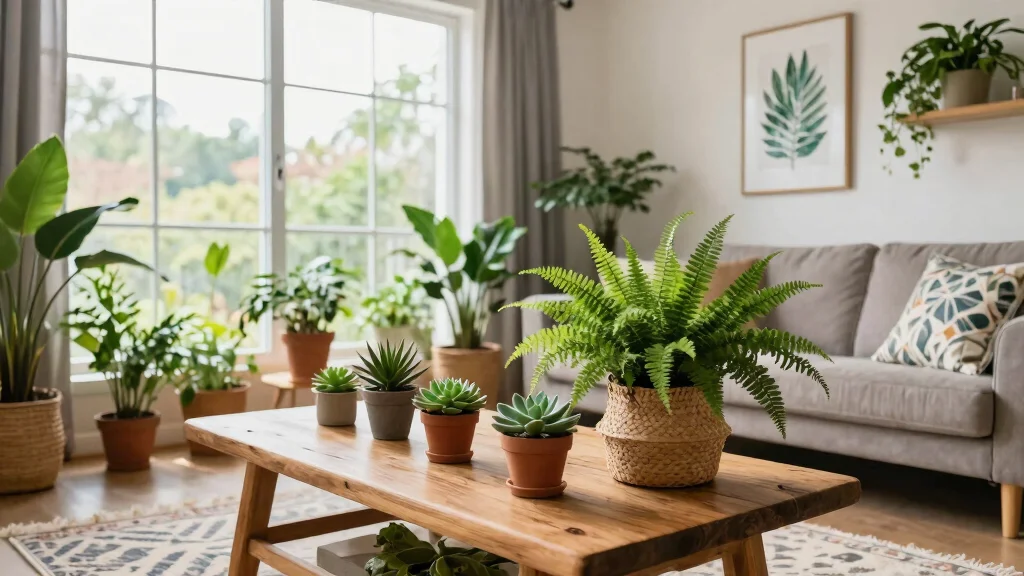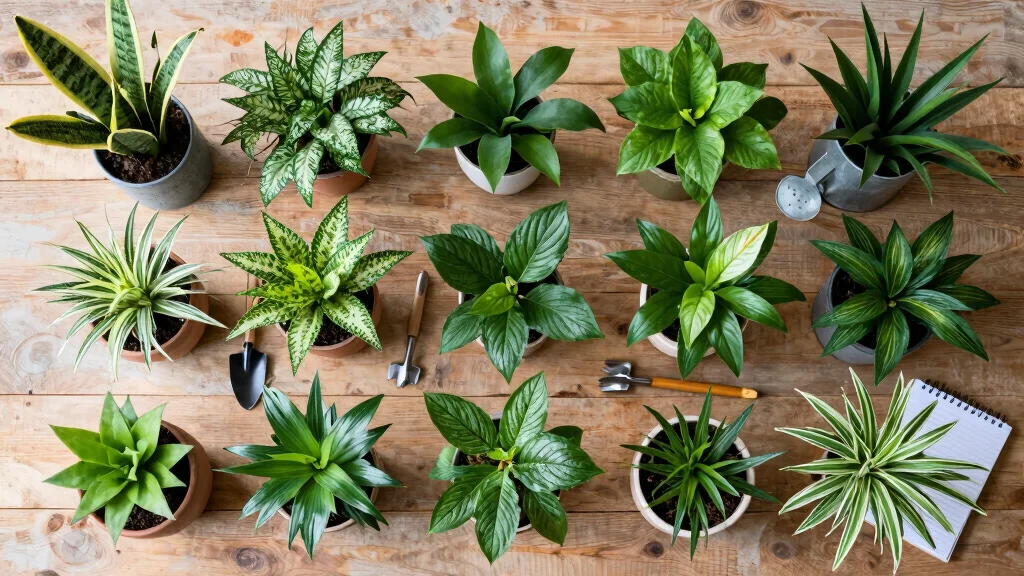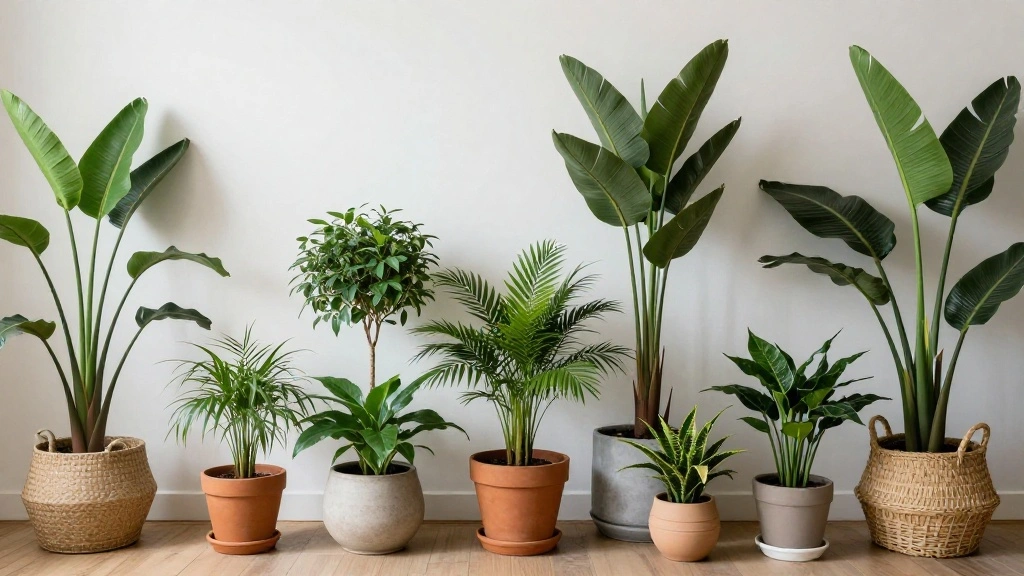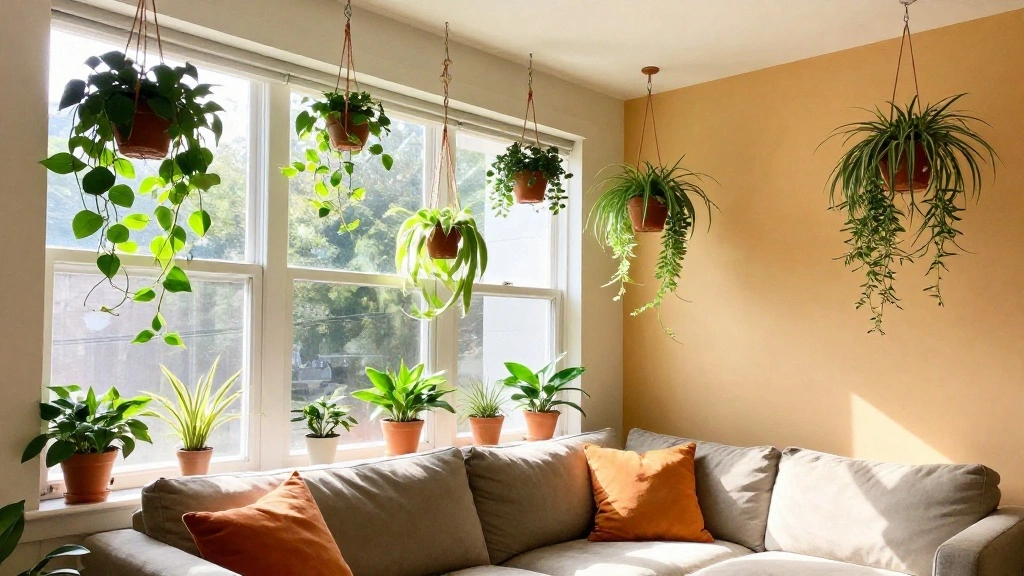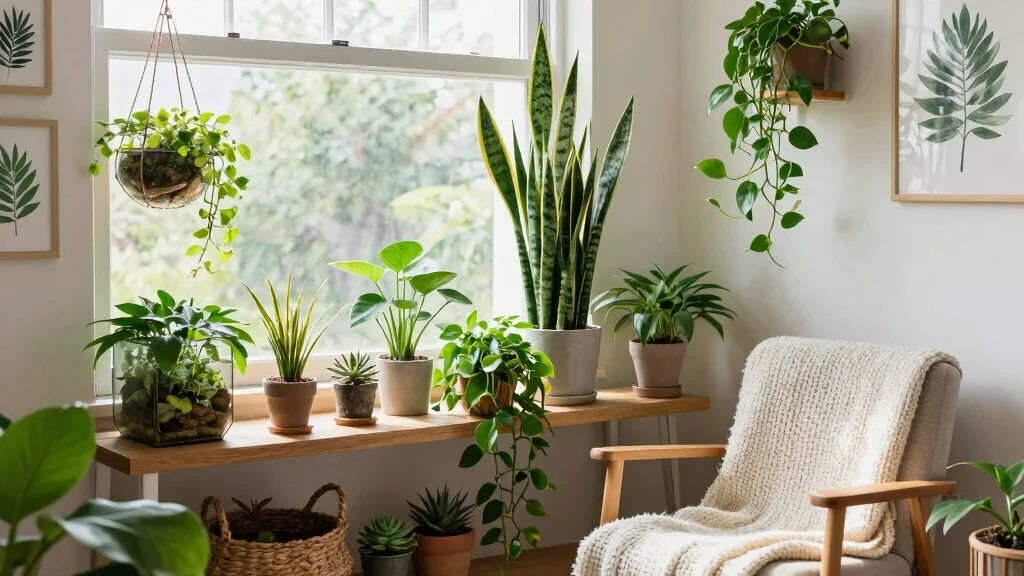

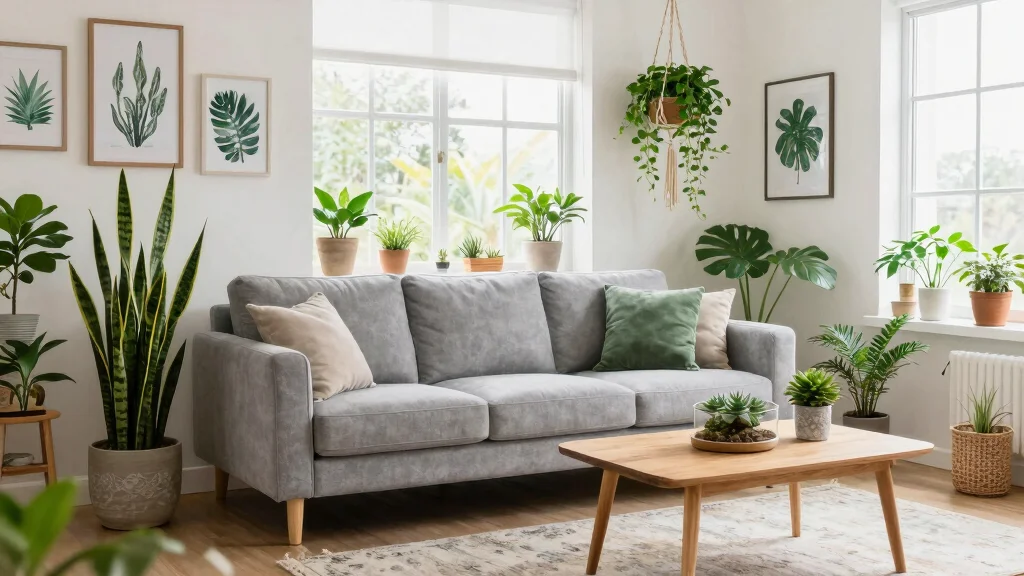


Creating a cozy living room isn’t just about selecting the right furniture; it’s also about the atmosphere you create. And nothing brings warmth and tranquility to a space quite like indoor plants. I’ve been daydreaming about transforming my own living room into a tranquil oasis filled with lush greenery. So, I decided to put together this guide on indoor plants decor for living rooms that will inspire you just as much as it inspires me.
If you’re a plant lover or someone who simply wants to breathe life into your home, this post is for you. Whether you’re a seasoned plant parent or just starting out, you’ll find ideas that cater to all levels of gardening experience. We’ll explore low-light indoor plants that thrive even in the shadiest corners of your home, ensuring you can enjoy greenery without worrying too much about sunlight requirements.
In this guide, you’ll discover 19 creative ideas for incorporating indoor plants into your living room decor. From stunning statement pots to clever arrangements and seasonal decor tips, you’ll gain valuable insights into how to style indoor plants that fit your personal aesthetic. Get ready to dive into a world of indoor plant arrangements and decorative pots that not only enliven your space but also promote a healthier atmosphere at home.
Key Takeaways
– Diverse Plant Options: Explore a variety of low-light indoor plants, including the snake plant, ZZ plant, and pothos, perfect for adding greenery to any living room.
– Styling Ideas: Learn how to use different decorative pots and creative holders to elevate your plant decor and make a statement in your living area.
– Arrangement Techniques: Discover practical tips on grouping plants and layering them on shelves or tables for a dynamic look that draws the eye.
– Seasonal Decor: Get inspired by seasonal indoor plant rotation ideas that keep your living room fresh and inviting throughout the year.
– DIY Projects: Find unique DIY ideas, like crafting your own plant frames or using repurposed items as plant holders, to add a personal touch to your decor.
Recommended Products
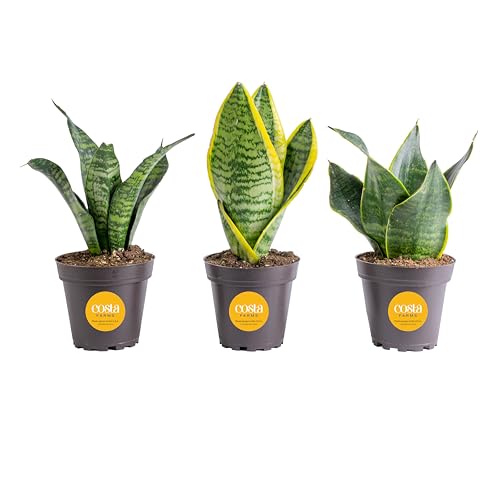
INSTANT HOME STYLING TRIO: Multi pack of three live snake plants takes the guesswork out of interior design by creating an effortless cohesive look across your living room shelves, bedroom nightstands, or home office desks

SANSEVIERIA ZEYLANICA: Mother in Laws Tongue House Plant is a stemless evergreen that grows elongated, sword-shaped leaves from its underground rootstock. The Snake Plant is an upright species with firm structure and hardiness characteristics. Being that it is a perennial, the Sansevieria will live for years when properly cared for.

HARDY INDOOR PLANT: Sansevieria Laurentii is a drought tolerant, durable, and adaptable houseplant for beginners
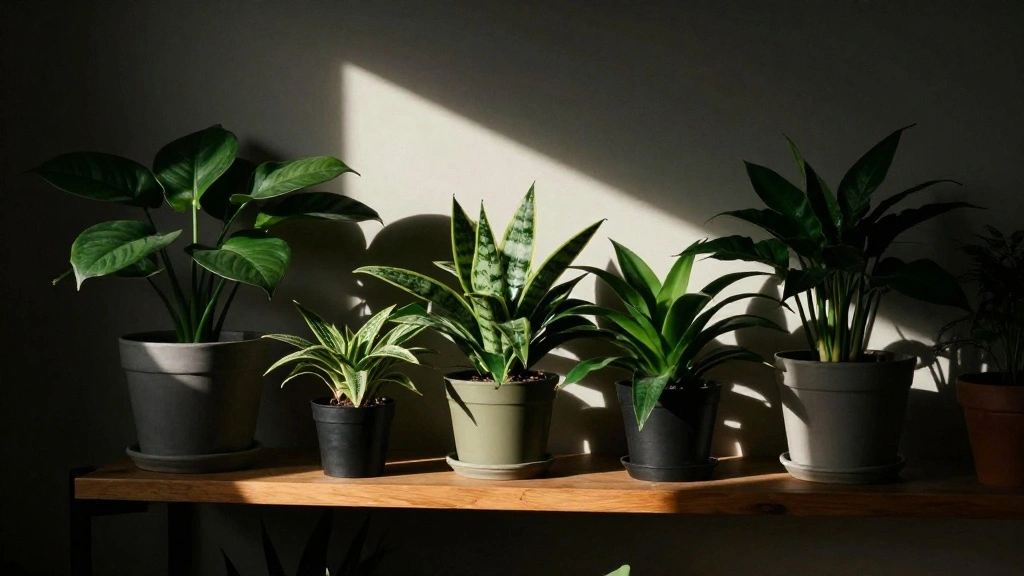
1. Snake Plant in a Statement Pot
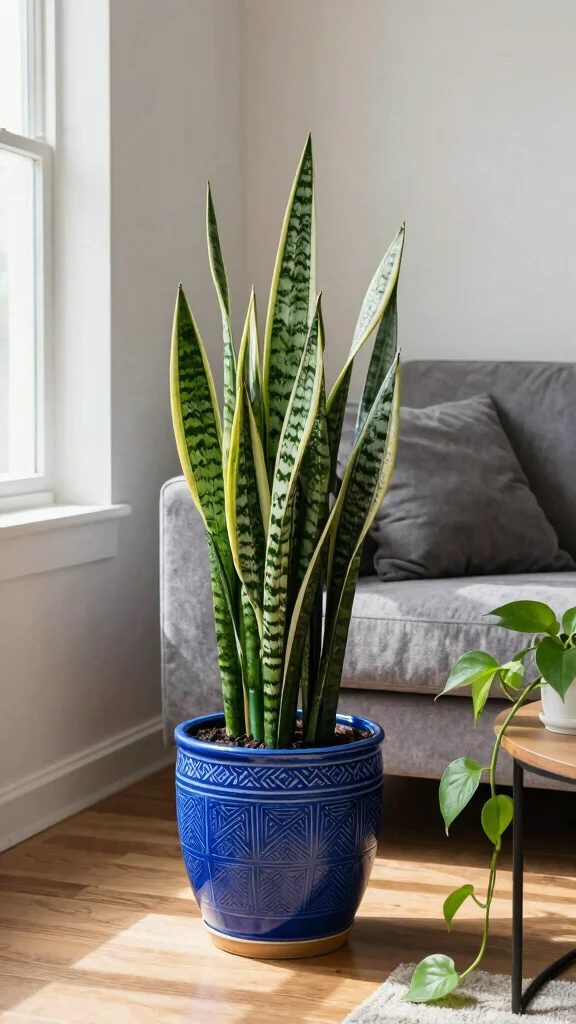
The snake plant, or Sansevieria, stands out with its striking, upright leaves that add a bold touch to your decor. This low-maintenance plant thrives in low light, making it an ideal choice for any room. When placed in a decorative pot, the snake plant not only enhances visual appeal but also reflects your personal style. Consider pairing it with a vibrant ceramic pot or one featuring geometric patterns to create a standout piece in your living space.
To implement this look effectively, place the snake plant in a corner or beside a sofa where it can draw attention without crowding the area. For a budget-friendly option, search for unique thrifted pots that can give character to your decor.
Consider these tips for styling:
– Pair a bold pot with contrasting colors to enhance the snake plant’s beauty.
– Position the plant near a window to promote healthy growth while it adapts well to lower light.
– Incorporate smaller plants or decorative items on a shelf to create a cohesive display.
This approach enriches your space with sophistication while introducing natural textures that elevate the overall aesthetic.
Recommended Products

Realistic Foliage with Natural Detailing: This fake ZZ plant features meticulously crafted leaves that mimic the look of real ZZ plant foliage. Each leaf showcases accurate green hues, with a silk-like texture and detailed vein structure that feels surprisingly authentic to the touch. The lush, glossy appearance of the leaves brings the vibrant charm of a live tropical plant to your space without any of the maintenance hassle.

Dimension of Artificial House Plant: The artificial plant overall is approx 17"( plant approx.11'') while the pots measure approx 5.9" x 5.6''.

Dimension of Artificial House Plant: The artificial plant overall is approx 11.81", while the white ceramic pots measure approx 4.72" x 4.33'‘.
2. Pothos Plant Hanging Near a Window
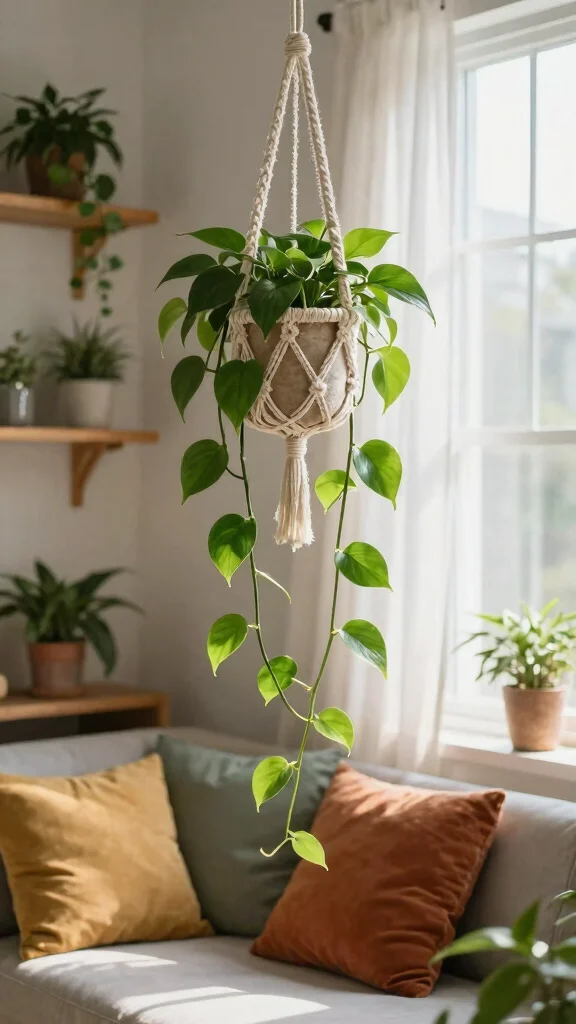
The pothos plant, with its heart-shaped leaves and trailing vines, brings life and vibrancy to any room, especially when hung near a window. This versatile plant thrives in bright spaces and softens hard edges with its lush greenery, making it perfect for modern or bohemian styles. By choosing attractive hanging planters, you can create a cascade of green that enhances your interior decor.
For practical implementation, consider using macrame hangers or decorative brackets to showcase your pothos. You can easily find affordable options at local stores or online, adding style without breaking the bank.
Try these styling ideas:
– Hang pots at varying heights for added visual interest.
– Water regularly to keep the leaves lush and vibrant.
– Combine with other plants or decorative elements for a fuller look.
This arrangement not only adds a refreshing touch to your living space but also encourages a sense of calm and connection with nature.
Recommended Products

Lifelike and Vibrant - Instantly elevate your home with these 2-Pack fake pothos vines. Each vine stretches 43.3 inches with lifelike multi-green leaves and natural veining. Unlike real plants, our fake plants feature fade-resistant colors and realistic textures that blend seamlessly into any decor style - from modern apartments to rustic farmhouses. Includes realistic butterflies for an extra touch of charm.

🌿 INSTANTLY UPGRADE YOUR SPACE Add a soft, cascading touch to your home with this artificial trailing ivy plant. Perfect for shelves, cabinets, or countertops, the flowing vines create a relaxed, styled look instantly.

LIVE INDOOR PLANTS: Includes 4 easy to grow pothos plants, approximately 8-10 in. tall measured from bottom of pot
3. ZZ Plant in a Corner
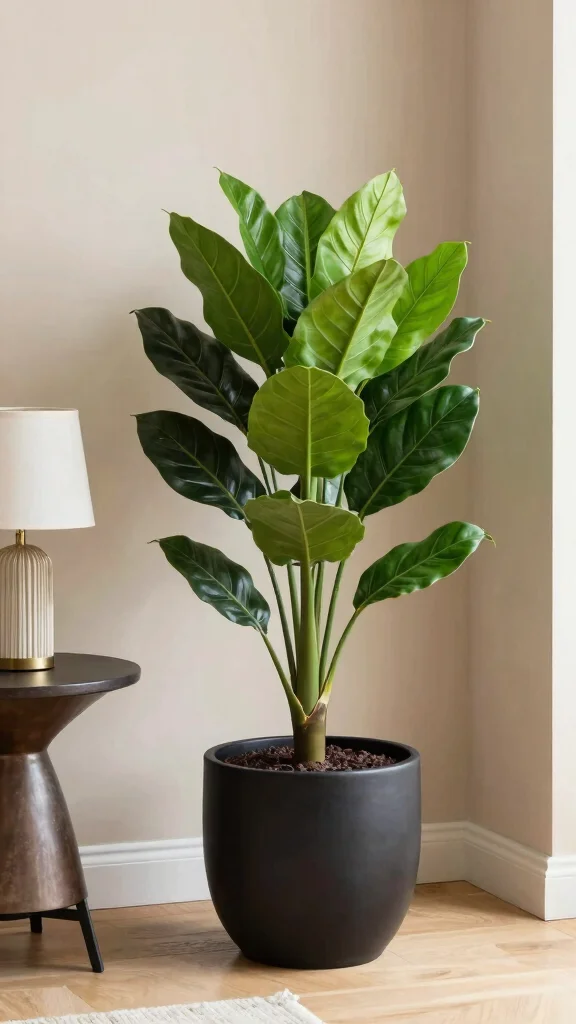
The ZZ plant is a resilient indoor choice, known for its glossy, dark green leaves that exude elegance. Thriving in low light and requiring minimal maintenance, it’s perfect for filling empty corners in your living room. With a stylish planter, such as ceramic or metallic finishes, the ZZ plant can elevate the overall look of your decor.
For effective arrangement, place the ZZ plant in a corner to enhance the space without overwhelming it. This plant pairs beautifully with decorative tables or lamps, creating a refined atmosphere.
Keep these tips in mind:
– Position the plant strategically to fill empty spaces elegantly.
– Pair with minimalist decor to let the ZZ plant shine.
– Use a decorative table or lamp nearby to enhance the overall design.
This approach creates a sophisticated touch, allowing natural textures and materials to enhance the aesthetic appeal of your home.
Fun fact: ZZ plants thrive in low light and only need water about every 2-3 weeks. In a corner, they quietly elevate indoor plants decor living room aesthetics.
Recommended Products
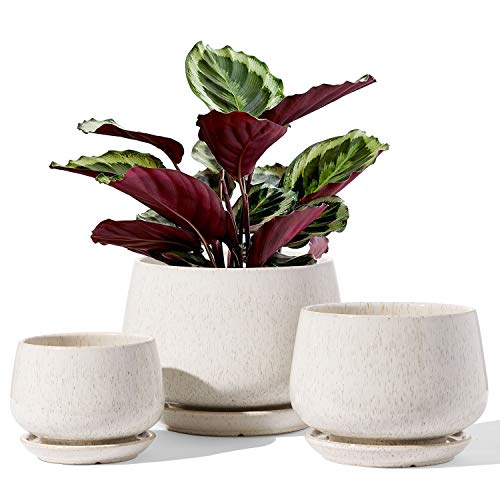
Bringing the Garden to You with Three Plant Pots: No garden? No problem! This set offers three plant pots of different sizes, ideal for your tabletop, bedroom, or even a spacious backyard or patio; Sizes: Large - 6.5" diameter, 5.8" height; Medium - 5" diameter, 4.5" height; Small (for succulents) - 4" diameter, 3.74" height

Ceramic Plant Pot: The ceramic pot is high temperature fired stoneware which are durable and lightweight that convenient for you to use

Classic Meets Modern: This plant pots seamlessly combines classical elegance with modern sophistication; whether in your home or office, in the living room or bedroom, this white plant pot effortlessly enhances your space, adding a touch of both tradition and contemporary style to your environment
4. Grouping of Small Succulents on a Coffee Table
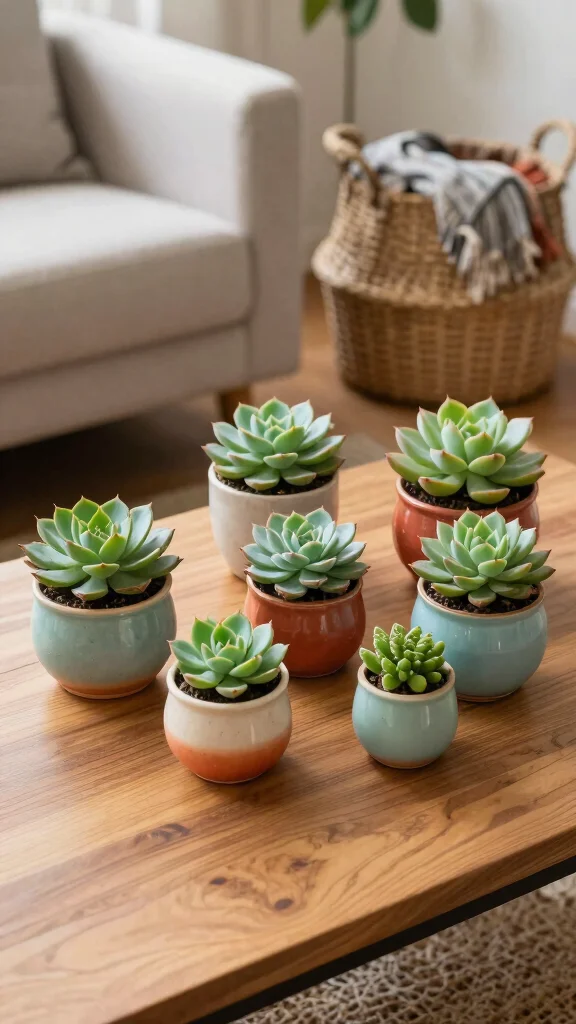
Small succulents are an excellent choice for adding a pop of greenery to your coffee table without overwhelming the space. Grouping different varieties together creates a captivating centerpiece that draws the eye. By selecting decorative pots that complement each other while varying in size and shape, you can create a visually intriguing arrangement.
To maximize this grouping, mix different textures and colors of succulents for added liveliness. You can find budget-friendly options at local nurseries or online stores, making this a simple yet impactful decor choice.
Consider these grouping tips:
– Arrange succulents at varying heights for a dynamic look.
– Use pots that share a color palette to maintain a cohesive feel.
– Rotate the arrangement occasionally for a fresh appearance.
This playful display not only brightens your living space but also invites a sense of warmth and comfort through its vibrant greenery.
Recommended Products
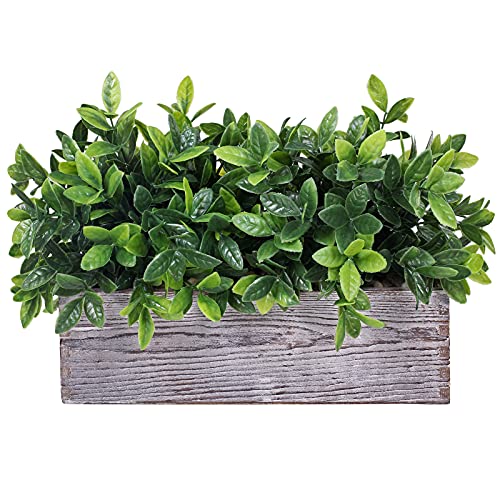
Quantity: Package includes 1 pcs Artificial Eucalyptus Plant securely arranged in a rustic rectangular wooden planter box that can be placed anywhere around the house.

【DESIGN】Artificial Flower Plants are well-designed, Composed of 1 flower ball and several flowers, the bottom is proportioned by a number of green leaves. Bright colors and generous style, perfect for the discerning you!

5. Ferns on Floating Shelves
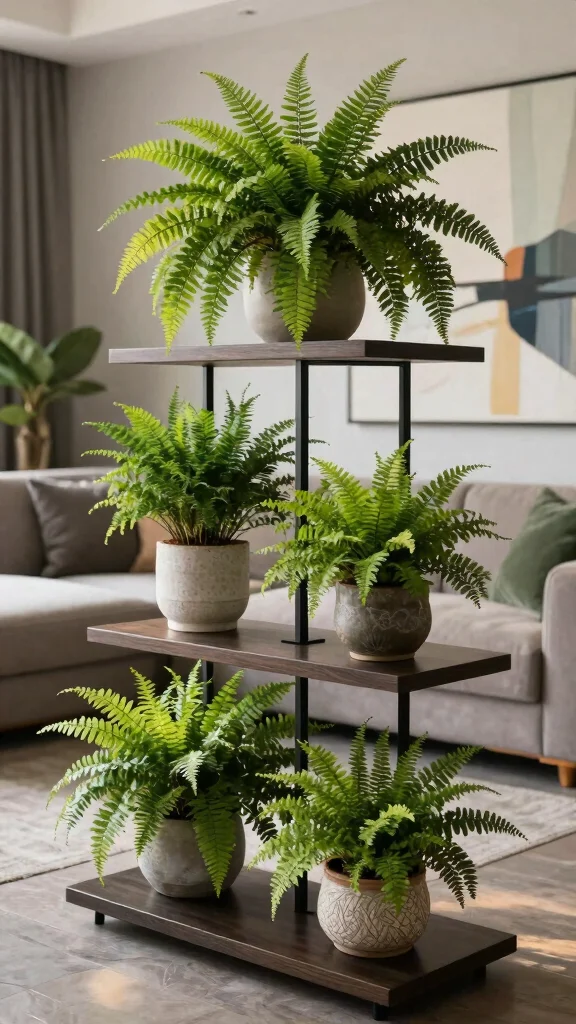
Ferns are exceptional low-light plants that introduce a lush, verdant feel to any room. Displaying them on floating shelves allows for an eye-level showcase, creating a beautiful visual interest. By incorporating various fern types, like the Boston fern or maidenhair fern, you can diversify the textures and shapes within your decor.
For display, mix ferns with other small plants or decorative items like books to create a cozy shelf vibe. Ensure your shelves are sturdy enough for pots, and look for budget-friendly options at local stores or markets.
Use these tips to enhance your display:
– Combine different fern types to achieve a rich texture.
– Use pots that contrast with the shelf color to create a striking effect.
– Add decorative elements for a personalized touch.
This design choice brings a fresh, natural aesthetic into your home, enhancing the overall atmosphere with organic beauty.
Recommended Products

HARDY INDOOR PLANT: Sansevieria Zeylanica is a low-maintenance houseplant for beginners
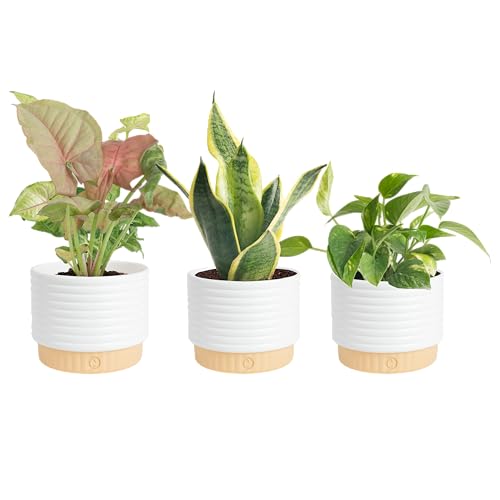
DECOR-READY LIVE INDOOR PLANTS: This 3-pack of houseplants offers incredible value to gift or instantly upgrade any space. Perfect for shelf, tabletop, or office desk. Varieties will vary — examples include Peace Lily, Snake Plant, Fern, and Pothos

6. Plants in a Multi-Tiered Plant Stand
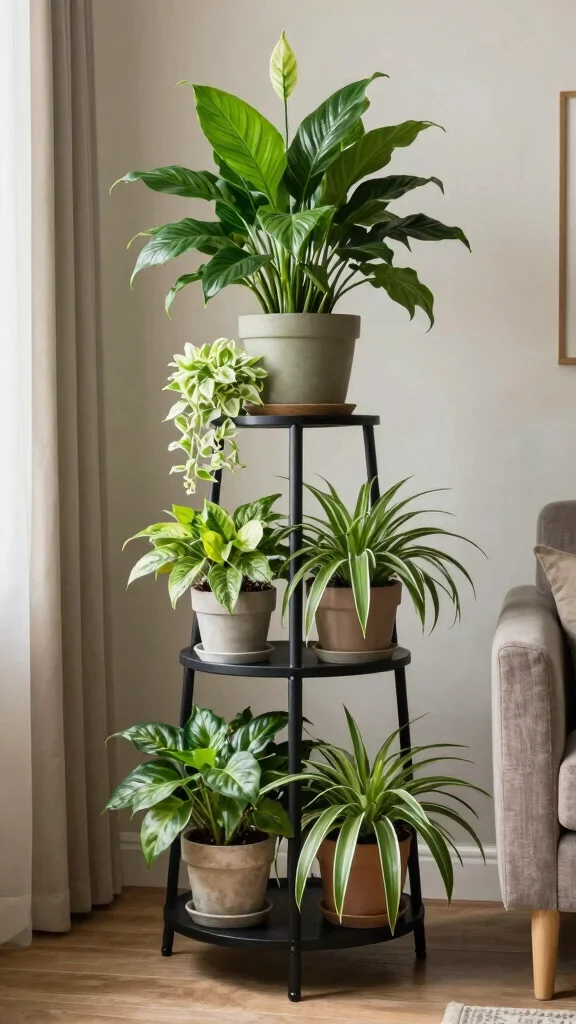
A multi-tiered plant stand is a wonderful solution for showcasing multiple plants in a compact space. This setup is especially beneficial for smaller living areas, allowing you to create a delightful green corner without cluttering the floor. Fill the stand with various low-light plants like peace lilies and spider plants for a vibrant display.
For a visually appealing arrangement, use pots of different sizes to create depth and interest. You can find affordable plant stands at home goods stores or online, making this an easy addition to your decor.
Keep these arrangement tips in mind:
– Position taller plants at the top and shorter ones below for a structured look.
– Consider adding decorative stones or pebbles in pots for a polished touch.
– Group plants by color or texture to enhance visual harmony.
This approach brings greenery into your living space, enhancing its charm and inviting a sense of tranquility.
Recommended Products

STRIKING LIVE HOUSEPLANT: The Everlasting ZZ features bold, upright architectural foliage that transitions in color as it matures, making it a dynamic, eye-catching addition to any modern home or office decor

SLEEK, STYLISH ROOM DÉCOR: The architectural upright leaves of a real ZZ Plant provide a modern, sleek look that defines minimalist home decor. An excellent, stylish live plant choice for an office desk, plant shelf, or tabletop
7. Monstera Deliciosa as a Focal Point
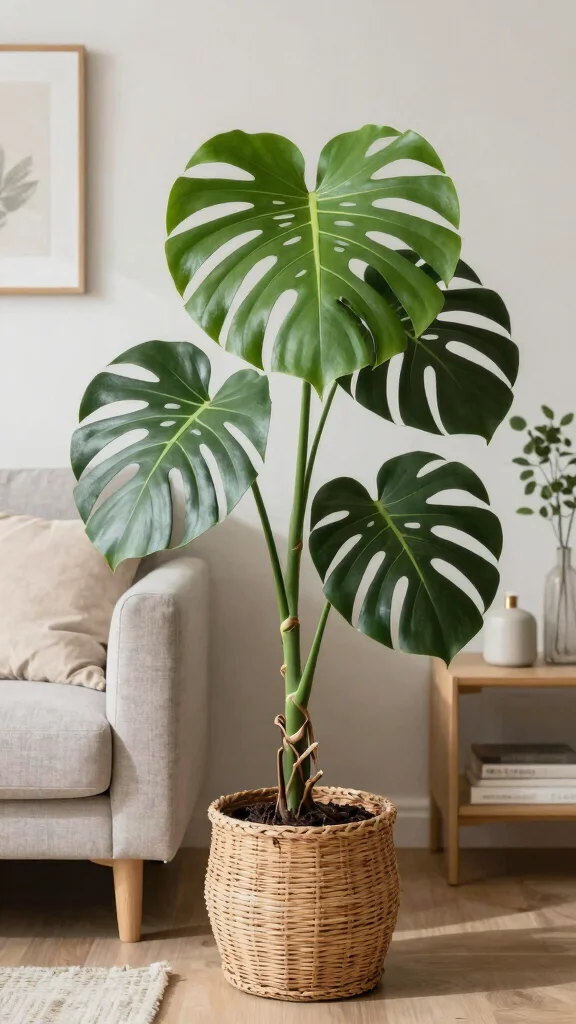
The Monstera Deliciosa, with its iconic split leaves, serves as a striking focal point in any living room. This tropical plant thrives in low light, making it a perfect centerpiece for your decor. Placing it in a decorative pot, whether bohemian rattan or sleek ceramic, can elevate its presence and complement your interior style.
To maximize its impact, position the Monstera in a prominent spot, such as next to a sofa or in an entryway. Keeping surrounding decor minimal allows this stunning plant to shine. For added drama, consider using a plant stand to elevate its height.
Try these tips for styling:
– Ensure it’s placed where it can receive adequate light and attention.
– Surround it with minimal decor to emphasize its beauty.
– Use a sturdy stand to enhance visibility and create a dramatic effect.
This design choice brings sophistication and a sense of nature into your home, enriching the overall aesthetic with its lush greenery.
Recommended Products

POT INCLUDED – White melamine pot comes with fake plants. It's Medium/Small Artificial Plants for Home Decor Indoor with Pot. (Silk Plants for Home Decor Indoor / Faux Hanging Plants Indoor)

Package Set: Package includes 4 pieces of artificial plants outdoor (pothos and mandala) in white pots, fake pothos are 27.5 inches long, fake mandalas are 23.1 inches long, pots are wide 2.56 inches, high 3.15 inches

EYE-CATCHING ROOM DÉCOR BUNDLE: Each two-pack includes a mix of stunning pothos plants like Golden Pothos, Baltic Blue, or Amplissimum, hand-selected for unique color, texture, and trailing charm. It's a surprise combo that looks amazing in any space
Ongoing Maintenance & Care Guide
Maintenance Schedule:
Daily/Weekly Tasks:
– Check the soil moisture of your indoor plants. If the top inch is dry, it’s time to water. This task takes about 5 minutes.
– Rotate your plants weekly to ensure even light exposure. This can help them grow more evenly and takes around 2 minutes.
– Dust the leaves gently with a damp cloth to keep them clean. This helps with photosynthesis and takes about 10 minutes each week.
Monthly/Seasonal Tasks:
– Fertilize your plants once a month during the growing season (spring and summer) with a balanced houseplant fertilizer. This usually takes about 15 minutes.
– Prune any dead or yellowing leaves monthly to encourage new growth. This task will take around 10 minutes.
– Inspect for pests and diseases every month. This check can take about 10 minutes, but it can save your plants from serious issues.
Maintenance Summary Table:
| Task | Frequency | Difficulty | Time Needed |
|—————————–|—————-|—————-|————–|
| Check soil moisture | Daily/Weekly | Easy | 5 minutes |
| Rotate plants | Weekly | Very Easy | 2 minutes |
| Dust leaves | Weekly | Easy | 10 minutes |
| Fertilize | Monthly | Easy | 15 minutes |
| Prune leaves | Monthly | Easy | 10 minutes |
| Inspect for pests | Monthly | Moderate | 10 minutes |
Common Issues to Watch For:
⚠️ Watch for these warning signs that indicate maintenance is needed:
– Yellowing Leaves: This often means overwatering or nutrient deficiency. Check the soil moisture and consider fertilizing.
– Wilting Leaves: Wilting can indicate underwatering. Check the soil and give your plant a good drink.
– Brown Leaf Tips: This usually suggests low humidity or underwatering. Increase humidity levels or check your watering routine.
– Sticky Residue on Leaves: This may signal a pest problem, such as aphids or mealybugs. Inspect your plants closely.
– Slow Growth: If your plant isn’t growing, it might need more light or nutrients. Evaluate its placement and feeding schedule.
Care Tips:
💡 Here are some practical tips for keeping your indoor plants in great shape:
– Choose the Right Location: Place your plants where they can receive the right amount of light. For low-light plants, avoid direct sunlight and look for bright, indirect light.
– Use Quality Pots: Decorative pots should have drainage holes. This prevents root rot by allowing excess water to escape.
– Group Plants Together: Cluster plants for added humidity. This is especially beneficial for tropical varieties like ferns and peace lilies.
– Monitor Temperature: Keep your indoor temperature between 60°F to 75°F. Avoid placing plants near drafts or heat sources, as this can stress them.
– Rotate Seasonal Plants: Change plants seasonally for variety and to keep your space fresh. Some plants thrive in summer, while others prefer winter’s cooler conditions.
With a little attention and care, your indoor plants will not only survive but thrive, enhancing your living room’s greenery and aesthetic. Keeping a consistent maintenance routine will ensure your indoor plant decor remains vibrant and beautiful year-round.
Recommended Products

VINTAGE DECOR: This elegant ceramic planter combines functionality and timeless charm, making it perfect for enhancing any indoor space.

【VERSATILE 3-POT SET 】- Includes large (6.75"D X 5.6"H), medium (5.6"D X 4.6"H), and small (4.2"D X 3.5"H) pots to accommodate various plant sizes, such as orchids, Iilies, bamboo, african violets, snake plants, peppermint plants, cactus, aloe and succulent plants.

【COMBINATION SETS IN DIFFERENT SIZES】The ceramic flower pots have three different sizes. They are suitable for growing most kinds of family/office, plants in both small and medium size, such as orchids, Iilies, bamboo, african violets, snake plants, peppermint plants, cactus, aloe and succulent plants.
8. Layered Plant Arrangement on a Console Table
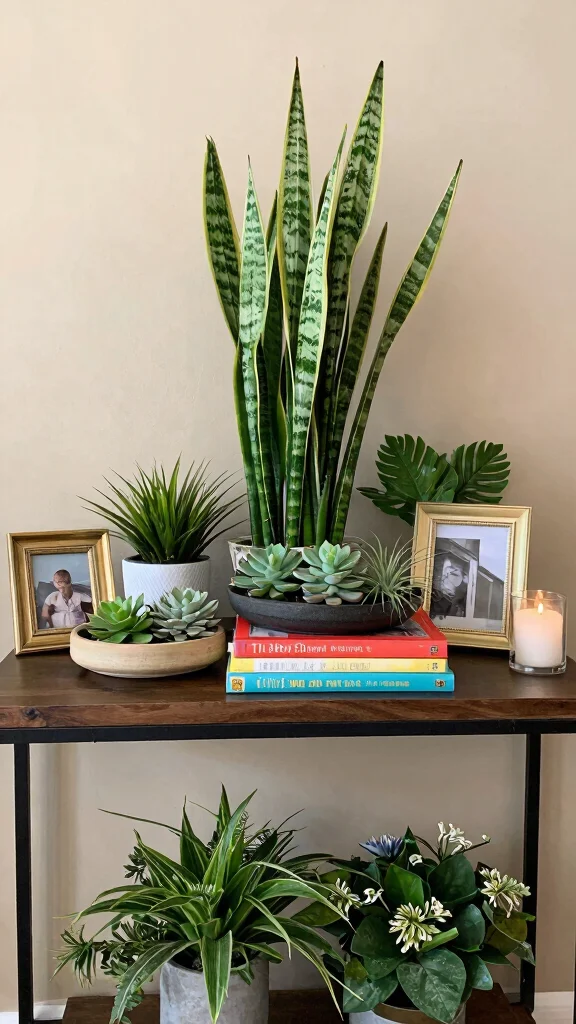
Console tables offer a fantastic opportunity to express your style through layered plant arrangements. By using plants of varying heights, you can create depth and visual appeal that enhances the space. Combining taller plants like snake plants with smaller succulents or air plants results in a dynamic display that draws the eye.
For a well-rounded arrangement, incorporate decorative trays or books beneath the plants to add texture and dimension. Using different pot sizes or plant stands can help achieve this layered look, making your decor more engaging.
Consider these arrangement tips:
– Place taller plants behind shorter ones to create depth.
– Mix in decorative objects like candles or framed photos for a personal touch.
– Experiment with different layouts until you find the perfect balance.
This approach not only enhances your living space’s visual interest but also invites a warm, inviting atmosphere into your home.
Layering plants on a console table makes my living room feel calmer and more alive. I mix tall snake plants with tiny succulents and toss in a few books for texture—proof that small touches go a long way in indoor plants decor living room.
Recommended Products

This realistic lavender arrangement features vibrant blooms and green grass nestled in natural pebbles, planted in a distressed white wooden planter. Its rustic appeal adds warmth and elegance to any space, perfect for enhancing your home décor effortlessly and the well-being of the viewer
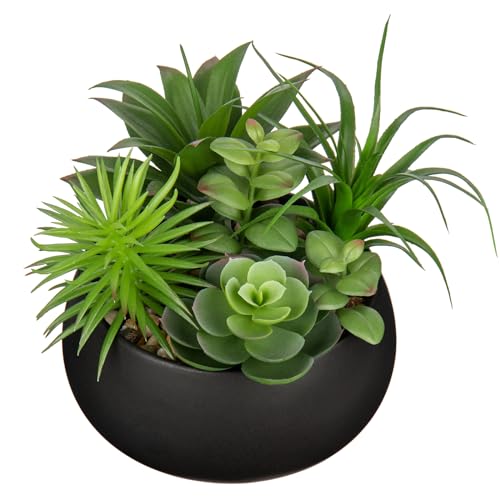
【HIGH QUALITY POTTED SUCCULENT】Black Each realistic fake plants are made of eco-friendly PE and ceramic vase. Each fake succulents in pots is solid and great textured in touch that is more lifelike naturalistic than others in the market. Large plants "Hollyone" brand assurance is worthy of your trust.

Size&Quantity: Contains four fake potted plants with flowers, each plant is 7.18" tall and 4.7" wide, and the pot is 2.76" tall and 2.56" wide
9. Using Terrariums for Unique Decor
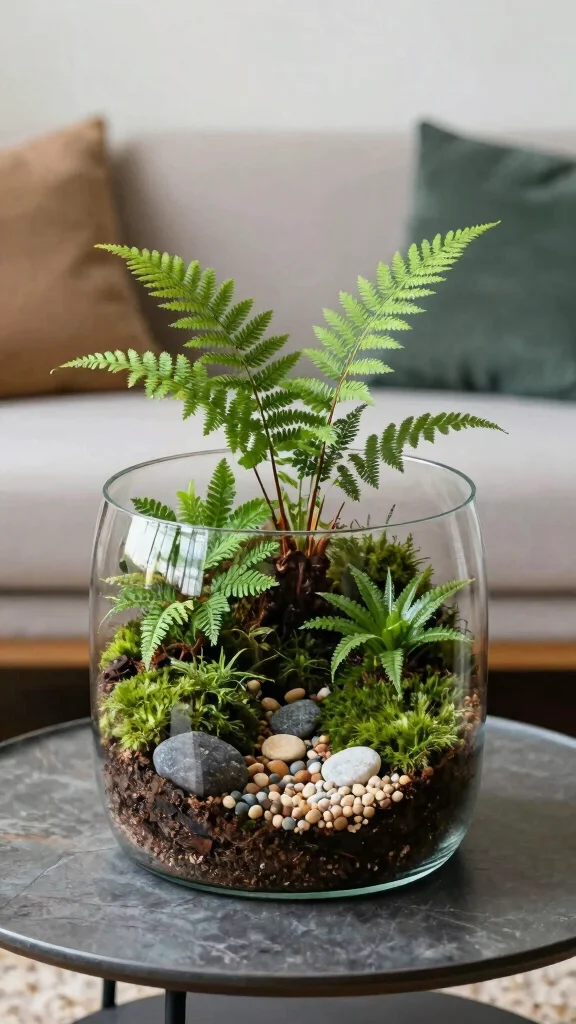
Terrariums provide a unique and creative way to display indoor plants, allowing you to create a miniature green world. These enclosed glass containers can house a variety of low-light plants, including ferns, moss, and small succulents, adding a touch of whimsy to your decor. They serve as fantastic conversation starters while fitting seamlessly into various design styles.
To create your terrarium, ensure proper drainage by adding pebbles or charcoal at the bottom, and layer soil carefully for depth. You can easily find terrarium supplies at craft stores, making this an accessible DIY project.
Here are some tips for styling:
– Incorporate decorative stones or figurines for a whimsical touch.
– Ensure plants within the terrarium receive adequate light.
– Consider varying plant heights for added visual interest.
This design choice not only showcases your plants in a unique setting but also brings a delightful, refreshing atmosphere to your living space.
10. Air Plants in Creative Holders
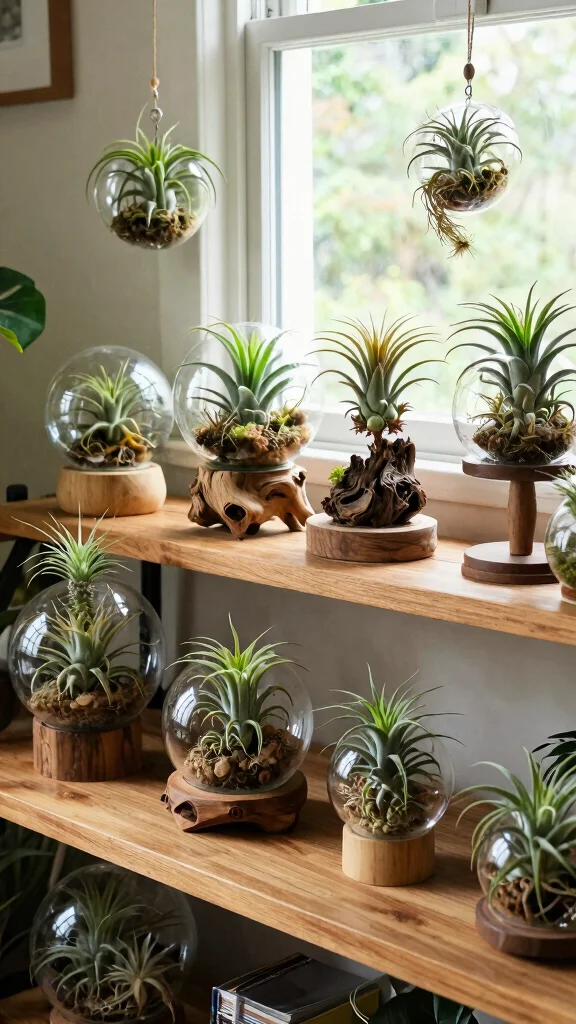
Air plants, or Tillandsia, are fascinating because they don’t require soil to grow. Their unique nature allows for a variety of creative displays, using holders like glass globes, driftwood, or hanging terrariums. This versatility encourages a playful and unconventional approach to indoor plant decor, making them perfect for any style.
To showcase air plants effectively, consider grouping several together for a striking effect. You can find creative holders in various styles at home décor stores, making it easy to find something that fits your aesthetic.
Use these display tips:
– Choose holders that match your overall decor style.
– Arrange air plants in groups for maximum impact.
– Ensure they receive enough light, thriving in bright, indirect sunlight.
This creative display not only enhances your decor but also invites a sense of fun and uniqueness into your living space.
11. Rustic Window Sill Garden
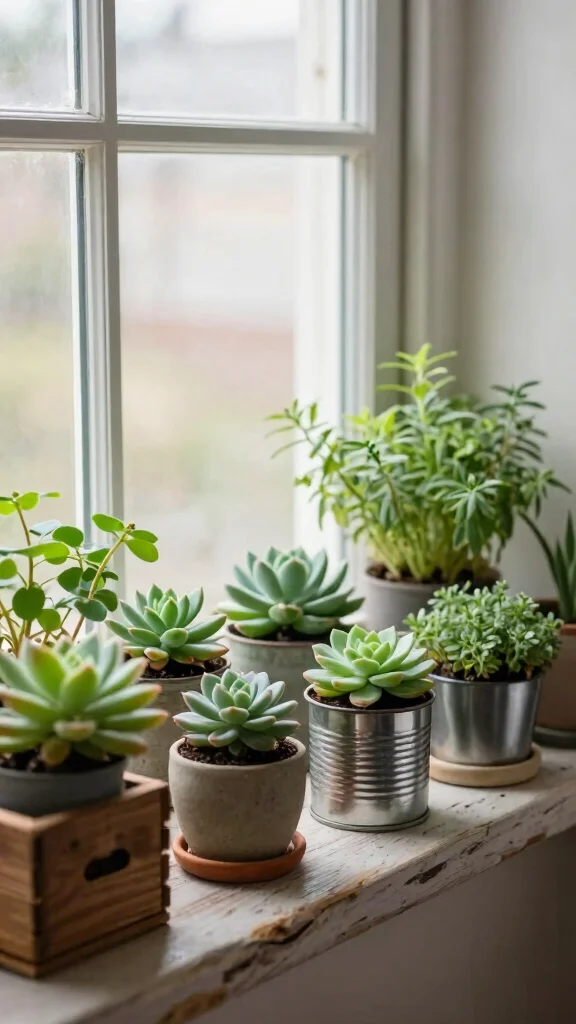
Transform your window sill into a charming rustic garden by featuring an assortment of low-light plants. Using small pots or unique containers like tin cans or wooden boxes can add a casual charm while bringing life to your living room. Mixing herbs, succulents, and flowering plants creates a fragrant and visually appealing display.
For an effective window sill garden, ensure your plants receive adequate sunlight. Rotate them regularly to promote balanced growth and consider a cohesive color palette for pots to unify the look.
Keep these tips in mind:
– Add decorative elements like stones or fairy lights for extra flair.
– Use a mix of plant heights for visual interest.
– Choose plants that thrive well in your window’s light conditions.
This design choice adds a lively and refreshing touch to your home, creating a welcoming atmosphere with its organic beauty.
12. Colorful Pots for Accent Plants

Brightly colored pots can bring an uplifting vibe to your indoor plants, infusing energy into your living room. Hues like teal, mustard yellow, or coral not only showcase your favorite low-light plants, such as peace lilies or Chinese evergreens, but also create a joyful atmosphere. Mixing and matching pots can enhance the eclectic feel of your decor.
To optimize this look, select plants with solid green leaves that allow the vibrant pots to take center stage. You can find colorful pots at home goods stores or online, making it easy to incorporate this fun element into your decor.
Consider these accent pot tips:
– Use pots with patterns for added visual interest.
– Position colorful pots on low shelves or side tables for easy visibility.
– Experiment with arrangements to see what brings the most joy to your space.
This playful approach adds a cheerful touch to your decor, enhancing the overall aesthetic with vibrant colors.
13. Vertical Plant Wall for Small Spaces
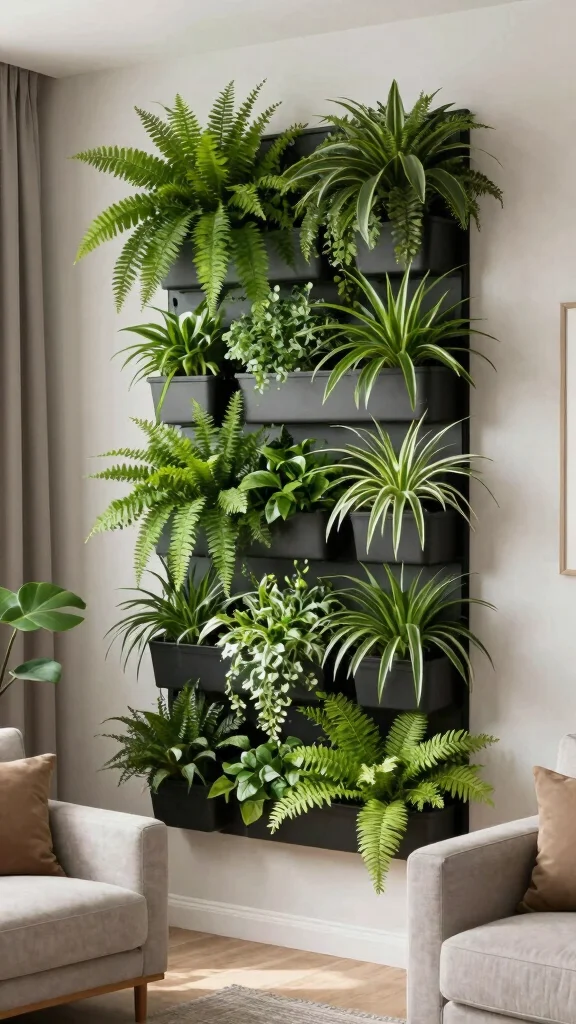
If you’re short on space, a vertical plant wall is an excellent solution for showcasing greenery while maximizing your living area. This concept allows you to grow multiple plants in a compact footprint, using wall-mounted planters or hanging systems to create a stunning green wall. Low-light plants such as ferns and spider plants are ideal for this arrangement.
For best results, choose a variety of plants to create a beautiful tapestry of textures and colors. Ensure that your wall is structurally sound enough to support the weight of the plants and pots, and locate it near a source of natural light for optimal growth.
Keep these vertical wall tips in mind:
– Mix different plant types for a more engaging look.
– Position the wall where it can easily be admired.
– Ensure easy access for maintenance and watering.
This design choice not only adds greenery to your home but also creates a striking visual statement that enhances your living environment.
14. Repurposed Items as Plant Holders
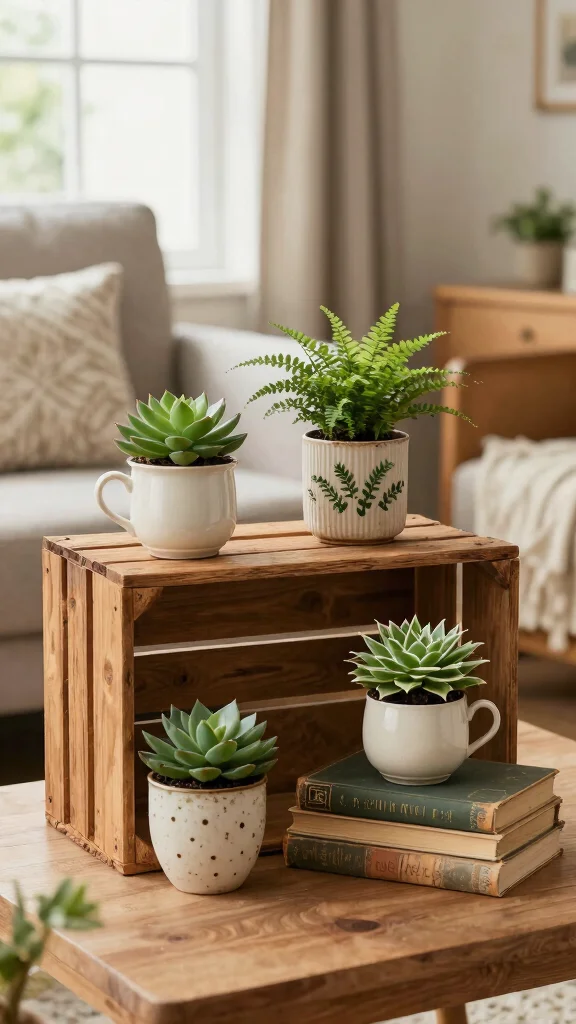
Get creative by repurposing items as charming plant holders! Old teacups, wooden crates, and vintage books can all serve as unique containers for your plants. This approach adds character and personality to your living room while showcasing your greenery in unexpected ways.
When selecting plants for repurposed items, ensure they fit well and have proper drainage. Consider using low-light plants that don’t require extensive care to thrive in these creative containers.
Here are some repurposing tips:
– Clean and prepare your chosen items before use—add drainage holes if necessary.
– Mix materials and styles for a playful arrangement.
– Place repurposed holders on bookshelves or coffee tables for delightful pops of greenery.
This fun approach brings an element of whimsy into your home, inviting a sense of creativity and charm.
Did you know that 80% of repurposed plant holders succeed when they include drainage and proper lighting? From teacups to wooden crates, quirky containers give low-light indoor plants a stylish, low-maintenance home for indoor plants decor living room vibes—without sacrificing care or charm.
15. Layering Plants with Decorative Objects
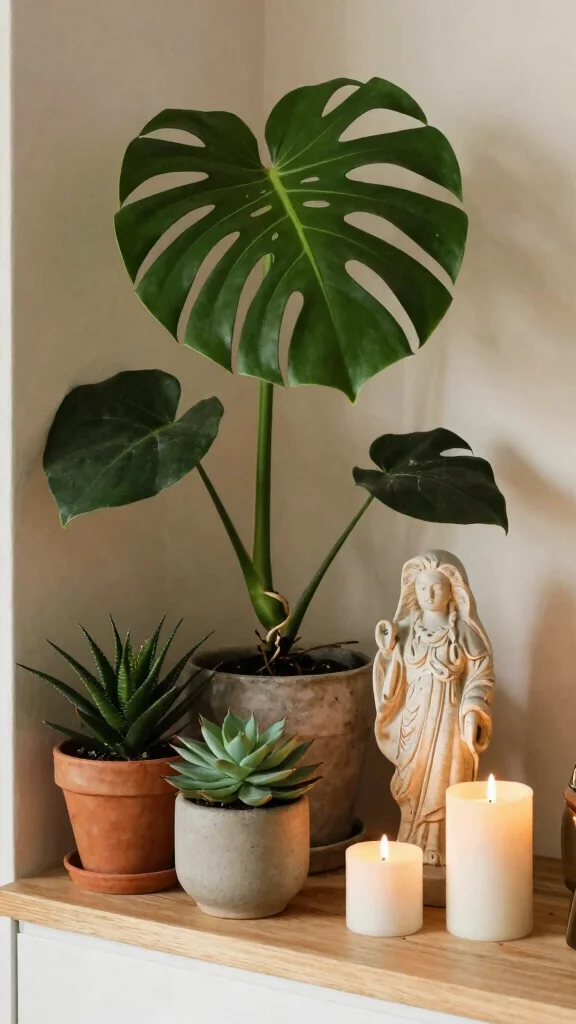
Layering plants with decorative objects adds depth and visual interest to your living room decor. By placing plants of various heights next to items like books, sculptures, or candles, you can create a dynamic and engaging look that enhances the overall aesthetic. This technique allows your plants to shine against unique backdrops while creating a harmonious arrangement.
For effective layering, position taller plants behind shorter ones to create dimension. Incorporating different textures in your decorative items can complement the plants beautifully, creating a balanced design.
Keep these layering tips in mind:
– Experiment with arrangements until you find what feels harmonious.
– Use decorative elements that resonate with your style.
– Consider the overall color palette for a cohesive look.
This design choice not only enhances the visual appeal of your space but also invites a sense of warmth and creativity into your home.
16. Seasonal Decor with Indoor Plants
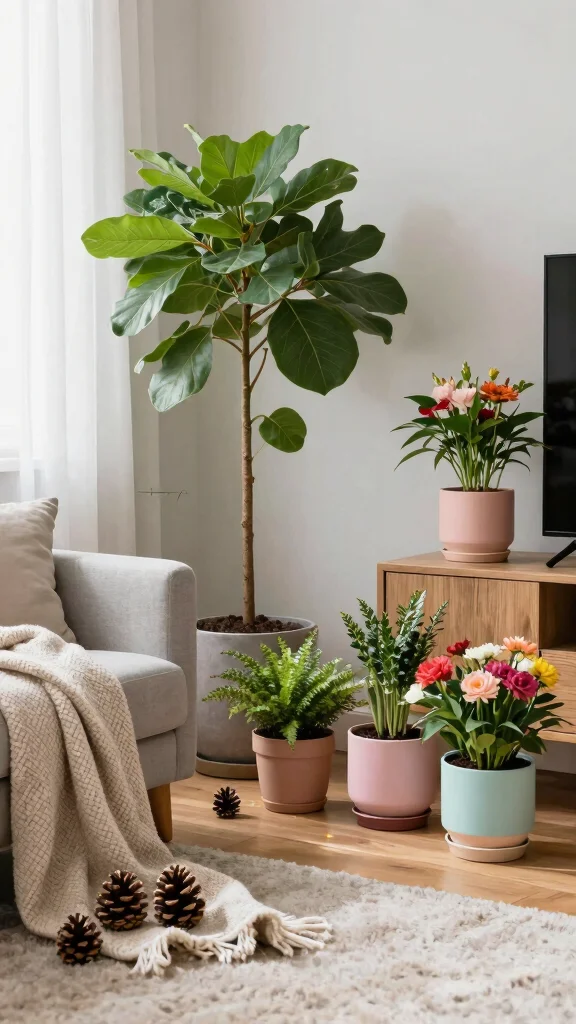
Incorporating seasonal decor with your indoor plants creates a fresh and inviting look throughout the year. By changing out decorative pots or arranging plants with seasonal accents, such as pinecones in winter or flowers in spring, you can add a festive touch that enlivens your living room.
For a practical approach, maintain neutral pots year-round and swap out decorative elements as the seasons change. Using plants that bloom or change with the seasons can enhance this effect, keeping your decor lively and engaging.
Consider these seasonal tips:
– Coordinate your colors with the overall decor theme for a unified look.
– Use seasonal plants to add variety to your arrangements.
– Rotate decorations to keep the space feeling fresh and exciting.
This dynamic approach not only enhances your decor but also invites a sense of joy and celebration into your home.
17. Textured Fabrics Complementing Plants
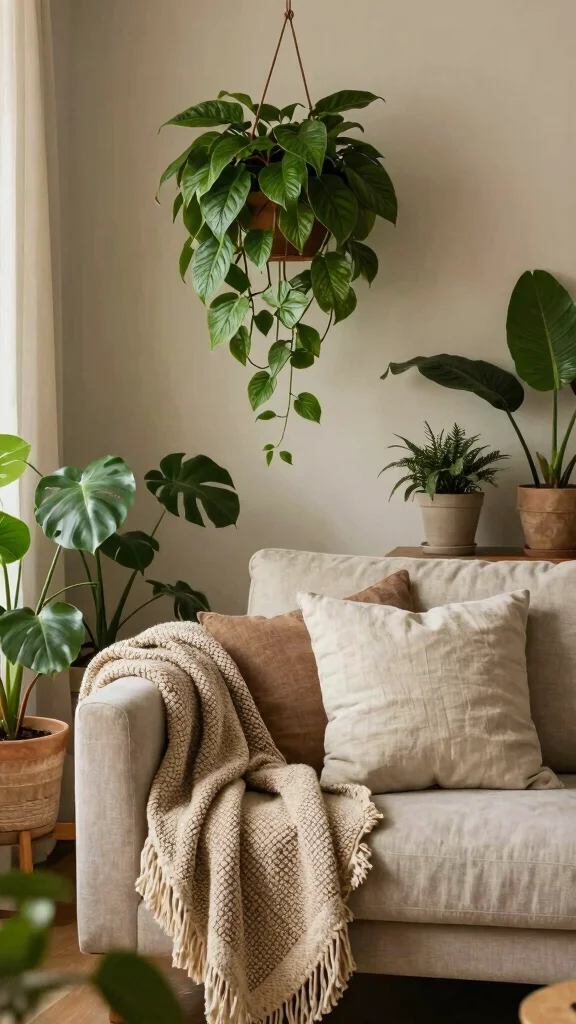
Pairing your indoor plants with textured fabrics like woven throws, linen cushions, or macrame hangers enhances the visual appeal and adds warmth to your living space. This combination celebrates natural materials, creating a cohesive look that beautifully complements your greenery.
To achieve a harmonious design, select colors that harmonize with your plants’ leaves, creating a unified aesthetic. Layering textiles around your plants adds dimension and richness, inviting comfort into your home.
Use these textile tips:
– Incorporate soft fabrics to soften the hard surfaces of pots or furniture.
– Explore different textures to create visual interest.
– Consider seasonal fabrics to keep your decor fresh and inviting.
This thoughtful approach enriches your living space, enhancing its beauty and inviting a cozy, welcoming atmosphere.
18. DIY Plant Frame for a Unique Display
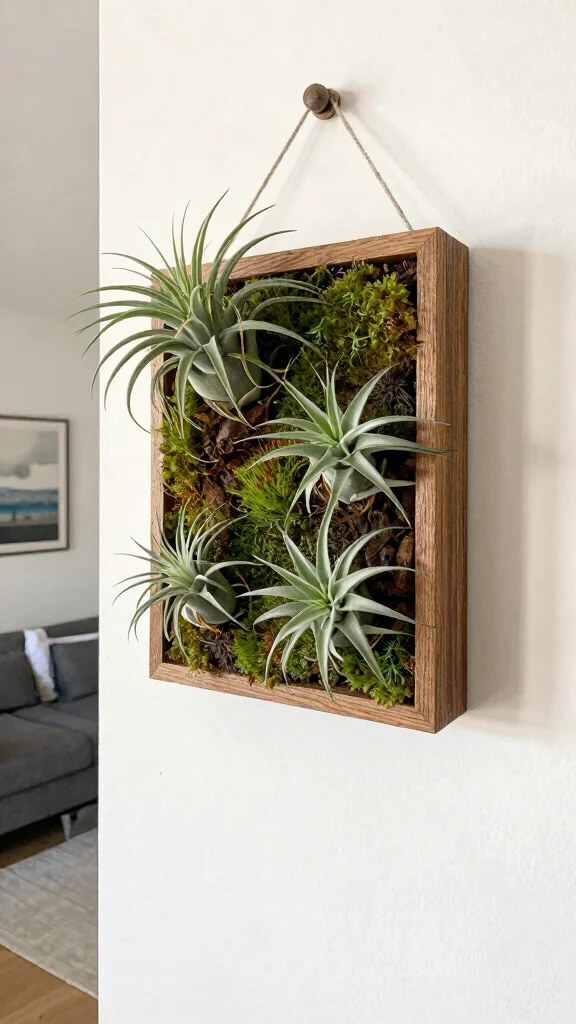
Creating a DIY plant frame offers a fun and imaginative way to showcase your indoor greenery. This living picture frame can feature moss, air plants, or small ferns, allowing you to merge art and gardening in a striking way. It serves as a captivating focal point in your living room while being a unique conversation starter.
For your plant frame, consider using a wooden frame for a rustic touch or metal for a modern look. Ensure the plants receive proper care and light to thrive within the frame, creating a vibrant display.
Here are some DIY tips:
– Add decorative elements like stones for an extra touch of creativity.
– Securely attach plants to ensure they remain healthy and vibrant.
– Experiment with different frame styles to match your decor.
This creative display not only enhances your decor but also invites a sense of innovation and charm into your living space.
19. Seasonal Indoor Plant Rotation
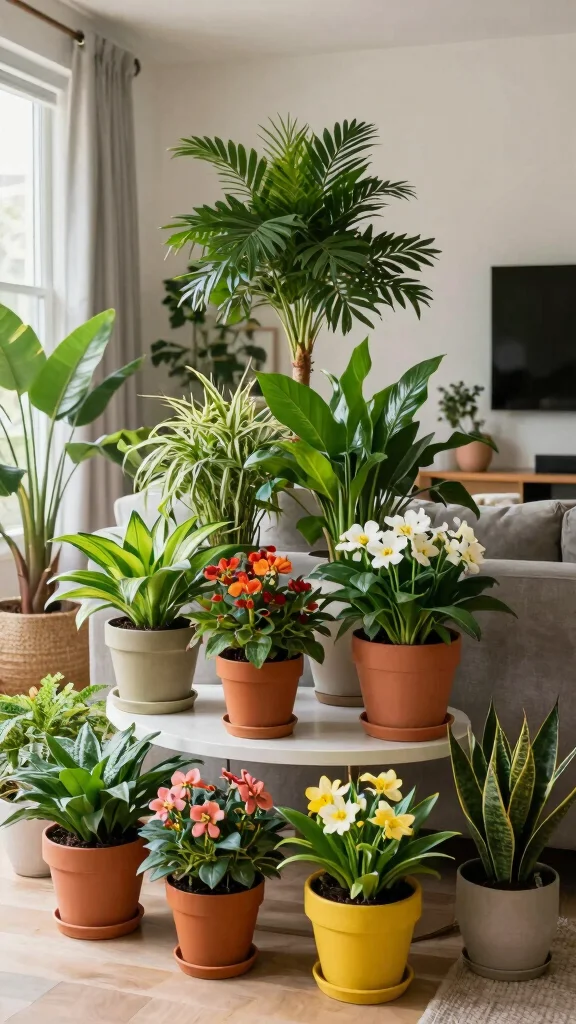
Rotating your indoor plants seasonally keeps your living space feeling fresh and exciting. By changing out plants that thrive in different seasons, you can create new arrangements that reflect the changing atmosphere. For example, swapping flowering plants in spring for lush greenery in winter can invigorate your decor.
To organize your seasonal rotation, keep a record of which plants thrive during specific times of the year and their optimal conditions. This planning allows for smoother transitions and helps maintain the health of your plants throughout the seasons.
Consider these rotation tips:
– Store out-of-season plants carefully to preserve their health.
– Refresh pots and decor to match the new seasonal theme.
– Use this opportunity to experiment with arrangements and placements.
This seasonal strategy not only revitalizes your decor but also brings a sense of connection to nature as the seasons change.
Conclusion
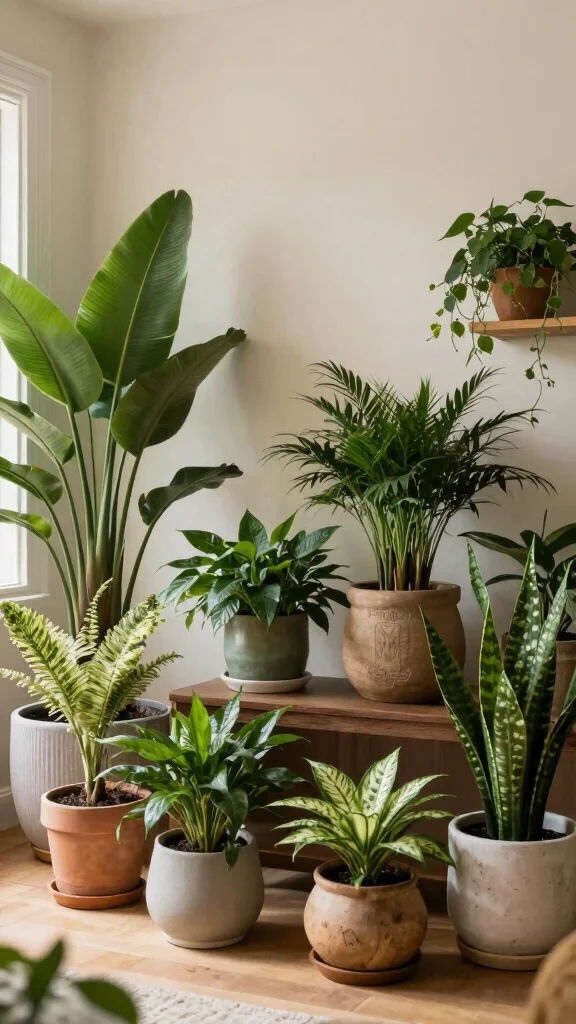
Bringing indoor plants into your living room offers not just visual appeal but also a sense of tranquility and freshness.
With these 19 low-light plant decor ideas, you can easily elevate your space and create a cozy, inviting environment. The beauty of indoor plants is not only in their aesthetics but also how they connect us to nature, even within the walls of our homes. Don’t hesitate to experiment with different styles and arrangements that resonate with your taste!
Frequently Asked Questions
What are the best low-light houseplants for indoor plants decor living room?
For a cozy, low-light living room, try Snake Plant (Sansevieria), ZZ Plant (Zamioculcas zamiifolia), Pothos, Cast Iron Plant (Aspidistra elatior), and Peace Lily (Spathiphyllum). They’re forgiving and give reliable living room greenery.
Place them near windows or under indirect light for best growth. Water sparingly—let the top inch of soil dry before watering. Rotate plants every few weeks to keep growth even. Pair them with decorative pots for plants to create a cohesive indoor plants decor living room look and support indoor plant styling.
How can I arrange indoor plant decor to maximize living room greenery without clutter?
Start with a trio of plants at varying heights using stands, shelves, and wall-mounted planters.
Keep a focal plant near a light source and use a cohesive color palette for pots to support indoor plant arrangement and decorative pots for plants.
Create vertical layers with trailing vines on higher shelves or a wall trellis and use odd-number groupings for visual balance, perfect for living room greenery.
Can decorative pots for plants improve low-light plant health and style?
Absolutely. Look for pots with drainage to prevent soggy roots and consider breathable materials like terracotta for better moisture balance.
Coordinate pot colors with your furniture and use liners if you’re re-potting. Regularly wipe dust from the exterior to keep your houseplant decor tips on point and maintain indoor plants decor living room cohesion.
Pro tip: choose different heights and textures in decorative pots for a dynamic indoor plant styling effect.
How often should I water low-light indoor plants in a living room?
Watering depends on pot size, soil, humidity, and light, but for most low-light houseplants, check weekly and water when the top 1-2 inches of soil are dry.
Always use pots with drainage and avoid leaving standing water. In a living room with indirect light, evaporation is slower, so you may water every 7–14 days instead of more frequent intervals. Feel the soil or a leaf to confirm moisture and adjust as needed. This fits well with indoor plants decor living room and houseplant decor tips.
What maintenance tips help keep living room greenery thriving in a low-light environment?
Regular maintenance is key. Dust leaves monthly to maximize photosynthesis and keep pests away, rotate plants monthly so all sides get light, prune leggy growth to keep shape, and fertilize lightly in spring and summer following product directions.
Group plants with similar water needs and be mindful of humidity—consider pebble trays or a humidifier for tropical varieties. With these indoor plant styling and indoor plants decor living room habits, your greenery stays cohesive and healthy.
Related Topics