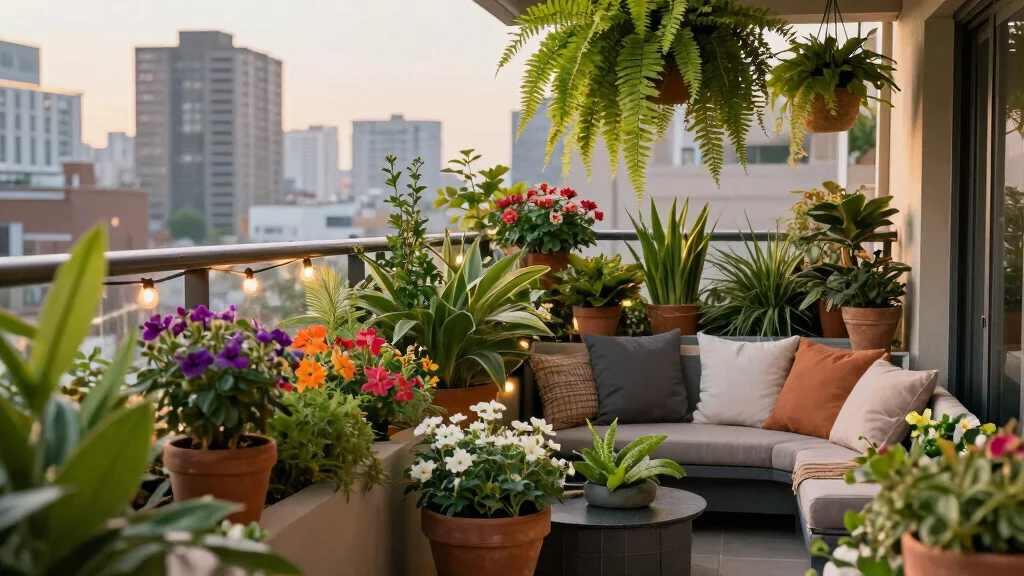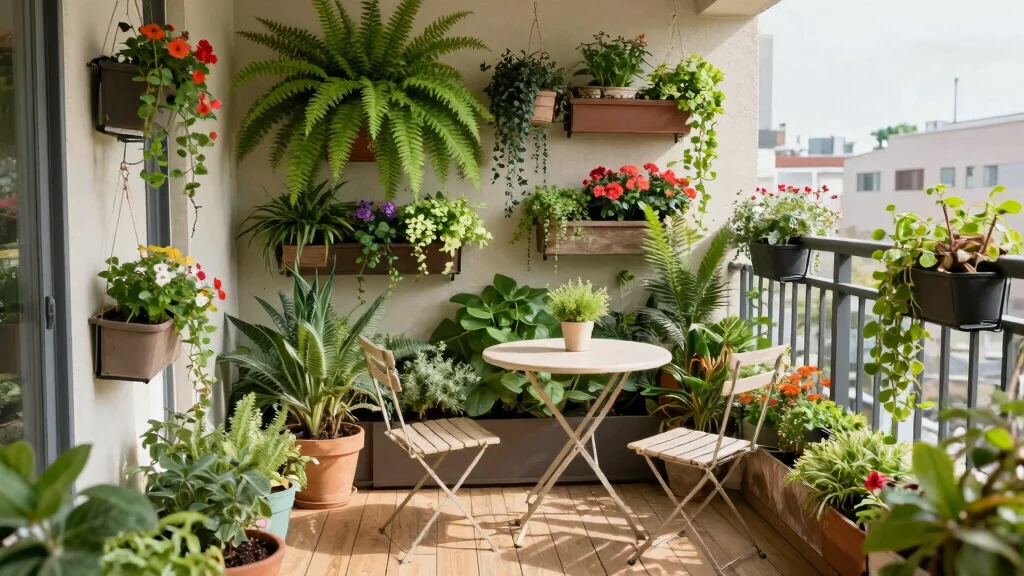

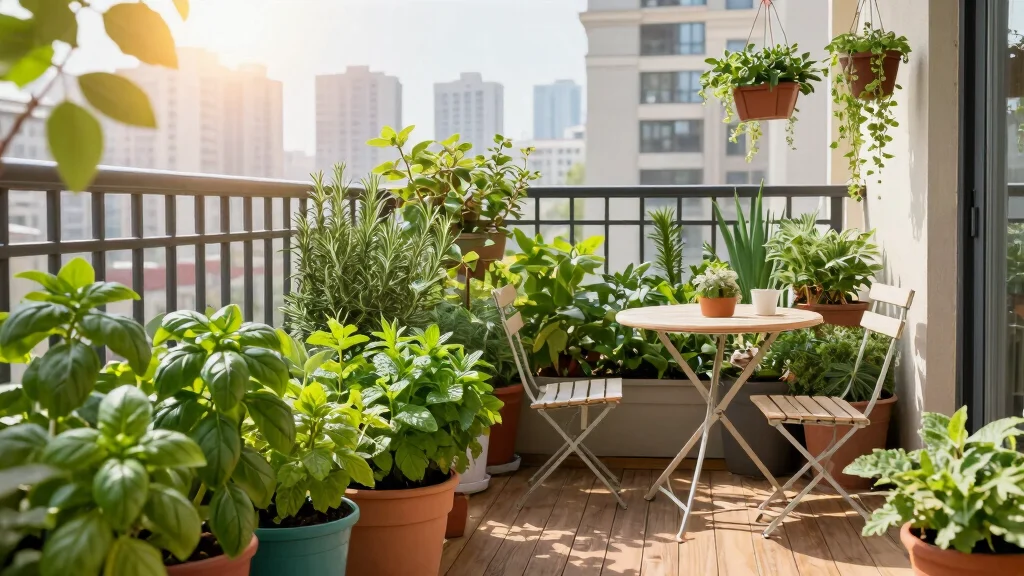
Creating a balcony herb garden apartment is more than just a trend; it’s a delightful way to bring nature into your urban lifestyle. If you’ve ever craved the fresh taste of homegrown herbs or longed for the soothing sight of green plants while sipping your morning coffee, this post is for you. Whether you’re an experienced gardener or a novice looking to dip your toes into the world of container gardening, you’ll find a treasure trove of ideas here.
This guide is tailored for urban dwellers who often face the challenge of limited space. If you have a balcony, a small patio, or even a sunny windowsill, you can create a lush herb garden that not only adds flavor to your meals but also enhances your living space. You’ll discover 16 easy-to-implement balcony herb garden ideas that are practical, creative, and perfect for small spaces. Get ready to transform your apartment into a mini herb haven, where you can grow everything from basil to mint, right at your fingertips.
What you’ll gain from this blog post is a clear understanding of various approaches to urban gardening. You’ll learn about vertical gardens, container setups, and creative planting methods that suit any balcony size. With simple steps and practical tips, you’ll be on your way to growing your own fresh herbs in no time. Let’s dive into these inspiring balcony herb garden apartment ideas!
Key Takeaways
– Vertical Herb Garden: Maximize your space by growing herbs vertically using wall-mounted planters or shelves, making it easier to maintain and harvest.
– Window Box Gardening: Install window boxes on your balcony railing to utilize every available inch and create a lovely view of fresh herbs.
– Container Gardening: Use pots and containers of different sizes to grow a variety of herbs, ensuring good drainage and easy mobility.
– Hanging Herb Baskets: Save floor space by hanging baskets from hooks or rails, providing a unique look while growing herbs like oregano and parsley.
– DIY Herb Markers: Enhance your gardening experience by creating personalized markers for your herbs, making it easy to identify your plants while adding a decorative touch.
1. Vertical Herb Garden
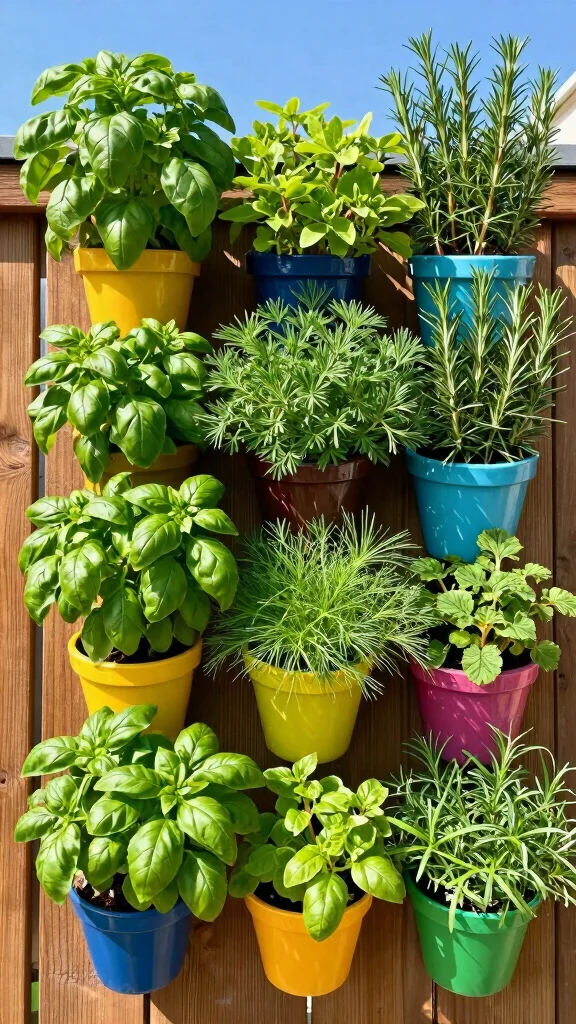
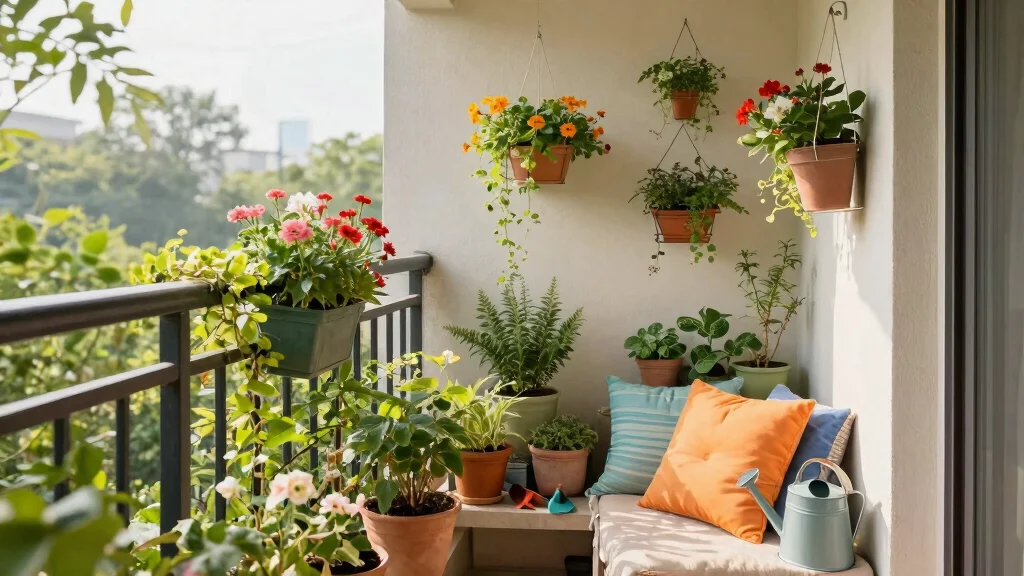
Looking to maximize your balcony space while keeping it green? A vertical herb garden is the perfect solution! With wall-mounted planters or repurposed pallets, you can create a vibrant greenery display that breathes life into your walls. Not only does it save space, but it’s also a feast for the eyes, making it easy to grab fresh herbs for your meals right from your wall.
Consider planting herbs like thyme, oregano, and chives, as they thrive in shallow soil. Ensure you use well-draining containers to protect your wall from moisture damage. Here are some tips for a flourishing vertical herb garden:
– Use lightweight containers to avoid wall damage.
– Position your garden in a sunny spot.
– Water regularly but watch for overwatering.
This approach not only provides fresh herbs but also transforms your balcony into a lush escape.
Did you know a vertical herb garden on a balcony can double your leafy harvest in just 6 square feet? Wall-mounted planters let thyme, oregano, and chives thrive with shallow soil, right where you cook. Balcony herb garden apartment life just got easier and greener.
How To Choose The Right Planters for Your Balcony Herb Garden
When starting a balcony herb garden apartment, choosing the right planters is essential for success. The right containers can make all the difference in how well your herbs thrive in small spaces. Here’s how to select the best planters for your urban gardening journey:
1. Size Matters
Choose planters that fit your space and the herbs you want to grow. Larger containers can hold more soil and moisture, benefiting plant health. For instance, a 12-inch pot is ideal for herbs like basil and oregano, while smaller herbs like chives can do well in 6-inch pots. Make sure not to overcrowd your plants; give them enough space to grow.
2. Drainage is Key
Good drainage prevents root rot and keeps your herbs healthy. Look for pots with drainage holes at the bottom. If you prefer a pot without holes, consider adding a layer of pebbles at the bottom to allow excess water to escape. You can also drill holes into ceramic or plastic pots as a DIY solution.
3. Material Choices
The material of your planter can affect how well your herbs grow. Plastic is lightweight and retains moisture well, making it great for beginners. Terracotta pots are porous and allow air to reach the roots but dry out quickly; they are perfect for herbs that prefer drier conditions. Wooden planters add rustic charm but ensure they are treated to avoid rot.
4. Style and Aesthetics
Your planters should complement your balcony’s style. Choose pots that match your personal taste, whether that’s modern, rustic, or colorful. Hanging planters can save space while adding visual interest. Look for unique designs that incorporate textures to liven up your outdoor area!
5. Mobility
Consider how easy it is to move your planters. If your balcony gets varying sunlight during the day, having pots with wheels or lighter materials can help. You might want to reposition them for optimal sunlight exposure or to protect them from harsh weather. This flexibility can greatly enhance your growing experience.
6. Budget-Friendly Options
While it’s tempting to go for high-end planters, there are budget-friendly options available. Look for sales at home improvement stores or consider upcycling old containers. Just make sure they’re clean and have drainage. You can create an eco-friendly garden without breaking the bank!
Pro Tip: To enhance growth, use potting mix specifically designed for herbs. This mix provides the right nutrients and drainage for your plants, giving them the best chance to flourish in your balcony herb garden!
By carefully considering these aspects, you can create a flourishing balcony herb garden apartment that not only beautifies your space but also provides fresh herbs for your culinary adventures. Happy planting!
2. Window Box Gardening
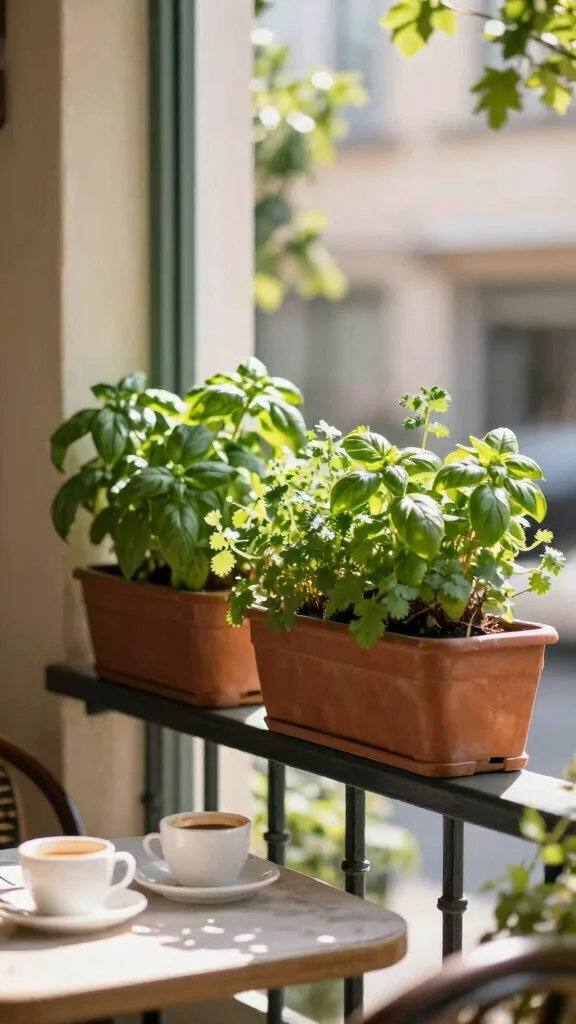
Craving a classic touch for your balcony? Window boxes are a charming way to grow your herbs! These narrow containers can be placed on railings or mounted under windows, offering both function and beauty. Imagine fresh parsley, cilantro, and basil thriving right outside your window, ready for your culinary adventures.
Choose a box with drainage holes to keep your herbs healthy. Here are some benefits of window boxes:
– Easy access for watering and harvesting.
– Beautifies your balcony and enhances your indoor view.
– Perfect for limited space.
Regularly prune your herbs to keep them bushy and vibrant. Plus, window boxes are a great way to spark conversations with curious neighbors!
3. Container Gardening
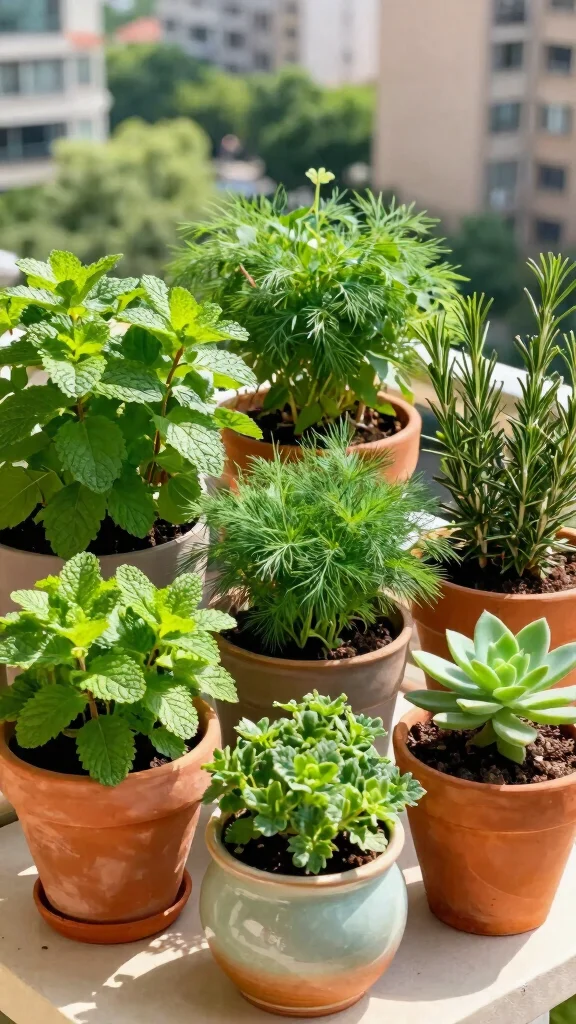
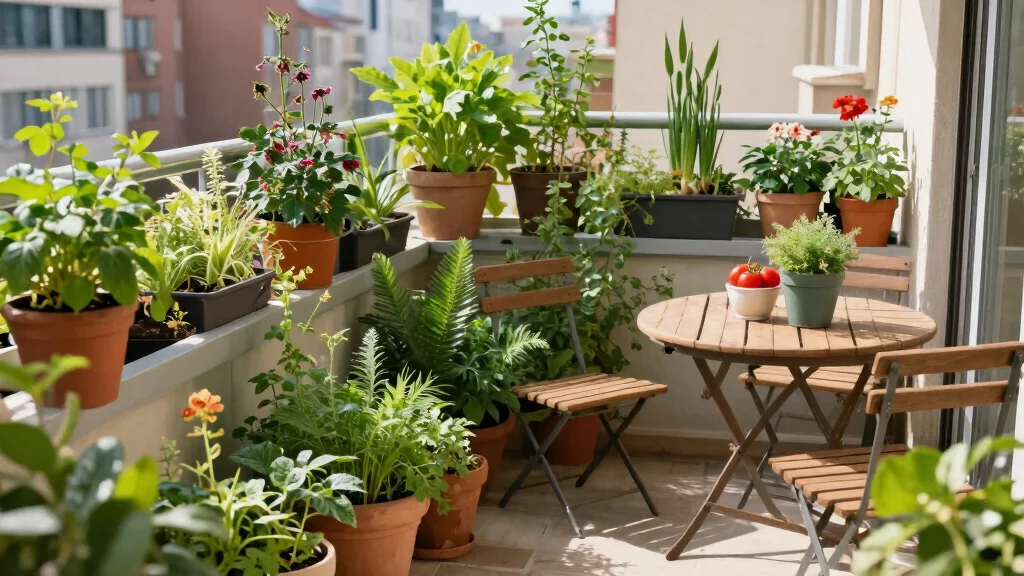
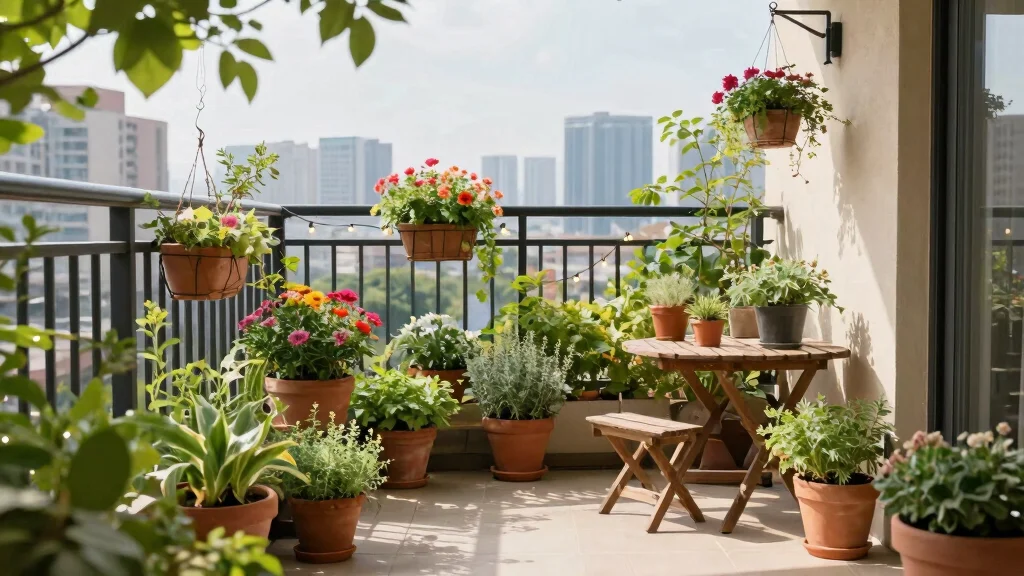
Want to cultivate herbs in a small space? Container gardening is your best friend! With a variety of shapes and sizes, you can create a personalized herb oasis that reflects your style. Use materials like terracotta, ceramic, or recycled plastic, ensuring proper drainage for healthy plants.
Herbs like rosemary, mint, and dill thrive in containers with sufficient sunlight and care. Follow these best practices:
– Opt for potting soil for better drainage.
– Group containers for a visually appealing arrangement.
– Choose lightweight pots for easy movement.
Container gardens are functional and can add a splash of color to your balcony. Mix and match different sizes and shapes for stunning displays!
Fun fact: A sunny balcony can fit 4–6 containers and yield fresh rosemary, mint, and dill all season. Proper drainage and potting soil keep herbs thriving, turning a balcony herb garden apartment into a harvest-ready oasis.
4. Hanging Herb Baskets
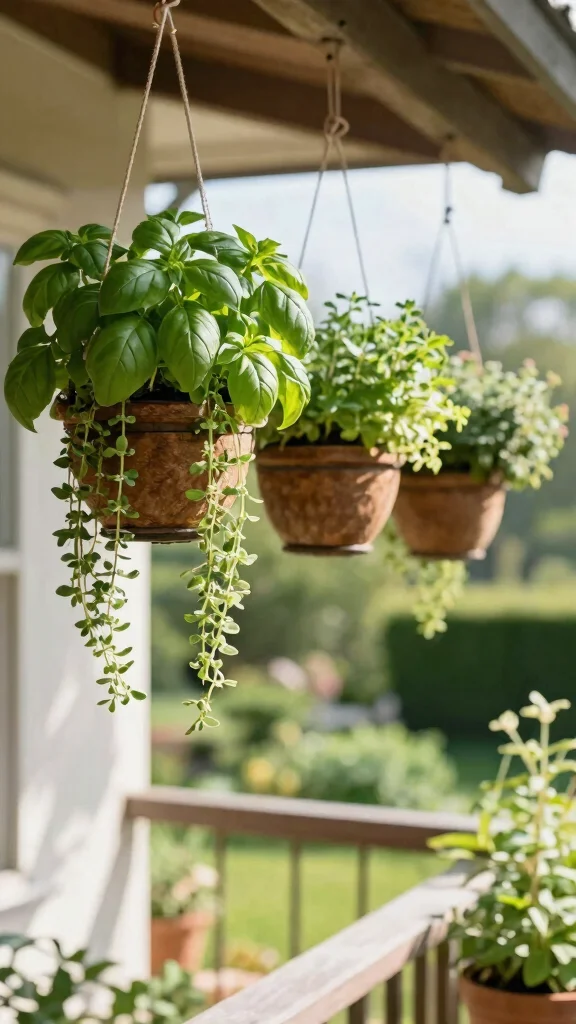
Elevate your gardening game with hanging herb baskets! These eye-catching arrangements save floor space and add dimension to your balcony. Hang them from ceilings or walls for a lush, layered look. Imagine strawberries, trailing basil, and creeping thyme cascading down, ready for your kitchen.
Choose lightweight baskets that allow for good airflow. Here are some tips for success:
– Use sturdy hooks or brackets for secure hanging.
– Regularly check moisture levels, as hanging baskets can dry out quickly.
– Mix trailing and upright herbs for added visual appeal.
Hanging baskets create a whimsical atmosphere and make herb maintenance easy without taking up precious floor space.
5. Herb Spiral
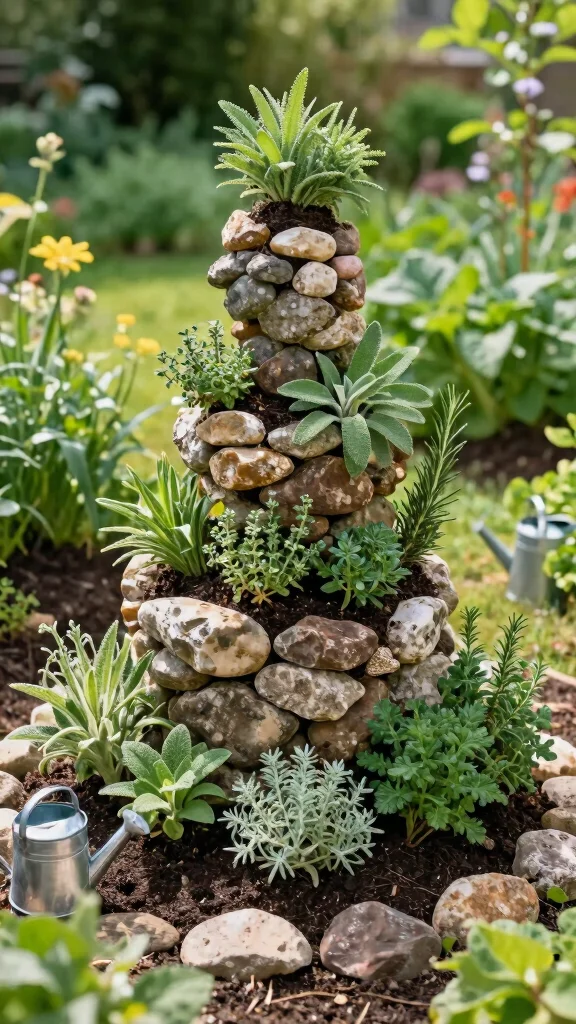
Ready to try something unique? Create a herb spiral! This innovative design allows you to grow various herbs in a compact and visually appealing setup. Perfect for maximizing vertical space, it creates microclimates, catering to different herbs’ needs.
Start with a base of stones or bricks, spiraling upwards with soil and herbs. The top remains drier, while the bottom stays moist. Common herbs for this setup include sage, thyme, and rosemary. Consider these advantages:
– An attractive garden feature.
– Efficient use of space with varied growing conditions.
– Easier maintenance due to its compact structure.
Herb spirals can become a conversation starter, showcasing your creativity and love for gardening!
6. Indoor Herb Garden
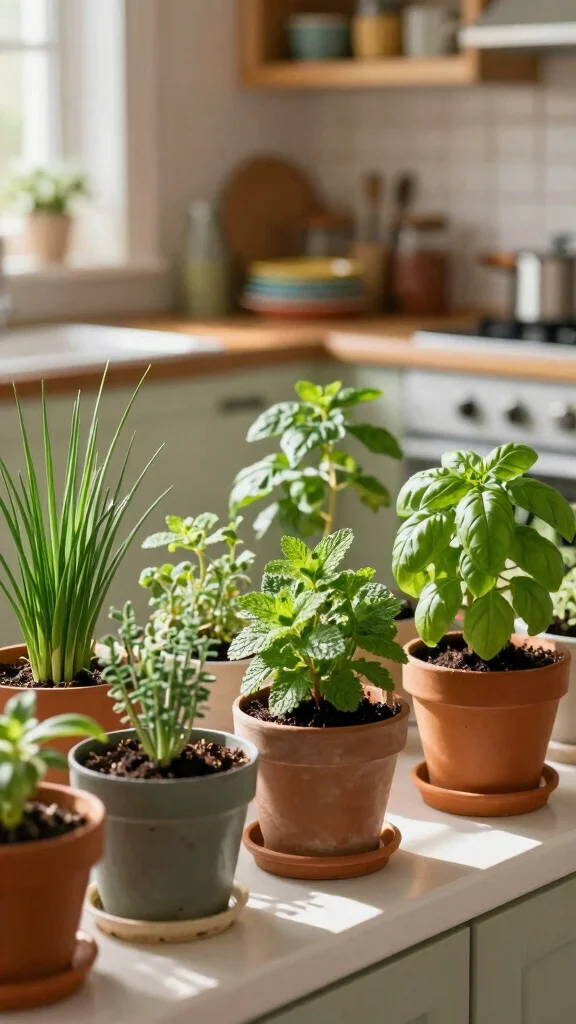
Limited on balcony space? An indoor herb garden is your solution! Enjoy fresh herbs all year round, even in winter. Place pots on sunny windowsills or kitchen counters to soak up 6-8 hours of sunlight daily.
Opt for smaller herbs like chives, mint, and basil, which thrive indoors. Use pots with drainage holes and quality potting mix for best results. Here are some indoor gardening tips:
– Rotate pots for even light exposure.
– Maintain humidity; mist plants if the air is dry.
– Fertilize sparingly to avoid overfeeding.
Having an indoor herb garden not only enhances your cooking but also brightens your living space, making it cozier and more inviting!
7. Upcycled Planters
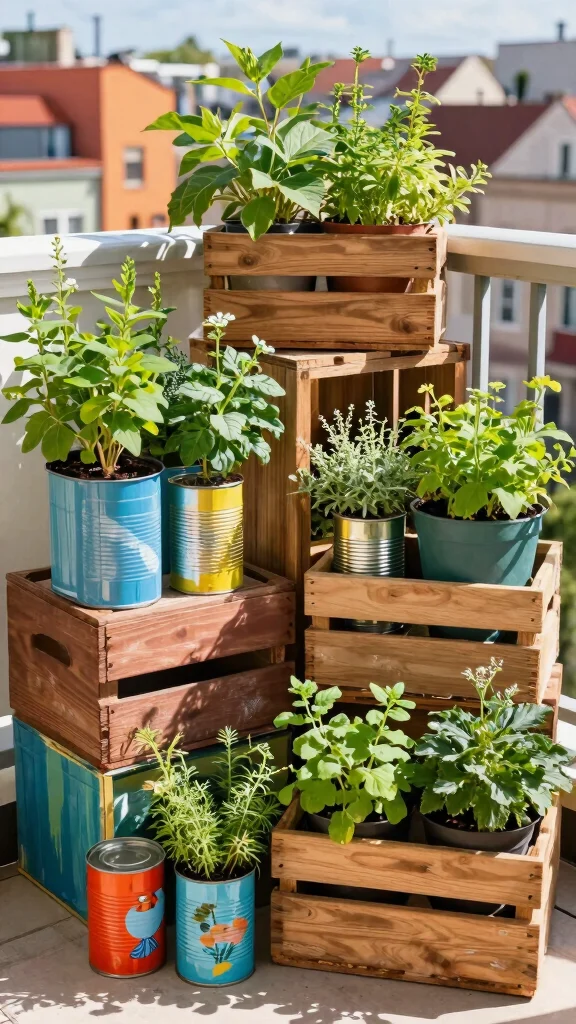
Get creative and eco-friendly with upcycled planters for your balcony herb garden! From old tin cans to wooden crates, upcycling adds character while reducing waste. Plus, it’s a fun project to personalize your garden with unique containers.
Ensure your upcycled planters have proper drainage by adding holes. Fill them with good potting mix and choose herbs that fit, like parsley or cilantro. Here are some creative ideas:
– Use wooden crates for a rustic look, stacking them for height.
– Decorate tin cans to match your balcony vibe.
– Make hanging planters from old shoe organizers for a unique twist.
This approach allows you to cultivate a charming herb garden while making an eco-conscious statement!
8. Tiered Herb Garden
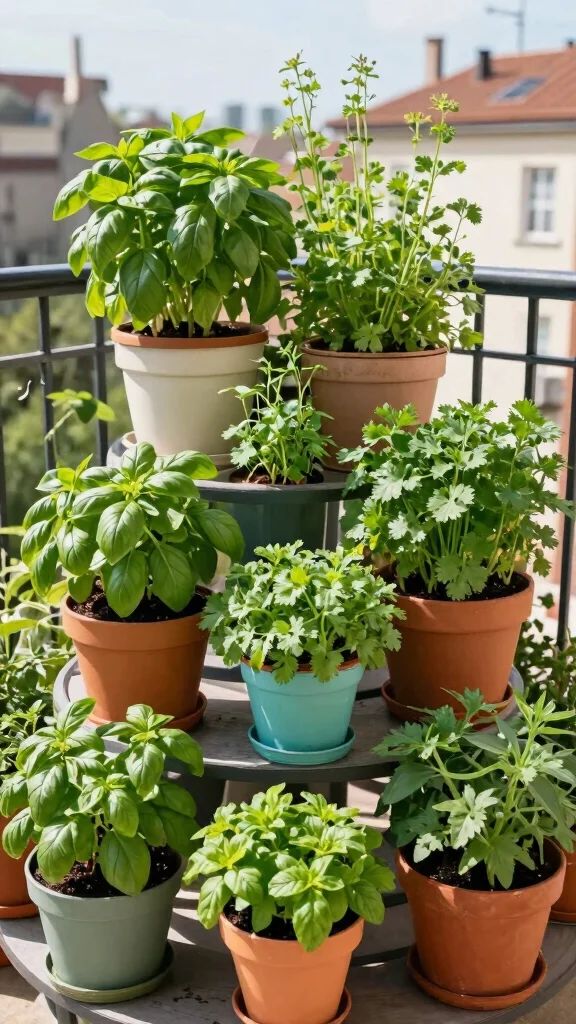
Looking for a stylish way to use vertical space? A tiered herb garden is your answer! With multi-level planter boxes or stands, you can showcase a variety of herbs beautifully. This setup not only saves space but also provides easy access to all your plants.
Choose herbs such as basil, cilantro, and dill, planting them in tiers based on their sunlight and watering needs. Here are some benefits of a tiered herb garden:
– Adds height and dimension to your balcony.
– Encourages good airflow and sunlight exposure.
– Simplifies maintenance without bending or stretching.
Make your tiered garden a focal point by using colorful pots or decorative stands for added appeal!
9. Herb Garden with Edibles
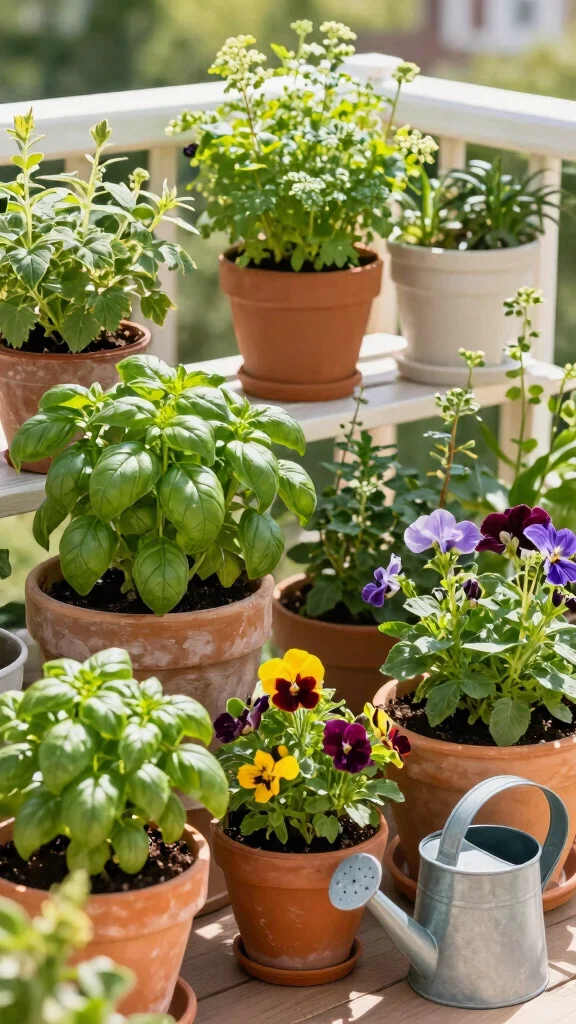
Combine beauty with functionality by creating a mixed herb garden featuring edible flowers and vegetables! This approach allows you to grow herbs alongside vibrant blooms like nasturtiums or violets, adding both visual interest and variety.
Consider companion planting, where herbs and veggies support each other’s growth, like basil paired with tomatoes. Use containers that accommodate both herbs and larger plants, ensuring ample root space. Here are the advantages:
– Maximizes growing potential with diverse plants.
– Offers unique flavors for your dishes—impress your guests!
– Provides a stunning garden experience.
An herb garden with edibles adds fresh flavors to your meals and makes cooking more enjoyable!
10. Using Aromatic Herbs
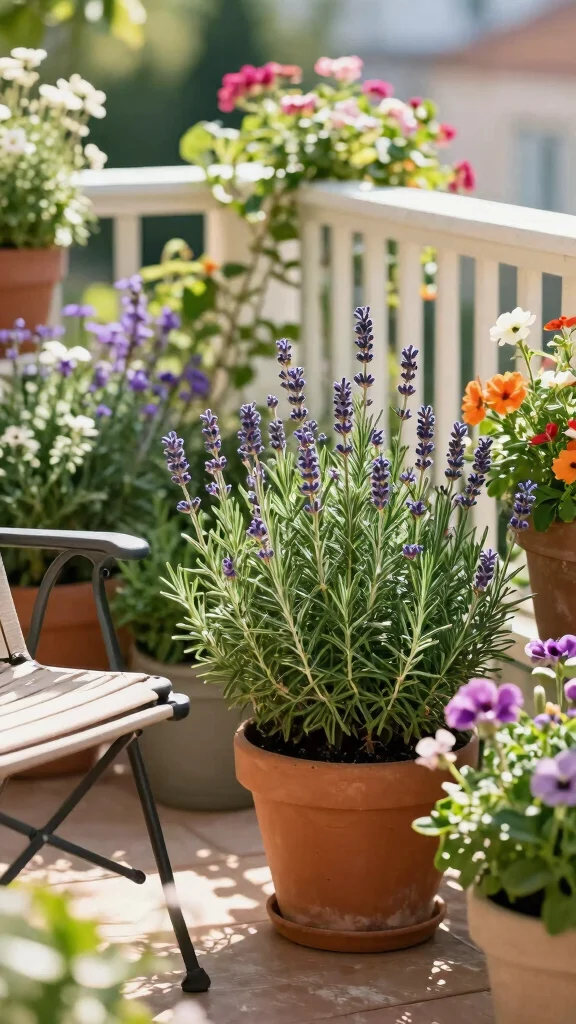
Transform your balcony into a sensory haven with aromatic herbs! Plants like lavender, rosemary, and mint not only look appealing but also fill the air with delightful scents. These herbs deter pests and add fresh flavors to your dishes.
Plant them in well-draining containers, and consider pairing them with colorful flowers for an enchanting garden. Here are some benefits of aromatic herbs:
– Enhances your balcony’s ambiance with lovely fragrances.
– Can be used in teas or as natural air fresheners.
– Strong scents can help keep pests away naturally.
Incorporating aromatic herbs creates a serene retreat in your urban space, inviting relaxation and enjoyment.
11. Seasonal Herb Planting
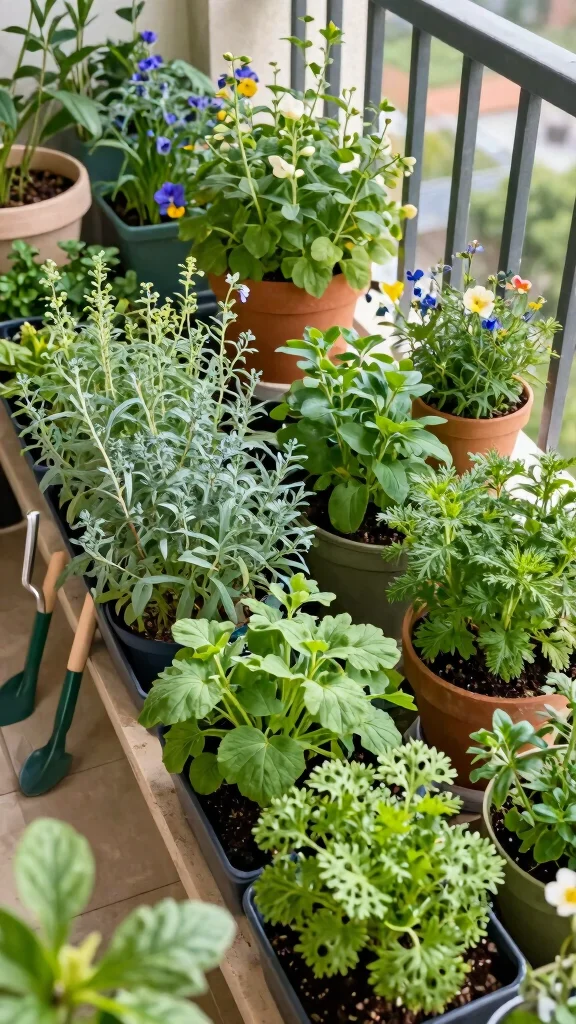
Keep your balcony garden fresh year-round with seasonal herb planting! Rotate your herbs based on the seasons—cool-season herbs like cilantro and parsley thrive in fall and winter, while summer welcomes heat-loving varieties such as basil and oregano.
This strategy maximizes your growing environment and lets you enjoy diverse flavors throughout the year. Monitor temperatures and sunlight exposure for healthy growth. Here are some seasonal planting tips:
– Use frost protection for delicate herbs in winter.
– Plan your garden layout for seasonal changes.
– Regularly check soil nutrients and amend as needed.
A seasonal herb garden ensures you always have fresh flavors ready to elevate your dishes!
12. Herb Gardening Workshops
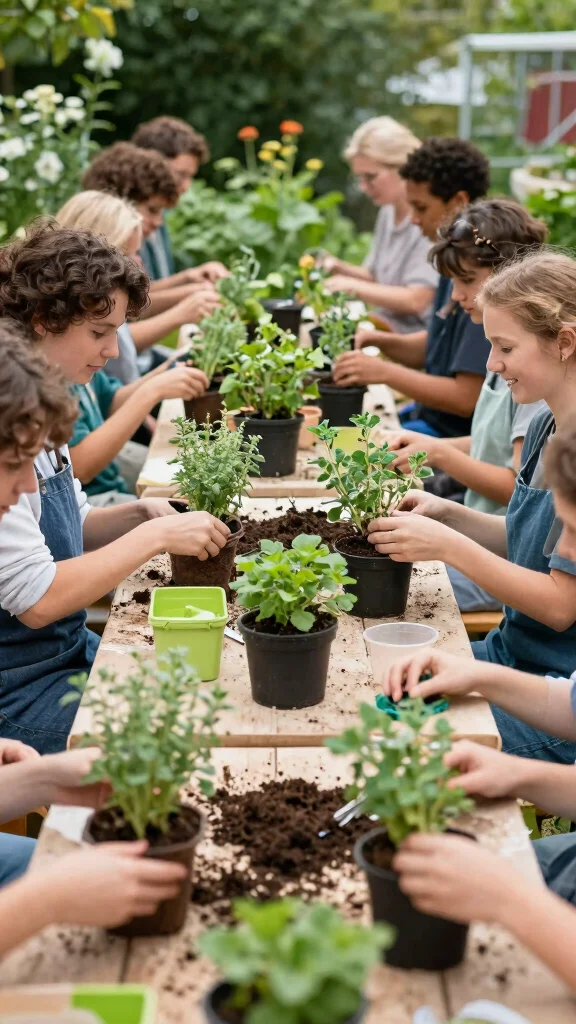
Boost your herb gardening skills by joining a local workshop! Many communities offer sessions focused on balcony gardening, providing hands-on experience and expert advice. It’s a fantastic way to connect with fellow gardening enthusiasts and learn valuable tips.
Workshops typically cover plant selection, soil management, and pest control, making them beneficial for both newcomers and seasoned gardeners. Here are some benefits of joining workshops:
– Access to professional gardening advice and support.
– Opportunity to learn new techniques and trends.
– Build a community with fellow urban gardeners.
Participating in workshops can boost your confidence, allowing you to nurture a thriving balcony herb garden and enjoy the process even more!
13. DIY Herb Markers
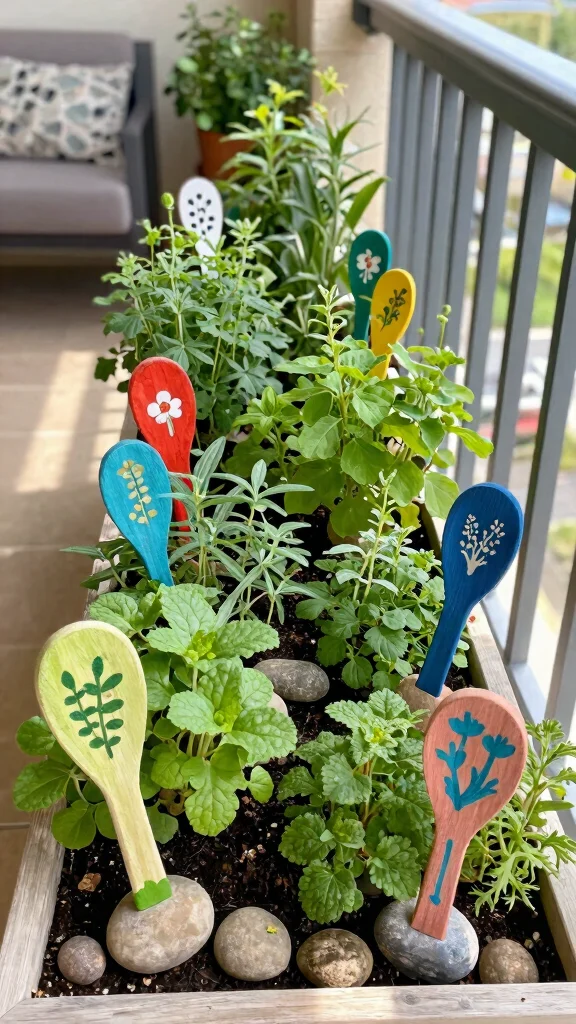
Keep your balcony garden organized and charming with DIY herb markers! Using materials like wooden spoons, stones, or even old silverware adds a personal touch. Simply paint or etch the names of your herbs for a creative flair.
Markers help identify plants while enhancing your garden’s visual appeal. Involve kids for a fun family activity! Here’s how to create your own markers:
– Choose your materials and clean them thoroughly.
– Paint or write herb names in a stylish way.
– Place them in the soil next to each herb for easy identification.
DIY herb markers add character to your balcony while helping you keep track of your favorite plants!
Did you know? DIY herb markers can turn a compact balcony into a charming herb-identification corner in just 5 minutes. With painted wooden spoons or old silverware, your balcony herb garden apartment stays organized—and it’s a fun, kid-friendly project too.
14. Companion Planting
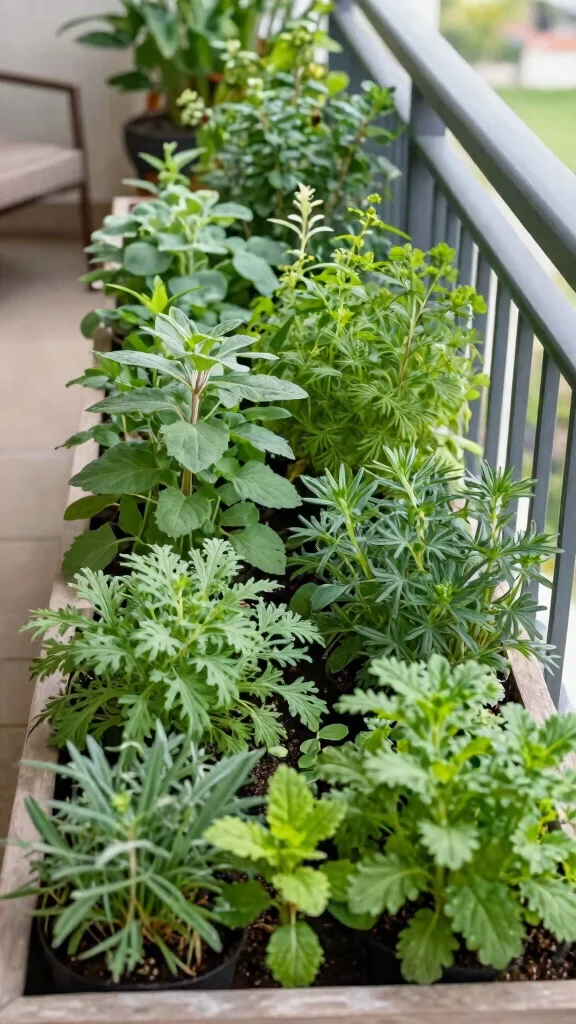
Elevate your balcony herb garden with companion planting, where specific herbs thrive alongside each other. This method can enhance growth, deter pests, and create a healthier ecosystem.
For example, plant basil next to tomatoes for better flavor and growth. Pair mint with cabbage to repel pests or chives near carrots for added protection. Here are some benefits of companion planting:
– Increases biodiversity in your garden.
– Reduces the need for chemical pesticides.
– Maximizes space and yields.
Companion planting transforms your balcony into a strategic gardening playground, ensuring each herb flourishes alongside its neighbors!
15. Herb Tea Blends
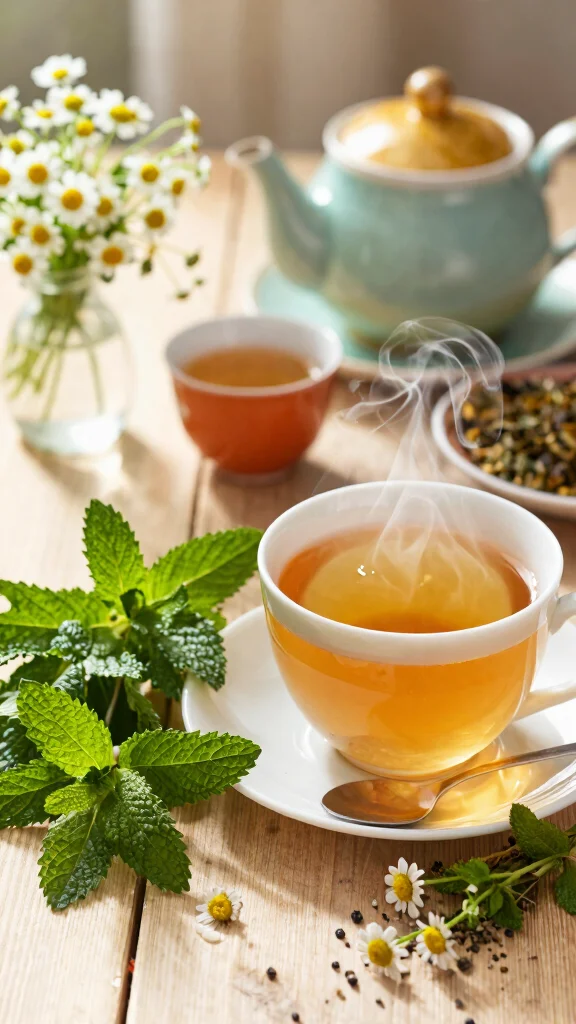
Discover the joy of crafting your own herbal tea blends from your balcony garden! Fresh herbs like mint, lemon balm, and chamomile can be mixed for delightful tea experiences. These brews taste amazing and come with health benefits.
To prepare your tea, simply harvest fresh herbs, rinse them, and steep in hot water for a few minutes. Feel free to experiment with different combinations to create your unique flavors! Here are some popular herbal tea blends:
– Mint and lemon balm for a refreshing drink.
– Lavender and chamomile for relaxation.
– Rosemary and ginger for a soothing blend.
Creating your own tea blends from your garden adds a special touch to your tea time!
16. Creating a Themed Herb Garden
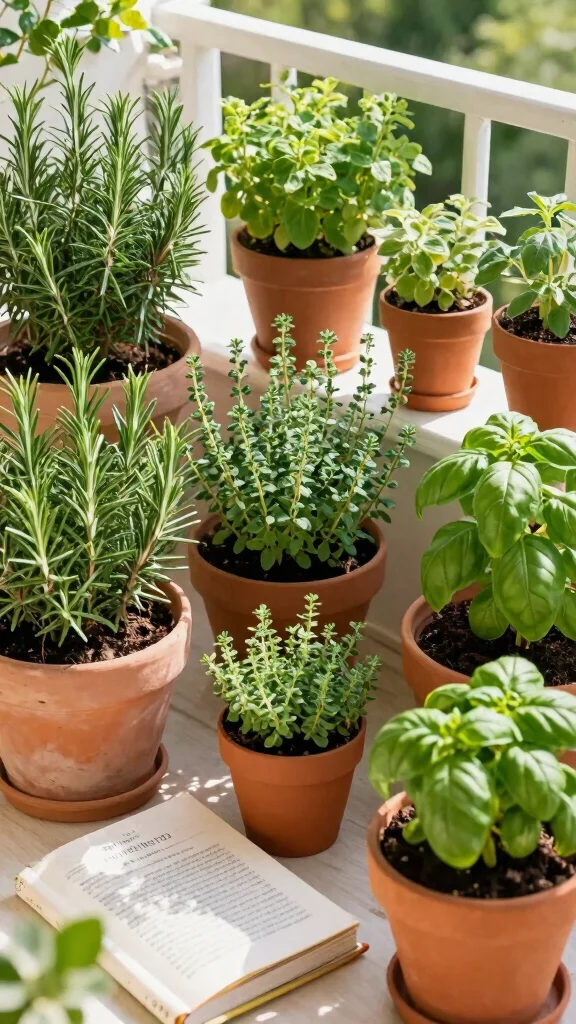
Unleash your creativity by designing a themed herb garden on your balcony! Whether it’s Mediterranean with rosemary, thyme, and oregano, or an Italian-inspired garden featuring basil, parsley, and tomatoes, themes add a delightful twist to your gardening experience.
Grouping herbs with a common theme enhances organization and creates an enchanting visual display. Choose herbs that complement each other in both appearance and flavor! Here are some themed garden ideas:
– A salsa garden with cilantro, jalapeños, and tomatoes.
– A fragrant garden with lavender, chamomile, and mint.
– A cocktail garden with mint, basil, and lemon balm.
Themed herb gardens reflect your cooking preferences while adding charm to your outdoor space.
Conclusion
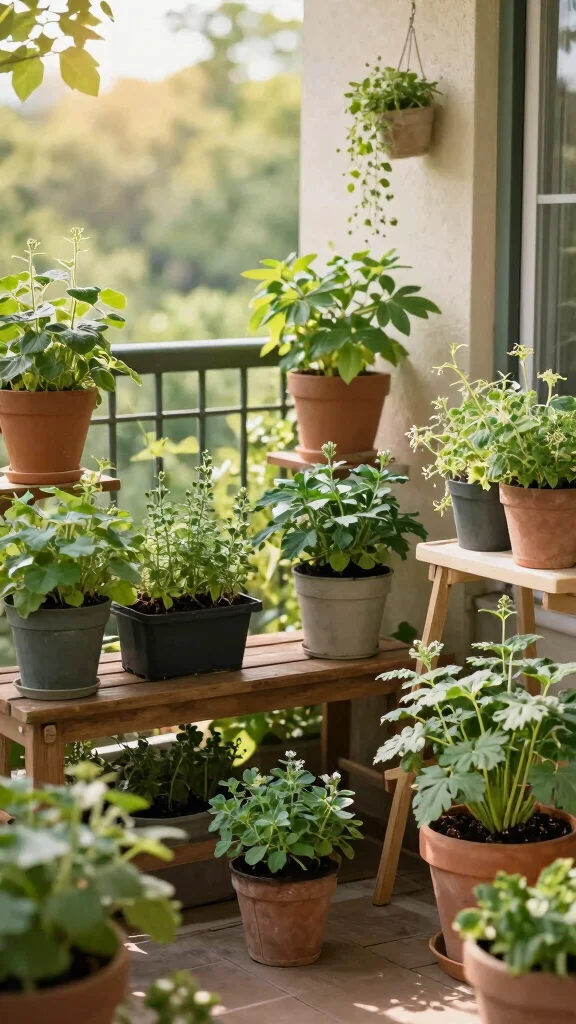
Creating a balcony herb garden is not just about growing your own food; it’s a fulfilling hobby that can brighten up your space and elevate your culinary adventures. With so many creative options, from vertical gardens to themed designs, anyone can cultivate a green paradise, no matter the size of their balcony.
So, why not choose a few ideas that resonate with you and start your journey into urban gardening? Your taste buds and your soul will thank you for it!
Frequently Asked Questions
What Are The Best Herbs To Grow In A Balcony Herb Garden Apartment For Beginners?
Several herbs thrive on a balcony and are perfect for beginners in a balcony herb garden apartment. Good starter choices include basil, parsley, chives, thyme, oregano, cilantro (coriander), and mint in a dedicated pot to prevent spreading.
Choose small to medium containers with drainage holes and fill with a lightweight, well-draining potting mix.
Water consistently so the soil stays evenly moist but not soggy, and harvest regularly to encourage fresh growth.
For container gardening in a small space gardening setup, place pots on a sunny balcony rail, shelf, or tiered stand to maximize space.
How Can I Start A Balcony Herb Garden Apartment Using Container Gardening In A Small Space?
To start a balcony herb garden apartment using container gardening in a small space, pick a sunny spot (at least 4–6 hours of sun).
Use sturdy pots or hanging planters with drainage; group herbs with similar water needs; use a high-quality potting mix rather than garden soil.
Consider vertical or railing planters to save floor space and protect pots from wind.
Water regularly and mulch the surface, and feed with a light, balanced fertilizer every few weeks. This approach fits well with urban gardening tips and keeps balcony gardening ideas simple and scalable.
What Practical Tips Help Maintain An Indoor Herb Garden On A Balcony?
Keep your indoor herb garden on a balcony thriving with a simple routine. Start with checking sun exposure and adjusting plant placement as the season changes.
Prune herbs often to encourage bushier growth.
Inspect for pests like aphids and whiteflies, washing leaves or using a gentle soap solution if needed.
Water according to pot size and weather, and fertilize lightly every month or two. If space is tight, rotate pots every couple of weeks so all plants get even light, and remember that container gardening on a balcony gardening ideas setup works best with consistent care.
Which Balcony Gardening Ideas Work Best For Year-Round Herbs In Urban Apartments?
Year-round herbs on an urban balcony require planning and protection from cold and wind. Choose hardy perennial companions like rosemary, thyme, oregano, and sage, plus adaptable annuals for fresh harvests.
Create microclimates by placing sun-loving pots in sunny corners and using a light windbreak or cladding in winter.
Use vertical planters, railing boxes, or tiered stands to maximize space, and consider a simple indoor herb garden option during colder months as part of your balcony gardening ideas strategy.
Urban gardening tips help you plan rotations and crop pairing for a steady supply.
Do I Need A Grow Light For A Balcony Herb Garden Apartment, Or Will Natural Light Suffice?
Natural light can be enough for many balcony herbs, but it depends on sun exposure. If your balcony gets 4–6 hours of direct sun, a balcony herb garden apartment can thrive with natural light alone.
For low-light balconies, choose shade-tolerant herbs such as mint, parsley, and chives, and consider a compact grow light as a supplement.
Assess your light levels across seasons and adjust placements or add lighting as needed to keep your indoor herb garden thriving.
Related Topics