


You might assume curled leaves always mean your plant is failing, but this common symptom often signals deliberate survival strategy rather than distress. When you notice curling on your fiddle leaf fig, tomato seedlings, or peace lily, you’re witnessing a hydraulic response where cells along leaf margins contract to reduce surface area and conserve moisture. This protective mechanism activates within hours of heat spikes above 85°F, humidity drops below 40%, or cold drafts below 55°F, and it frequently resolves without intervention once conditions stabilize. Your next step depends on identifying whether the curl accompanies dry, crispy edges or soft, yellowing tissue.
Why Leaf Curl Is Usually Normal, Not an Emergency
When your plant is still pushing out new growth and stems are elongating at their typical rate, say, 1 to 2 inches per week for a healthy indeterminate tomato, curling alone does not indicate a failure to thrive. Leaf curling is a common, often harmless adaptation to stress, helping you recognize when your plant decreases surface area to reduce water loss as conditions vary. You will notice this response during winter as temperatures shift, light changes, and drafts occur, even with adequate water.
In many plants, including tomatoes and related nightshades, curling alone does not indicate a failure to thrive unless accompanied by other symptoms. When your plant still grows and appears healthy, with new leaves emerging, curling is more likely a non-critical response rather than a sign of imminent decline. You should check undersides of leaves for pests like thrips or spider mites only if curling becomes extreme or persistent.
Recommended Products

All Purpose Mix; Nutrient Enrichment & Drainage Control for Fiddle Leaf Fig Trees & All Other Indoor Houseplants

100% Natural: Custom blend for Fiddle Leaf Fig Tree (Lyre Leaf Fig Tree); no artificial ingredients

🌳 SUPPORT YOUR FIDDLE LEAF FIG'S GROWTH - Give your fiddle leaf fig plants (Ficus lyrata) the ideal growing environment with this professional soil mix designed for strong root development and healthy leaf growth. This premium ready-to-use potting soil enhances nutrient absorption, supports fertilizer efficiency, and promotes plant stability. Perfect for indoor houseplants and container gardening, helping your fiddle leaf fig thrive with lush foliage.
Why Plants Curl Leaves to Protect Themselves
How exactly does a simple curl shield your tomato from a scorching July afternoon or your fiddle-leaf fig from a dry winter draft? You’re witnessing an elegant survival strategy, not a death sentence. When curling leaves appear, your plant actively reduces its exposed surface area, cutting transpiration losses by up to 50 percent during heat waves or drought stress.
Curling leaves aren’t a cry for help—they’re your plant’s built-in climate control, slashing water loss by half when conditions turn harsh.
Picture this protective response in action:
- Your pepper plants roll leaves lengthwise, creating narrow tubes that deflect intense midday sun
- Your rubber tree cups its foliage inward, trapping humid microclimates against drying indoor heat
- Your newly transplanted hydrangea twists foliage downward, conserving energy while roots establish in USDA zones 5 through 9
- Your container-grown citrus folds leaves against cold drafts, protecting vascular tissues until temperatures stabilize above 45°F
This curling leaves response often resolves within 48 to 72 hours once conditions moderate, so you’ll want to monitor rather than intervene immediately.
Recommended Products

2X MORE VALUE: With a bigger-sized bottle, 16 oz of our Cal Mag Fertilizer can be mixed with 96 gallons of water, 32 oz with 192 gallons & 1 gallon with 768 gallons of water for a standard feed rate.

2X MORE VALUE: With a bigger-sized bottle, 16 oz of our Cal Mag Fertilizer can be mixed with 96 gallons of water, 32 oz with 192 gallons & 1 gallon with 768 gallons of water for a standard feed rate.

12-5-19+ 7.6% Calcium & 1.3% Magnesium
How to Tell If Watering Problems Are Causing Curl
Where exactly should you begin when your hydrangea’s broad, serrated leaves start twisting at the margins or your patio tomato’s foliage rolls into tight, canoe-shaped tubes? You start with moisture levels, because both underwatering and overwatering trigger the same distress signals.
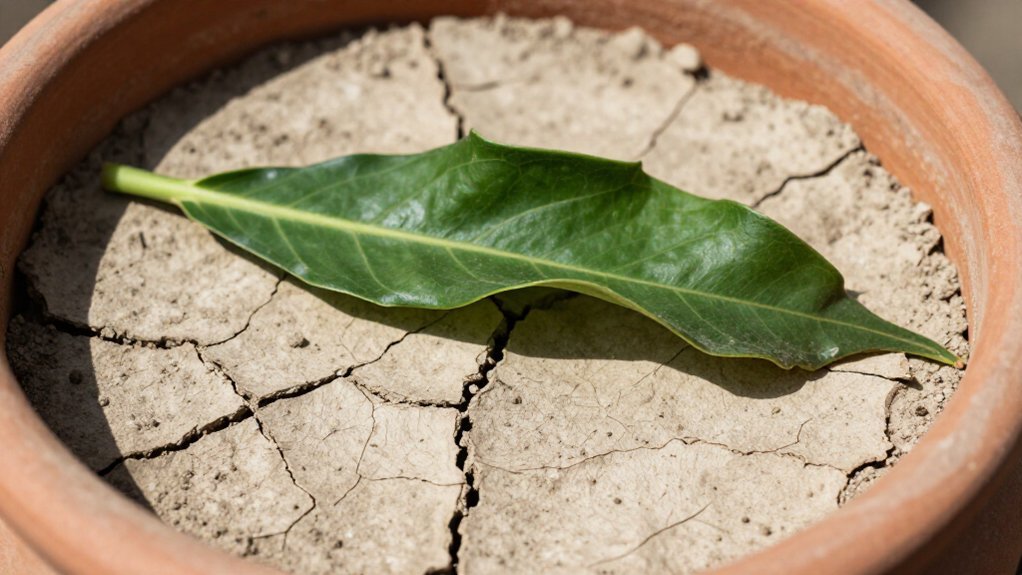
First, test the soil before you reach for your watering can. Wilt and curl mean nothing without confirmation, so plunge your finger 2 inches deep or use the Wood “tell” method: push a wooden skewer 75–85 mm toward the bottom of the pot, and water only when it emerges dry or nearly dry.
If the soil feels parched and the container feels light, give your plant a thorough soak, letting excess drain for 20–30 minutes. However, if moisture levels read adequate yet curling persists, inspect the roots for rot and verify your pot has drainage holes. When curled leaves accompany continued new growth, you’ve likely spotted a watering issue, not a death sentence.
Recommended Products

A curl-defining cream that boosts hydration, minimizes frizz, and provides soft, flexible control for waves and curls. alcohol-free cream defines & holds without stickiness...
When Low Humidity and Heat Cause Leaf Curl
You’ll notice your plant’s leaves curling inward when humidity drops below 30%, especially in winter-heated rooms where central heating accelerates moisture loss through transpiration, and this response, common in Calatheas and Ferns, represents a moisture conservation strategy rather than a signal that your soil is dry. Heat compounds this stress by increasing transpiration rates, so even with adequately moist compost, your plant curls its leaves to reduce surface area and minimize water loss through the stomata. You can distinguish this from drought-induced curling by checking that the potting mix feels damp while the foliage remains furled, which tells you to prioritize humidity management through pebble trays, plant grouping, or a small humidifier rather than additional watering.
Recommended Products

MAXIMIZE YIELDS – Grow healthier plants with Grower’s Ally Spider Mite Control. This natural miticide for spider mites kills and repels common soft-bodied insects, including adult and nymph spider mites.
MAXIMIZE YIELDS – Grow healthier plants with Grower’s Ally Spider Mite Control. Our natural garden safe spray kills and repels common soft-bodied insects, including adult and nymph spider mites.

Low Humidity Effects
When winter heating drives indoor humidity below 30%, you may notice your plant’s leaves curling inward along their margins, a defensive response that reduces surface area and slows transpiration.
You can distinguish low humidity from underwatering because curling persists even when your compost remains moist, since the steep humidity gradient drives rapid moisture evaporation from leaf surfaces. Humidity-sensitive species, including Calatheas, Ferns, Anthuriums, and Marantas, show this response most dramatically under dry indoor air conditions.
To remedy this, you should:
- Place a shallow tray of water beneath your pot to create localized evaporation
- Group your plants together so they share transpired moisture
- Run a small humidifier to raise ambient moisture above 40%
- Monitor persistent curls despite watering, which confirms humidity dominates as your stressor
Heat Stress Response
Why does your plant’s foliage twist downward at the edges even when you’ve kept the soil consistently damp? You’ve encountered heat stress, a condition where transpiration accelerates so dramatically that roots cannot transport water quickly enough to match leaf demand. The curling you observe represents your plant’s survival mechanism, reducing exposed surface area to slow further moisture loss.
Common culprits include radiators, direct afternoon sun through south or west-facing glass, and heat-emitting appliances positioned too near your greenery. You will notice this damage often appears during summer months or when heating systems activate in winter.
To remedy heat stress, relocate your plant immediately to a cooler location with stable temperatures between 65-75°F. Avoid placing specimens near thermal sources, and monitor leaf recovery over 7-14 days as new growth emerges flat and turgid.
Moisture Conservation Strategy
How can you distinguish leaf curl caused by thirsty air from the heat stress you’ve just addressed? You look for the telltale signs of atmospheric dryness, where low humidity below 30% forces your plant’s leaves to curl inward as a moisture conservation strategy.
Your diagnostic checklist includes these observations:
- Your Calathea, ferns, or other tropical specimens show curling while the soil stays moist below the surface
- The compost surface dries rapidly despite adequate watering underneath
- Curling persists or worsens in heated winter rooms with dry air
- Symptoms improve noticeably within days of boosting ambient humidity around the plant
You can stabilize your plant’s microclimate through pebble trays, grouping specimens together, or running a small humidifier nearby. This targeted humidity increase often resolves curling even when your watering schedule remains unchanged.
How to Diagnose Leaf Curl in 2 Minutes
Where exactly should you begin when your fiddle-leaf fig’s broad, violin-shaped leaves start to cup inward, or your heirloom tomato’s foliage begins to roll like a cigar? You start with a two-minute diagnostic sweep, scanning first for overall vigor: new growth, flowering, or fruiting signal adaptation, not alarm. Next, you check water conditions, comparing surface moisture to deeper soil saturation; dry topsoil with wet roots, or uniformly parched earth, both trigger curling as a distress signal. You note your plant’s placement, measuring distance from HVAC vents, east-facing windows, or south exposures in USDA zones 7 through 10, where temperature swings and humidity drops between 40 and 60 percent commonly provoke this response. Finally, you flip leaves, inspecting undersides for stippling or webbing, and you probe soil two knuckles deep. Thriving plants with curled foliage usually adjust naturally; stalled growth with additional yellowing or spotting demands deeper investigation into roots, nutrient balance, or irrigation scheduling.
Recommended Products
FIDDLE LEAF FIG SOIL: Premixed, ready-to-use blend formulated for Ficus lyrata. Supports healthy roots with balanced moisture retention and excellent drainage.
🌱 100% ORGANIC, NUTRIENT-RICH BLEND FOR FASTER GROWTH Specially formulated for fiddle leaf figs and other indoor trees, this premium chunky, airy mix uses aged bark, green compost, and biochar to nourish plants naturally without chemical buildup—helping prevent common issues like brown spots, yellow leaves, and leaf drop.

Made for Fiddle Leaf Fig Plants – Specially formulated fiddle leaf fig fertilizer designed for ficus trees and indoor plant care.
Pests That Damage Leaves and Cause Curling
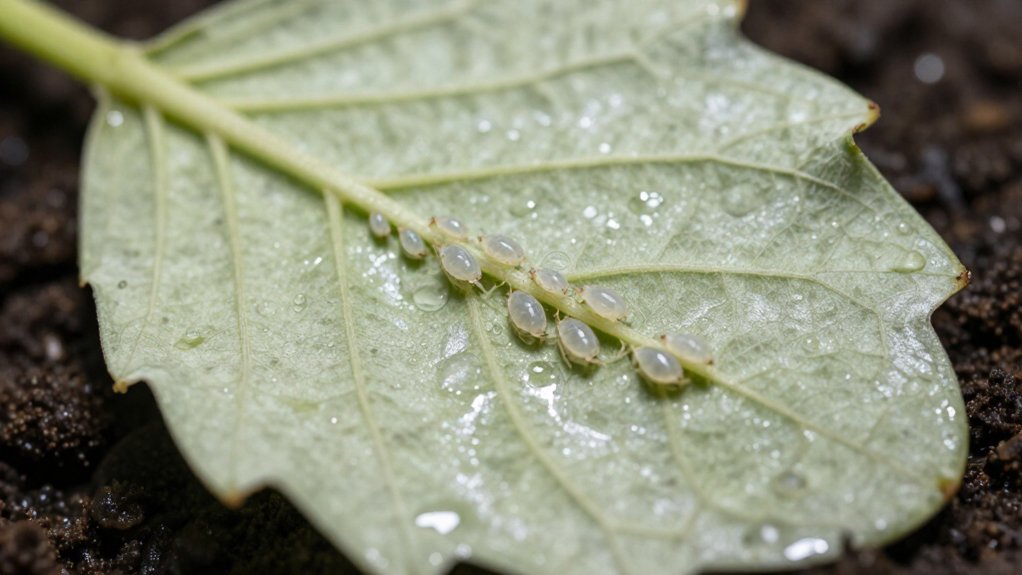
Once you’ve ruled out environmental stress through your two-minute diagnostic, you’ll want to turn your attention to the living culprits that frequently hide in plain sight.
Spider mites, barely visible specks that cluster beneath leaves, puncture plant cells with piercing mouthparts, leaving stippled yellow patches and fine silk webbing that gathers in curled leaf folds. Inspect your foliage carefully, flipping leaves to expose the pale undersides where these arachnids congregate.
You’ll recognize pest damage through these telltale signs:
- Silvery streaks or distorted new growth clustering at stem tips
- Tiny moving dots or web strands catching morning light
- Accelerated yellowing spreading from feeding sites
- Progressive curling that worsens without intervention
When you confirm an infestation, treat immediately with insecticidal soap or neem oil, repeating applications every five to seven days while monitoring closely, since unchecked feeding compounds distortion and threatens overall plant vitality.
Recommended Products

【Package includes】You will receive 20 pieces of tomato hooks with string and 100 pieces of plant support clips;.Tomato hooks are made of robust rope and iron materials,whichare weather-resistant,aging-resistant,high-temperature-resistant,rot-resistant, and not easy to break.
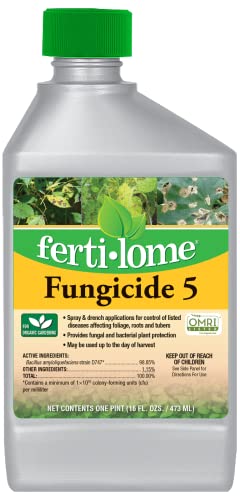
DISEASE & BACTERIA CONTROL - Listed Blights, Molds, Rots, Spots, Specks, Mildews and more. See label for full lists of disease prevention and treatment.
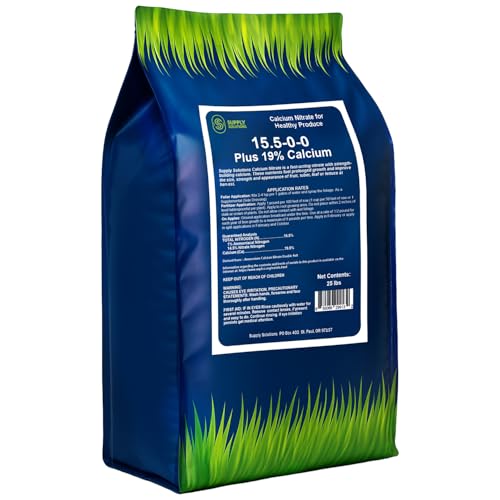
ACCELERATE PLANT GROWTH & VIGOR: Experience explosive growth with Supply Solutions Calcium Nitrate! Our 15.5-0-0 formula delivers readily available Nitrate Nitrogen for rapid vegetative development and lush, green foliage, while the essential 19% Calcium builds strong cell walls from root to tip. It's the ideal fertilizer for jumpstarting your vegetables, fruits, and ornamentals for a healthier, more productive garden.
Root Problems That Block Water From Reaching Leaves
When you’ve ruled out surface-level stressors and visible pests, yet your plant’s leaves stubbornly curl downward while the top inch of soil still clings to moisture, you’re likely facing the invisible crisis of compromised root function.
Root problems that block water transport can cause this downward curl even when the soil surface feels moist and the compost appears healthy. Indicators include compacted soil, overwatering with root oxygen deprivation, and possible root rot that breaks your plant’s ability to move water to leaves. Healthy roots are firm and white-tan, while rot-damaged roots are brown, mushy, and unable to support normal transpiration.
If curling persists despite adequate surface moisture, inspect and potentially replace soil, improve drainage, and check for root rot or root-bound conditions. Treatments focus on restoring root function: flush salts, allow drying between waterings, or re-pot with fresh, well-draining medium to reestablish water uptake.
When to Treat Leaf Curl: and When to Leave It Alone
You’ll need to distinguish between harmless seasonal adaptation, where your Ficus elastica or Monstera deliciosa temporarily curls leaves in response to a 10-15°F temperature drop or shifting light angles in USDA zones 9-11, and signals demanding your attention, such as persistent tube-like curling that indicates thrips infestation or root rot from waterlogged soil. When your plant continues pushing new growth, setting fruit, or flowering, you’re likely witnessing benign stress response, so monitor for 7-10 days while maintaining 40-60% humidity and allowing the top 2 inches of soil to dry between waterings. However, if curling accompanies yellowing, stunted growth, or visible webbing, you’ll prioritize pest inspection using a 10x hand lens, checking leaf undersides and axils, before treating with insecticidal soap or addressing root health through repotting in fresh, well-draining mix.
Recommended Products

MALATHION INSECT SPRAY: Protects flowers, vegetables, fruits, shrubs, roses and other ornamentals as listed

Sold on Amazon
Harmless Seasonal Adaptation
Sometimes the most alarming symptom in your garden turns out to be nothing more than your plant doing exactly what evolution designed it to do. Your plants curl their leaves to reduce water loss, a survival strategy triggered by temperature swings, shifting light intensity, or seasonal drafts. This adaptation appears frequently in tomatoes and nightshades across USDA zones 4 through 9, where you’ll notice leaves rolling upward yet growth continues unabated.
Watch for these reassuring patterns:
- Curling emerges during winter’s shorter days and cooler temperatures
- The same plant shows this behavior year after year at identical times
- New growth remains vigorous, with flowering and fruiting undisturbed
- Leaves flatten naturally as spring conditions stabilize
You need not intervene when overall health persists. Simply monitor for distortion, pests, or wilting that signals deeper trouble.
Root Health Signals
How do you distinguish between a plant’s temporary protest and a genuine cry for help from below the soil line? You learn to read root health signals carefully, because downward leaf curl often reveals trouble underground, not up top.
When your compost stays moist and humidity measures adequate, yet curling persists, you’ve likely got root damage from infection, compaction, or oxygen starvation. You’ll spot authentic distress through wilted curling despite wet soil, a clear contradiction demanding immediate inspection. Gently unpot your plant and examine for brown, mushy roots, the definitive signature of decay.
Begin treatment with thorough root inspection and soil flushing to restore function. However, when curling accompanies normal growth, adequate vigor, and absent stress signs, you’ve encountered harmless adaptation. Leave it alone, monitor weekly, and trust your plant’s resilient transport system to self-correct as conditions stabilize.
Pest Inspection Priority
Once you’ve ruled out root distress beneath the soil, your attention shifts upward to the foliage itself, where tiny invaders often hide in plain sight. You’ll need to inspect the undersides of curling leaves, since pests like thrips and spider mites congregate there, causing the distortion you’re witnessing.
Look for these telltale signatures:
- Stippled or silvery patches marring the leaf surface
- Fine, almost invisible webbing strung between veins
- Progressive leaf distortion worsening over days
- Tiny moving specks when you hold the leaf to light
If you’ve confirmed pests, treat immediately with appropriate controls and quarantine the affected plant to protect your collection. When your inspection reveals no invaders, resist the urge to spray, instead pivoting toward humidity adjustments or watering corrections while you document and monitor for 7-10 days.
Special Case: Why Tomatoes and Peppers Curl Leaves When Healthy
Tomatoes and peppers throw you a curve when their leaves curl despite looking otherwise robust, a phenomenon that trips up even seasoned growers in USDA zones 4 through 11. You are likely witnessing harmless genetic expression, particularly in varieties carrying wilty genes, or a natural response to environmental swings between cool mornings and hot afternoons.
Water stress from uneven irrigation ranks among the most common culprits you will encounter. When you overwater, roots suffocate and leaves distort; when you underwater, plants conserve moisture through curl. Check your soil moisture at a depth of 2 inches before adjusting your schedule.
Fruit burden also triggers temporary curl, as plants redirect resources to developing tomatoes or peppers. You should inspect closely only when curl appears extreme, tube-like, or accompanies yellowing, stunting, or webbing, which signals pests, disease, or root problems requiring intervention.
Recommended Products
🌳 SUPPORT YOUR HOUSEPLANT AND FIDDLE LEAF FIG'S GROWTH - Give your fiddle leaf fig plants (Ficus lyrata) and indoor houseplants the ideal growing environment with this professional soil mix designed for strong root development and healthy foliage. This premium ready-to-use potting soil enhances nutrient absorption, supports fertilizer efficiency, and promotes plant stability for long-term growth.

✅【Optimized Drainage】Our mix contains a blend of bark, perlite, and coarse sand, which promotes quick drainage and prevents water from sitting at the roots, thereby protecting against root rot.

Pre-Mixed & Ready To Use: Our fiddle leaf fig potting soil mix is meticulously crafted for convenience. It includes a 5-in-1 blend of coco coir, coconut fiber, perlite, pumice and pine bark, so there is no need to purchase, measure or mix separate ingredients. The ready-to-use blend helps make repotting large indoor plants quicker and less messy.