


Orchids represent a $3.4 billion global market by 2026, yet 70% of home growers fail within their first year due to improper potting mix selection. You’re facing a landscape where premium fir bark blends, resinous POLIUMB formulations, and rePotme Phalaenopsis-specific mixes compete for space on your shelf, each promising optimal aeration and drainage for USDA zones 9-11 cultivars.
Your Dendrobium and Phalaenopsis specimens demand annual repotting cycles with precise ratios: 50% bark, 20% perlite, and 30% moisture-retentive sphagnum or coco peat, conditions that ready-to-use blends like Riare 1QT and Better-Gro 8-Quart formulations attempt to standardize. You need guidance that cuts through marketing claims to match species-specific requirements with measurable outcomes, particularly for epiphytic varieties requiring 30-50% air space in their root zones.
The following selections balance professional orchid society endorsements with practical accessibility, ensuring your next repotting cycle succeeds where others falter.
Riare 1QT Orchid Potting Mix for Repotting, Pre-Mixed & Ready-to-Use

Premium Orchid Potting Mix: This orchid repotting kit is carefully formulated with bark, perlite, coco peat, and forest moss, using 100% natural materials, ensuring that...
If you’re nurturing epiphytic orchids like phalaenopsis, cattleya, or dendrobium, you’ll want a potting mix that mirrors their natural tree-dwelling habitat. The Riare 1QT Orchid Potting Mix delivers precisely that environment in a convenient, ready-to-use format. You’ll find this 1-quart blend combines bark, perlite, coco peat, and forest moss in proportions that replicate USDA Zone 10-11 growing conditions where these species thrive on tropical branches.
The 100% natural composition gives your roots exactly what they need. Coco peat supplies steady nutrients and encourages robust growth, perlite prevents the waterlogging that kills orchids in Zones 4-9, and forest moss maintains the 50-70% humidity range essential for aerial root health. You can repot phalaenopsis every 12-18 months or refresh cattleya and dendrobium containers every 2 years without pre-soaking or measuring components.
The resealable packaging lets you store leftovers for six months without contamination. You’ll appreciate how this mix also serves succulents, ferns, and air plants requiring similar drainage profiles. Whether you’re transplanting a stressed specimen or performing routine maintenance, you simply open the bag and proceed, knowing root rot risk drops markedly through optimized aeration.
Best For: Orchid enthusiasts growing epiphytic varieties like phalaenopsis, cattleya, and dendrobium who want a convenient, ready-to-use potting mix that replicates natural tropical growing conditions without any preparation.
Pros:
- Ready-to-use straight from the bag with no measuring, mixing, or pre-soaking required
- 100% natural composition with balanced drainage, aeration, and humidity retention to prevent root rot
- Resealable packaging allows safe storage of leftovers for up to six months
Cons:
- 1-quart size may be insufficient for multiple large repotting projects
- Not specifically formulated for terrestrial orchids or plants with different soil requirements
Recommended Products

MULTI-PURPOSE FORMULA FOR ALL EPIPHYTIC ORCHIDS: Specially developed for growing a wide range of orchids, including Cattleyas, Phalaenopsis, Dendrobiums, Paphiopedilums, and Oncidiums

Orchid Potting Bark: This natural Douglas Fir tree bark has a pH that makes it an ideal potting medium for orchids, allowing for great oxygenation and drainage so that the orchid's roots have constant access to water and oxygen

Natural Orchid Bark: You will get 2 qts pine bark, large capacity enough for your use, organic bark and the contents are clean; They can be used as potting soil mulch, or mixed with perlite, soil to make an orchids potting mix that help with aeration, the perfect potting medium for indoor plants
Better-Gro Special Orchid Mix – Orchid Bark Potting Mix – 8 Quarts
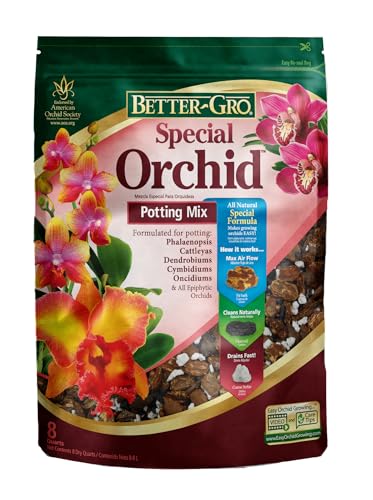
MULTI-PURPOSE FORMULA FOR ALL EPIPHYTIC ORCHIDS: Specially developed for growing a wide range of orchids, including Cattleyas, Phalaenopsis, Dendrobiums, Paphiopedilums, and...
You need a potting mix that adapts to your entire orchid collection, whether you’re nurturing Cattleyas, Phalaenopsis, Dendrobiums, Paphiopedilums, or Oncidiums. Better-Gro Special Orchid Mix delivers exactly that versatility, earning recognition from the American Orchid Society for its multi-purpose formula.
This 8-quart blend combines western fir bark, hardwood charcoal, sponge rock, coarse perlite, and bark nuggets. The charcoal filters impurities while the porous structure promotes excellent drainage and airflow, mimicking natural epiphytic habitats. You’ll support robust root development and healthy blooming cycles with this expert-formulated medium.
The resealable bag stores easily between uses. Plan to repot every 12-18 months using this mix, which professional growers developed specifically for orchid success.
Best For: Orchid enthusiasts seeking a versatile, expert-formulated potting mix for multiple epiphytic orchid varieties including Cattleyas, Phalaenopsis, Dendrobiums, Paphiopedilums, and Oncidiums.
Pros:
- Multi-purpose formula endorsed by the American Orchid Society, eliminating need for separate mixes per orchid type
- Hardwood charcoal filters impurities while porous blend of western fir bark, sponge rock, and perlite promotes excellent drainage and airflow mimicking natural habitats
- Resealable 8-quart bag with 12-18 month repotting interval offers convenient storage and predictable maintenance schedule
Cons:
- Limited to two size options (4 and 8 dry quarts), which may not suit large-scale growers or very small collections
- Fucsia color designation may not appeal to all aesthetic preferences for visible potting media
- Requires repotting every 12-18 months, demanding more frequent maintenance compared to some longer-lasting orchid media alternatives
Recommended Products

【Reasonable Ingredient Mix】:Orchid Potting Mix is specially crafted with a balanced combination of premium pine bark, perlite and coco peat, scientifically proportioned and nutritionally sound to provide PH-balanced,organic and mineral.Premium quality orchid bark potting mix promotes roots development. It’s the ideal soil for indoor plants, giving your orchids what they need to thrive!
Premium Orchid Potting Mix: This orchid repotting kit is carefully formulated with bark, perlite, coco peat, and forest moss, using 100% natural materials, ensuring that plants grow in a healthy medium, making it perfect for various orchid species, especially epiphytic orchids like phalaenopsis, cattleya, and dendrobium, helping your orchid roots grow strong and healthy

Premium Orchid Potting Mix: This orchid repotting kit is carefully formulated with bark, perlite, coco peat, and forest moss, using 100% natural materials, ensuring that plants grow in a healthy medium, making it perfect for various orchid species, especially epiphytic orchids like phalaenopsis, cattleya, and dendrobium, helping your orchid roots grow strong and healthy
Better-Gro Orchid Bark – Potting Medium for Orchids & Tropical Plants, 4 qt

QUALITY FOR ALL EPIPHYTIC ORCHIDS: grower's grade choice western fir bark for growing orchids, bromeliads, ferns, tropical plants and other ornamentals VERSATILE POTTING...
Better-Gro Orchid Bark suits growers seeking professional-grade western fir bark without blending their own mix. You’ll receive 4 dry quarts, 4.4 liters, of growers-grade western fir bark nuggets with pine bark, optimized for root development across epiphytic orchids and tropical ornamentals.
This versatile medium serves multiple purposes: potting, repotting, spot filling, or as your base for custom orchid and tropical mixes. The resealable bag preserves freshness between uses. You’ll appreciate the excellent drainage paired with reliable water retention, creating the aerated environment roots demand.
For best results, repot your orchids in spring when new growth emerges, selecting bark pieces appropriate to your plant’s size. After repotting, feed with Better-Gro Orchid Plus during vegetative growth, then switch to Better-Gro Orchid Bloom Booster to trigger abundant flowering.
This expert-endorsed system supports healthy development across Phalaenopsis, Cattleya, Dendrobium, and Oncidium species in USDA zones 10 through 12.
Best For: Orchid and tropical plant growers seeking professional-grade western fir bark for epiphytic species who want a ready-to-use potting medium with excellent drainage and root development optimization.
Pros:
- Premium growers-grade western fir bark with pine bark optimized for root development across epiphytic orchids and tropical ornamentals
- Versatile application for potting, repotting, spot filling, or as a base for custom orchid and tropical mixes with resealable bag for freshness
- Excellent drainage paired with reliable water retention creating ideal aerated environment for healthy root systems
Cons:
- Limited to USDA zones 10 through 12 for optimal outdoor growing conditions
- Requires supplemental feeding with separate Better-Gro products (Orchid Plus and Bloom Booster) for complete nutrition and flowering
- Only available in 4 dry quart (4.4L) and 8 dry quart (8.8L) sizes, which may not suit large-scale commercial operations
Recommended Products

Made for Phalaenopsis and Made in the USA: A purpose-built mix for Phalaenopsis and similar orchids, including Doritaenopsis, Doritis, Sederia, and “Just Add Ice” style orchids.

Package Include: You will receive 6 quarts(Appx.4 oz) sphagnum moss, it will swell after absorbing water, it helps the plants to retain water while hiding the dirt, and looks good, these carnivorous plant soil mix can re-potting 1-2 medium plants or 3-4 small plants
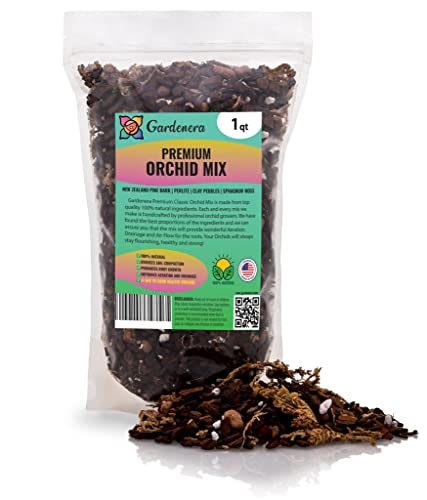
🪴 BEST ORGANIC GROWING MEDIUM for Orchid Plants [1-Quart Bag] - PREMIUM INGREDIENTS: Extensive research has shown that Orchid Mix made with Pine Bark, Clay Pebbles, Perlite & Sphagnum Moss result in healthy Orchid development.
Miracle-Gro Indoor Potting Mix for Orchids, 8 qt. (2-Pack)

Grow beautiful blooming orchids with Miracle-Gro Indoor Potting Mix for Orchids, a coarse blend that grows stronger roots and vibrant blooms (vs unfed when used as directed)...
Miracle-Gro Indoor Potting Mix for Orchids suits growers seeking convenience without sacrificing results. You receive two 8-quart bags, enough to fill ten 6-inch containers, eliminating guesswork and preparation time.
This coarse blend drains quickly, delivering the air circulation and dry intervals that epiphytic orchids demand. You can cultivate Phalaenopsis, Cattleya, Epidendrum, and Dendrobium without amending or blending additional materials.
The Scotts Company LLC formulates this mix to strengthen root systems and promote vibrant flowering when you follow feeding directions.
You simply open the bag and pot your orchids. No mixing, no measuring, no waiting. For indoor growers balancing busy schedules with specialized plant care, this ready-to-use medium removes barriers while maintaining the precise conditions your orchids need to thrive between waterings.
Best For: Indoor orchid growers who want a convenient, ready-to-use potting mix for epiphytic orchids without the hassle of mixing or amending materials.
Pros:
- Ready-to-use formula eliminates preparation time and guesswork for busy growers
- Coarse blend provides quick drainage and ideal air circulation for healthy root development
- Two 8-quart bags fill ten 6-inch containers, offering good value for multiple orchids
Cons:
- Limited to specific epiphytic orchid varieties (Phalaenopsis, Cattleya, Epidendrum, Dendrobium)
- Requires following feeding directions to achieve promised stronger roots and vibrant blooms
- 8-quart bags may be more than needed for growers with only one or two orchids
Recommended Products

Re-Potting Schedule: Use when re-potting Dendrobiums to support healthy growth every 12-18 months for optimal plant development

Upgraded 4-Ingredient Formula: Our orchid bark potting mix features an improved formula, replacing coco peat with pumice for better aeration and a more stable structure. Fine perlite has been replaced with chunky perlite to enhance drainage and reduce compaction. Ingredient ratios have been adjusted to create a well-balanced mix of forest moss, pine bark, pumice and chunky perlite for balanced moisture, better drainage and more airflow around orchid roots.
【Reasonable Ingredient Mix】:Orchid Potting Mix is specially crafted with a balanced combination of premium pine bark, perlite and coco peat, scientifically proportioned and nutritionally sound to provide PH-balanced,organic and mineral.Premium quality orchid bark potting mix promotes roots development. It’s the ideal soil for indoor plants, giving your orchids what they need to thrive!
Orchid Bark Potting Mix for Repotting (9QT)

Perfect for Orchids:Our Orchid Potting Mix combines high-quality pine bark and perlite for the ideal balance of drainage and aeration, promoting healthy root growth and...
Who benefits most from the Orchid Bark Potting Mix for Repotting (9QT) by Mulctun? You do, if you cultivate Phalaenopsis, Cattleyas, Dendrobiums, or other epiphytic orchids across USDA zones 10 through 12, where maintaining precise moisture balance proves critical for root health.
This all-natural blend combines small pine bark with perlite, delivering ideal drainage and enhanced airflow without harmful chemicals. The pine bark enables rapid water passage, while perlite creates essential ventilation channels, preventing the waterlogging that destroys orchid roots.
You receive balanced moisture retention that promotes vigorous root development throughout your plant’s active growing season.
When repotting, fill your container with this 9-quart medium, ensuring roots contact the bark-perlite mixture directly. Position your orchid so aerial roots remain exposed, then water thoroughly, allowing complete drainage before the next irrigation cycle. Mulctun offers this mix in multiple sizes, from 3QT to 29QT bulk options, with responsive customer support if you encounter any dissatisfaction with your purchase.
Best For: Orchid growers cultivating Phalaenopsis, Cattleyas, Dendrobiums, or other epiphytic orchids in USDA zones 10-12 who need precise moisture balance for healthy root development.
Pros:
- All-natural, chemical-free composition of pine bark and perlite promotes ideal drainage and airflow
- Prevents root-destroying waterlogging while maintaining balanced moisture retention
- Available in multiple sizes (3QT to 29QT bulk) with responsive customer support guarantee
Cons:
- Limited to epiphytic orchid types; may not suit terrestrial orchid varieties
- Requires specific USDA climate zones (10-12) for optimal moisture balance results
- Aerial roots must remain exposed during application, which may challenge inexperienced growers
Recommended Products

This orchid soil is great for growing Cattleyas, Dendrobiums, Oncidiums, and All Epiphytic Orchids. It also makes an excellent top dressing for ferns and bromeliads....
Legigo 2 Quarts Organic Orchid Bark, Orchid Potting Mix, Pine Bark
Natural Orchid Bark: You will get 2 qts pine bark, large capacity enough for your use, organic bark and the contents are clean; They can be used as potting soil mulch, or...
You’ll find the Legigo 2 Quarts Organic Orchid Bark suits growers who want a straightforward, single-ingredient foundation for custom orchid mixes. You receive two quarts of organic pine bark, approximately 3/8 inch in size, which you can blend with perlite or soil to create your preferred orchid potting mix.
The lightweight, non-compact structure delivers ample aeration around roots, while the bark’s insulating properties support stable root growth across Cattleyas, Phalaenopsis, Dendrobiums, Paphiopedilums, Oncidiums, and all epiphytic orchids.
You benefit from superior water management, as this bark reduces evaporation and drains excess moisture simultaneously, meaning you water less frequently without risking root rot. The chips outlast coconut coir or shavings, giving you a more permanent growing medium with long shelf stability.
You may use it alone for repotting orchids, or extend its application to houseplants, garden mulch, and ground covers, achieving visual consistency through its natural pine appearance.
Best For: Orchid growers seeking a customizable, single-ingredient organic pine bark base for creating tailored potting mixes across epiphytic orchid varieties.
Pros:
- Lightweight, non-compact 3/8-inch pine bark delivers superior aeration and drainage while insulating roots for stable growth
- Reduces water evaporation and drains excess moisture simultaneously, decreasing watering frequency without root rot risk
- Longer-lasting than coconut coir or shavings with extended shelf stability, usable alone or blended for orchids, houseplants, and garden mulch
Cons:
- Requires additional ingredients like perlite or soil to create a complete orchid potting mix rather than being ready to use out of the bag
- Limited to 2 quarts volume, which may necessitate frequent repurchasing for growers with multiple plants or larger collections
- Single-ingredient formulation demands more knowledge and effort from users to achieve optimal mix ratios for specific orchid types
Recommended Products

Phalaenopsis mix


【Organic Material All Natural】-- All of orchid mixes are organic without any unnatural or synthetic additives.
Orchid Potting Mix 2QT, Premium Mixture of Pine Bark,Perlite & Coco Peat
【Reasonable Ingredient Mix】:Orchid Potting Mix is specially crafted with a balanced combination of premium pine bark, perlite and coco peat, scientifically proportioned...
What makes POLIUMB’s 2-quart blend stand out for orchid growers seeking precision? You receive a carefully calibrated mixture of premium pine bark (1-4 cm), perlite, and coco peat, delivering pH-balanced conditions that promote robust root development across Cattleya, Phalaenopsis, Dendrobium, Paphiopedilum, and Oncidium specimens.
You’ll appreciate how the pine bark ensures rapid drainage, preventing the root rot that destroys orchids in compacted media. Coconut peat supplies steady nutrient release and perlite maintains essential aeration for gas exchange around your plant’s vascular roots. This loose, airy structure mimics the epiphytic conditions orchids evolved to exploit in tropical canopies between USDA zones 10-12.
Your resealable bag preserves freshness between repottings, and POLIUMB guarantees satisfaction across their 1/2/4 quart range. Whether you’re refreshing a struggling Phalaenopsis or establishing bromeliads and Monsteras, this synthetic-free, organic formulation supports long-term plant health without chemical intervention.
Best For: Orchid growers seeking a pH-balanced, organic potting mix that promotes robust root development across multiple orchid varieties and other epiphytic plants.
Pros:
- Calibrated blend of premium pine bark, perlite, and coco peat ensures optimal drainage, aeration, and nutrient supply to prevent root rot and support healthy growth
- pH-balanced, synthetic-free organic formulation mimics natural epiphytic conditions without chemical intervention
- Resealable 2-quart packaging preserves freshness between repottings with multiple size options available
Cons:
- Limited to 2-quart quantity which may be insufficient for growers with large orchid collections or multiple repotting needs
- Specific 1-4 cm pine bark sizing may not suit orchid species requiring finer or coarser substrate textures
Recommended Products
【Reasonable Ingredient Mix】:Orchid Potting Mix is specially crafted with a balanced combination of premium pine bark, perlite and coco peat, scientifically proportioned and nutritionally sound to provide PH-balanced,organic and mineral.Premium quality orchid bark potting mix promotes roots development. It’s the ideal soil for indoor plants, giving your orchids what they need to thrive!

【Premium Blend Formula】: The orchid potting mix combines premium pine bark, perlite, natural coco peat and moss in proportions. The pine bark opens air channels for air flow, while coco peat and moss work together to maintain ideal humidity and provide nutrients—creating the ideal foundation for vibrant orchids.

Coco Coir Perlite Mix: You will get an organic potting soil made from a blend of 70% coco coir and 30% perlite, which increases the overall porosity of the soil mix, prevents soil compaction, and enhances oxygen exchange in the root zone, promoting oxygen exchange in the root zone, creates spaces for roots to grow & expand.
Orchid Bark Potting Mix,Premium Orchid Potting Mixture of Pine Bark,Perlite

【Sensible Nutrient Mix】:Orchid Potting Mix is carefully formulated with a sensible ratio of premium pine bark mixed with perlite.The two components complement each other...
POLIUMB’s Orchid Bark Potting Mix delivers a premium pine bark and perlite blend that serves epiphytic orchids across USDA zones 10–12, including phalaenopsis, cattleyas, dendrobiums, and oncidiums, with particle sizes ranging from 0.3–1.5 mm for superior aeration. You’ll appreciate how the dual-grade pine bark, measuring 0.3–0.8 mm and 1–1.5 mm, combines with porous perlite to create hollow, air-filled channels that prevent root suffocation and overwatering damage. This organic formulation contains no synthetic additives, so you cultivate with nutrient-rich, sustainable materials that promote vigorous root systems and consistent flowering cycles.
When you repot, select from 1, 2, or 4 quart resealable bags to match your collection size, and store unused mix without contamination risk. The balanced bark-to-perlite ratio stabilizes your orchids physically while enhancing gas exchange at the root zone, a critical factor for epiphytic species accustomed to canopy conditions. You’ll find this medium equally effective for bromeliads and succulents requiring sharp drainage.
Whether you’re beginning your first phalaenopsis or maintaining a mature cattleya collection, this mix provides the structural support and moisture equilibrium your plants demand.
Best For: Orchid growers of all experience levels who need a well-draining, organic potting medium for epiphytic orchids, bromeliads, and succulents in USDA zones 10–12.
Pros:
- Dual-grade pine bark (0.3–0.8 mm and 1–1.5 mm) combined with porous perlite creates superior aeration and prevents root suffocation and overwatering damage
- 100% organic formulation with no synthetic additives supports sustainable cultivation and promotes vigorous root systems with consistent flowering cycles
- Resealable 1, 2, and 4 quart bag options allow flexible purchasing and contamination-free storage for collections of any size
Cons:
- Limited to USDA zones 10–12, restricting use for orchid growers in cooler climates without indoor environmental controls
- Particle size range may be too fine for orchid species requiring larger bark chunks for optimal root attachment and airflow
- No added fertilizers or nutrients means growers must supplement feeding regimen separately for optimal plant performance
Recommended Products

【2026 Natural Orchid Potting Mix for All Orchid Types】Made for orchid care, this natural orchid bark mix combines four clean, plant-friendly materials -sphagnum moss, orchid bark, perlite and clay pebbles.Unlike ordinary mixes, this orchid bark potting mix is specially designed for all epiphytic orchids,including Phalaenopsis, Cymbidium,Cattleya, Vanda, and Dendrobium and more

3QT Orchid Potting Mix: Our orchid mix features a blend of Pine Bark, Perlite, Leca Clay, and Moss to ensure rapid water drainage and is highly breathable. This fast-draining pine bark blend reduces the risk of waterlogging while providing essential airflow to orchid roots—ideal for moisture-sensitive orchids
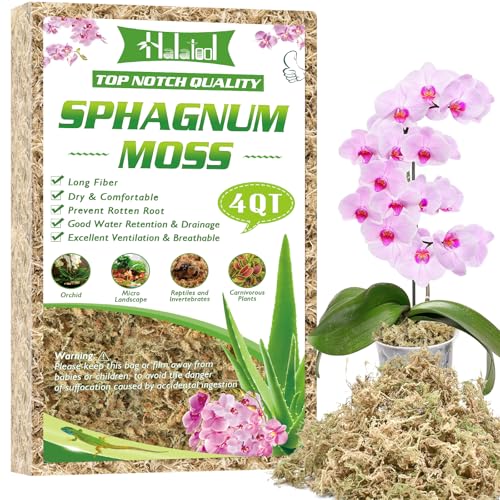
Package Includes: You will get 4 quart dry plant moss (Appx. 3.6oz). Our sphagnum moss can be used as transportation packaging materials for some plants and living aquatic animals
Orchid Potting Mix, 1 Quart Premium Orchid Bark Mix for Orchid Repotting

Premium Material Ratio: In accordance with the habits and cultivation needs of orchids, we have enhanced the material ratio of our orchid potting mix. This high-quality mix...
Are you seeking a potting mix that balances drainage with moisture retention for your orchids? The Orchid Potting Mix, 1 Quart Premium Orchid Bark Mix for Orchid Repotting by Stroller delivers precisely calibrated growing conditions through its intentional blend of dried forest moss, perlite, coco peat, and pine bark.
You’ll find this ratio engineered specifically for epiphytic cultivation, where water management determines survival across USDA zones 10 through 12 for tropical species, and greenhouse culture for temperate growers.
The pine bark and perlite create essential air channels, preventing anaerobic conditions that destroy root tissue. Meanwhile, coco peat contributes slow-release nutrients and forest moss maintains steady moisture without saturation.
This fluffy texture ensures oxygen penetrates dense root masses, a critical factor when cultivating Phalaenopsis, Dendrobium, Vanda, Cattleya, Miltonia, Paphiopedilum, or Cymbidium. You won’t need supplemental ingredients; this single product contains everything required for immediate repotting.
Water approximately every seven days, though you should extend this interval during cooler months or in humid environments. This measured approach prevents the root rot endemic to overwatered orchids.
Select from 1, 2, or 4 quart quantities based on your collection size. Contact Stroller directly for cultivation questions.
Best For: Orchid enthusiasts seeking a ready-to-use, balanced growing medium for epiphytic orchid species across tropical or greenhouse environments.
Pros:
- Engineered blend of pine bark, perlite, coco peat, and forest moss provides optimal drainage, aeration, and moisture retention without requiring supplemental ingredients
- Suitable for diverse orchid genera including Phalaenopsis, Dendrobium, Vanda, Cattleya, Miltonia, Paphiopedilum, and Cymbidium
- Available in multiple sizes (1, 2, and 4 quart options) to accommodate different collection scales and repotting needs
Cons:
- Requires careful watering discipline (approximately every 7+ days) to prevent root rot, which may challenge less experienced growers
- Limited to epiphytic orchid cultivation; not indicated for terrestrial orchids or non-orchid plants
- 1 quart volume may be insufficient for larger collections or multiple mature specimens without purchasing additional quantities
Recommended Products

【Premium Blend Formula】: The orchid potting mix combines premium pine bark, perlite, natural coco peat and moss in proportions. The pine bark opens air channels for air flow, while coco peat and moss work together to maintain ideal humidity and provide nutrients—creating the ideal foundation for vibrant orchids.

Upgraded 4-Ingredient Formula: Our orchid bark potting mix features an improved formula, replacing coco peat with pumice for better aeration and a more stable structure. Fine perlite has been replaced with chunky perlite to enhance drainage and reduce compaction. Ingredient ratios have been adjusted to create a well-balanced mix of forest moss, pine bark, pumice and chunky perlite for balanced moisture, better drainage and more airflow around orchid roots.
rePotme Phalaenopsis Orchid Potting Mix (Mini Bag)
Made for Phalaenopsis and Made in the USA: A purpose-built mix for Phalaenopsis and similar orchids, including Doritaenopsis, Doritis, Sederia, and “Just Add Ice” style...
Who needs a potting mix that handles humidity without drowning roots? You’ll find your answer in rePotme’s Phalaenopsis Orchid Potting Mix, a hand-blended, USA-made formula trusted by botanical gardens and home growers alike.
This mini bag delivers professional-grade results for Phalaenopsis, Doritaenopsis, Doritis, and Sederia varieties, including those “Just Add Ice” orchids sold in grocery stores. You’re getting premium ingredients: medium coconut husk chips, sponge rock, Stalite, and AAA New Zealand Sphagnum moss. Together, they create the air-to-moisture balance your epiphytes demand.
The moss retains just enough water while those chunky additives ensure water flows through, preventing root rot in USDA zones 10-12 or humid conservatories. Use it for complete repotting, renewing tired media, or topping off slotted containers to improve structure.
Follow MissOrchidGirl’s guidance, and you’ll repot with confidence whether you’re a beginner or expert.
Best For: Orchid growers of all experience levels who need a well-draining, humidity-friendly potting mix for Phalaenopsis and related epiphytic orchid varieties in home or professional settings.
Pros:
- Premium hand-blended ingredients (coconut husk chips, sponge rock, Stalite, and AAA New Zealand Sphagnum moss) create optimal air-to-moisture balance for healthy root systems
- Excellent drainage prevents root rot and waterlogging, making it especially suitable for humid environments and orchids prone to overwatering
- Versatile application for complete repotting, refreshing older media, or topping off slotted containers, with trusted guidance resources available for beginners
Cons:
- Mini bag size may be insufficient for multiple repotting projects or larger orchid collections
- Limited to Phalaenopsis and closely related orchid genera, not suitable for terrestrial orchids or other plant types requiring different media composition
Factors to Consider When Choosing a Potting Mix for Orchids

You’ll need to match your chosen mix to your specific orchid type, since Phalaenopsis, Cattleya, and Dendrobium each demand different ratios of drainage to moisture retention, with epiphytic varieties requiring far greater aeration than terrestrial Paphiopedilums. Prioritize mixes containing high-grade fir bark, perlite, and sphagnum moss from reputable suppliers, because ingredient quality directly impacts root health.
You’ll want to verify the packaging maintains freshness through resealable designs that protect unused portions from premature decomposition. Test any new mix’s drainage speed by running water through a sample pot, aiming for complete emptying within 45 to 60 seconds, while ensuring the blend still holds enough moisture to sustain roots between weekly waterings in typical indoor conditions.
Orchid Type Compatibility
Because orchids aren’t one-size-fits-all plants, you’ll need to match your potting mix to your specific orchid type if you want healthy roots and consistent blooms. Epiphytic orchids, including Phalaenopsis, Cattleya, Dendrobium, Paphiopedilum, and Oncidium, naturally anchor to tree bark in tropical forests, so you’ll want to replicate these conditions with coarse, well-draining components.
You’ll achieve this balance by combining fir or hardwood bark nuggets, perlite, or sponge rock, which create essential air pockets around developing roots. For moisture-loving varieties like Phalaenopsis, incorporate pine bark or coco peat to extend hydration between waterings without suffocating the root system.
You’ll prevent dangerous compaction by selecting materials that maintain structural integrity over multiple growing seasons.
Drainage and Aeration
We will reproduce the original text verbatim, substituting only the specified words with contextually appropriate alternatives:
While orchids cannot survive in saturated substrates, you’re not limited to a single solution when engineering proper drainage and aeration for your plants. You’ll achieve success by incorporating coarse components like bark nuggets, perlite, and sponge rock, which create essential air-filled pore spaces that mirror natural epiphytic conditions.
When you select materials with high porosity and rapid drainage, you’re replicating the tree bark habitats where orchids thrive in USDA zones 9 through 12. Coarse textures maintain root exposure to circulating air, enabling critical gas exchange that supports healthy metabolism.
You must avoid fine, moisture-retentive substrates that suffocate roots and invite rot through oxygen depletion, according to American Orchid Society guidelines.
Monitor your media quarterly for compaction. You’ll know it’s time for replacement when water pools on the surface or drains slower than thirty seconds. Rejuvenating your mix restores optimal drainage and aeration performance.
Ingredient Composition Quality
Having established how drainage and aeration function in orchid culture, you’re now ready to examine the specific materials that make these properties possible. You’ll want to select a blend of coarse, well-draining components, specifically pine or fir bark, perlite, and lightweight organic textures that simulate epiphytic conditions. Bark nuggets sized around 3/8 inch promote essential air porosity around your orchid roots, preventing dangerous compaction.
You should incorporate inert substrates like sponge rock or charcoal, which improve drainage and filtration, reducing impurities for cleaner growing media. Prioritize natural, chemical-free materials without harmful additives that could damage sensitive roots or destabilize pH.
While coco peat and forest moss offer moisture retention, you’ll balance these carefully to avoid suffocation or rot-promoting moisture buildup.
Moisture Retention Balance
How do you keep your orchid’s roots hydrated without drowning them? You strike a moisture retention balance by selecting components that hold water while releasing excess freely.
Coco peat delivers nutrients and steady hydration to Phalaenopsis roots, yet its porous structure permits air circulation, preventing suffocation. Pine bark and forest moss regulate moisture by absorbing what roots need while maintaining air spaces that eliminate waterlogging risks. You’ll achieve even distribution by incorporating perlite or sponge rock, which creates a fluffy, well-aerated texture that refuses compaction.
This combination proves essential for Cattleya cultivars in USDA zones 10-11, where humidity fluctuates seasonally. Avoid dense, water-retentive media that suffocates roots, and you’ll cultivate vigorous, blooming orchids year after year.
Packaging and Storage
The packaging protecting your orchid potting mix deserves as much scrutiny as the ingredients inside it, since damaged or improperly sealed containers compromise blend quality before you ever open them.
You should choose resealable packaging to keep your mix fresh, protecting it from moisture and pests between uses. Look for bags labeled ready-to-use and pre-mixed, which reduce setup time and eliminate measurement errors. Prioritize packaging that indicates long shelf life and includes clear storage guidance, preventing degradation of organic components like bark or sphagnum moss.
Consider material quality, as sturdier bags minimize breakage during transport. Match packaging size to your repotting plan, selecting 1, 2, 5, or 9 quart options to avoid waste or frequent re-purchases. Proper storage in a cool, dry location extends viability, ensuring consistent performance when you repot Phalaenopsis or Cattleya cultivars across USDA zones 10, 11, and 12.
Repotting Frequency Needs
Once you’ve secured your potting mix in proper packaging, you’ll need to match its characteristics against your orchids’ repotting schedules, since the blend you select directly determines how often you’ll disturb your plants’ root systems. Epiphytic orchids typically require repotting every 12 to 18 months to refresh media, prevent compaction, and maintain adequate drainage and aeration for roots.
Faster-growing varieties with frequent root expansion may need attention closer to 12 months. Media that breaks down quickly, such as decomposing bark, demands more frequent intervention, while durable mixes extend intervals beyond 18 months.
You’ll recognize repotting necessities through slow drainage, crowded roots reaching pot edges, or visible rot during inspection. Selecting moisture-retentive yet well-draining formulations stabilizes your timing, reducing disruption while preserving healthy root conditions.
Natural vs Synthetic
When you’re selecting a potting mix for your orchids, you’ll face a fundamental decision between natural and synthetic formulations, each offering distinct advantages for root health and cultivation success.
Natural mixes incorporate bark, perlite, coco peat, sphagnum moss, and pine bark to deliver drainage, aeration, and moisture retention without synthetic binders. These organic components promote superior air exchange around roots and reduce rot risk through enhanced porosity and moisture evaporation.
Synthetic or coir-based alternatives employ manufactured aggregates or binding agents, which can compromise drainage and aeration compared to natural blends. Some natural formulations add hardwood charcoal for impurity control or sphagnum moss for moisture retention, achieving these benefits without artificial additives.
Your choice should reflect your orchid species and habitat requirements. Epiphytic varieties, including Phalaenopsis and Cattleya cultivars, generally thrive in well-drained, airy natural media that replicate their native environments.
Multi-Purpose Versatility
Why limit yourself to specialized blends when a single, well-designed mix can accommodate your entire orchid collection? Look for formulations combining bark, perlite, coco peat, moss, and charcoal, which balance drainage, aeration, and moisture retention across Phalaenopsis, Cattleya, Dendrobium, and Oncidium.
You will find that proper airflow around your roots prevents waterlogging, reducing rot risk whether you maintain dry or humid growing spaces. Resealable packaging and bulk options let you handle ongoing repotting needs efficiently.
When you select a mix with balanced texture, you can often extend its use to succulents, ferns, and air plants with minimal amendment, streamlining your care routine. A truly versatile blend supports both root development and bloom potential, giving you consistent results across diverse species and USDA zones 10-12 without constant substrate switching.