


You walk into a garden center, and the labels blur together: annual, perennial, hardy, tender. You’re not alone if you’ve planted what you thought was a lasting investment, only to watch it vanish after frost. The difference between annuals and perennials isn’t just botanical jargon; it’s the foundation of every successful planting decision you’ll make. Annuals like ‘Profusion’ zinnias or ‘Blue Horizon’ ageratum complete their entire life cycle, from seed to flower to death, in one growing season. Perennials such as ‘May Night’ salvia or ‘Goldsturm’ rudbeckia return from established root systems for three years or more, though their bloom windows typically span two to six weeks rather than months. Your USDA hardiness zone, which you can verify through the online USDA Plant Hardiness Zone Map, determines whether a plant behaves as promised, because a perennial in Zone 8 may become an annual in Zone 5 without winter protection. Before you spend another dollar, you’ll need to decode those plastic tags, understand why some “perennials” fail, and learn how to layer both types for color that never quits. The answers start with a single question you probably haven’t asked yet.
What Makes a Plant Annual vs. Perennial?
Why does one plant return year after year while another fades after a single season? You’ll find the answer in each plant’s life cycle, which determines whether you’re tending annuals or perennials through your growing season.
Annuals germinate, flower, set seed, and complete their entire life cycle in one year, demanding replanting each spring. Perennials persist beyond two years, achieving winter survival through root hardiness that enables regrowth when temperatures rise.
Your climate zone dramatically affects this classification. A plant you grow as a perennial in USDA Zone 9 may behave as an annual in Zone 5, where freezing temperatures kill its crown. You’ll encounter genera containing both types, so verify specific cultivar life cycles before purchasing. Understanding these distinctions ensures you match plant hardiness to your regional conditions.
Recommended Products

Typically blooms for 4–6 weeks


100% Pure, Non-GMO Seeds - No fillers, favorites only! Includes 20 easy-to-grow species: Cornflower Tall Blue, Godetia/Farewell to Spring, Cosmos, Chinese Forget Me Not, Scarlet Flax, Four O'Clock, Catchfly, Sulphur Cosmos, Indian Blanket, Baby Blue Eyes, Rose Mallow, Rocket Larkspur, Wild Annual Sunflower, Plains Coreopsis, Clarkia, Toadflax/Spurred Snapdragon
Annuals or Perennials: Which Should You Choose?
How do you decide between plants that demand yearly commitment versus those that settle in for the long haul? You weigh your priorities against each plant’s life cycle. Annuals complete theirs in one season, so you’re replanting yearly, yet they reward you with months of uninterrupted bloom duration. Perennials invest energy in roots, returning for years with lower maintenance once established, though each variety’s flowering window typically spans just two to four weeks.
You should choose Annuals when you crave instant impact, flexible seasonality, and the freedom to redesign your garden annually. You should choose Perennials when you seek lasting structure, reliable habitat for pollinators, and reduced yearly labor. Remember, zone hardiness affects classification; a plant perennial in USDA Zone 8 may become an annual in Zone 5, so always verify your local conditions before committing.
Recommended Products

Thrives in USDA zones 3-8


👍A popular choice for landscapers and gardeners for superb ground cover and landscape borders.
Hardy, Tender, and Half-Hardy: What Your Labels Mean
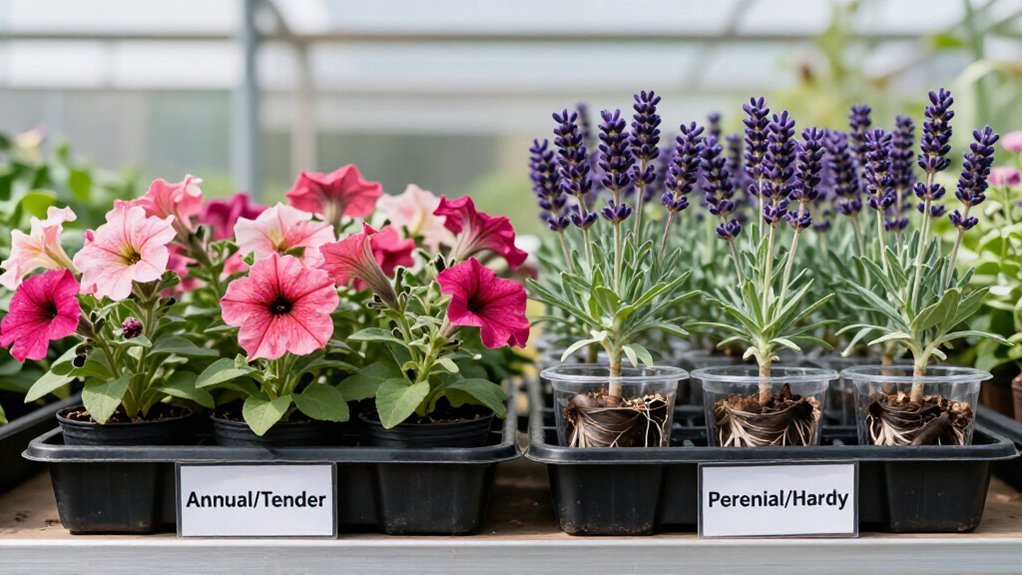
Your choice between annuals and perennials shapes your garden’s long-term character, yet even within a single season, temperature tolerance determines which plants thrive and which falter before their time.
These labels guide your plant selection:
- Hardy annuals, like forget-me-not and larkspur, tolerate cool temperatures and light frost, letting you plant early in zones 3 to 6.
- Tender annuals, such as marigolds and petunias, demand consistent heat and struggle below 50°F, so you must wait until frost danger passes.
- Half-hardy annuals bridge both worlds, handling chilly nights yet persisting into warmer months.
Recommended Products

Beautiful - Full color seed packets of popular flowers including Crackerjack Marigold (Tagetes erecta), Envy Zinnia (Zinnia elegans), Powder Puff China Aster (Callistephus chinensis), Lemon Queen Sunflower (Helianthus var. ‘Lemon Queen’), and Candy Stripe Cosmos (Cosmos bipinnatus). Enjoy outside in the garden and indoors as cut flowers.

Freshest Wildflower Seeds: Our hummingbird and butterfly wildflower mix includes 24 beautiful annual, perennial and biennial plants. We offer the freshest seeds to enhance the quality of your garden, we ensure a high germination rate, 99% pure live seed, no filler

Why Your “Perennial” Might Die After One Year
Sometimes even the most carefully chosen perennial fails to return after its first winter, leaving you puzzled and disappointed despite following every planting instruction.
Even the most carefully chosen perennial can fail to return after its first winter, leaving you puzzled despite following every instruction.
Your perennial lifespan expectations may clash with reality when you overlook your hardiness zone. A plant rated for USDA Zone 7 cannot survive your Zone 5 winter, no matter how carefully you tend it. Winter dieback you expect to reverse becomes permanent damage when temperatures exceed tolerance.
Poor soil drainage creates another fatal trap. You plant at proper depth, yet waterlogged conditions trigger crown rot, destroying the root crown before spring arrives. Check drainage by digging a hole, filling it with water, and observing how quickly it empties.
Mislabeling compounds your confusion. Retailers sometimes misidentify biennials as perennials, so you watch a plant complete its two-year growth cycle and disappear, mistaking natural decline for failure. Verify biennial vs perennial status before purchasing.
Recommended Products

Frilly, Scabiosa-Style Blooms: Zinderella Punch Zinnias showcase dramatic double and occasional single flowers with frilly crested centers and dark eyes, creating a unique, vibrant display perfect for cutting gardens and floral arrangements.
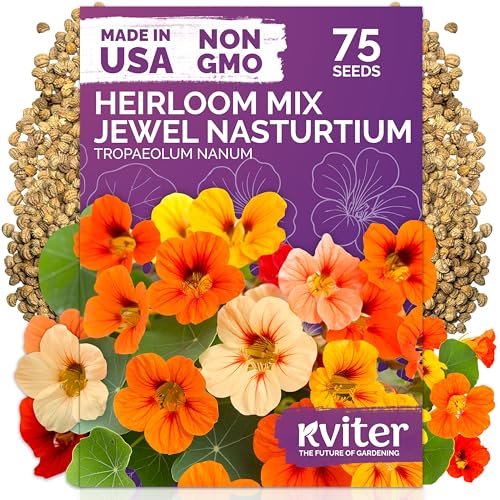
High Germination Rate: Soak dwarf nasturtium seeds overnight to reach up to 90% germination in 10-12 days at 60-65°F; flowers seeds are hardy in USDA 1-12 for gardens, window boxes & hanging baskets.

QUALITY - All seeds packaged by Seed Needs are intended for the current and the following growing seasons. All seeds are stored in a temperature controlled facility that is free of significant amounts of moisture.
How to Pair Annuals and Perennials for Continuous Bloom
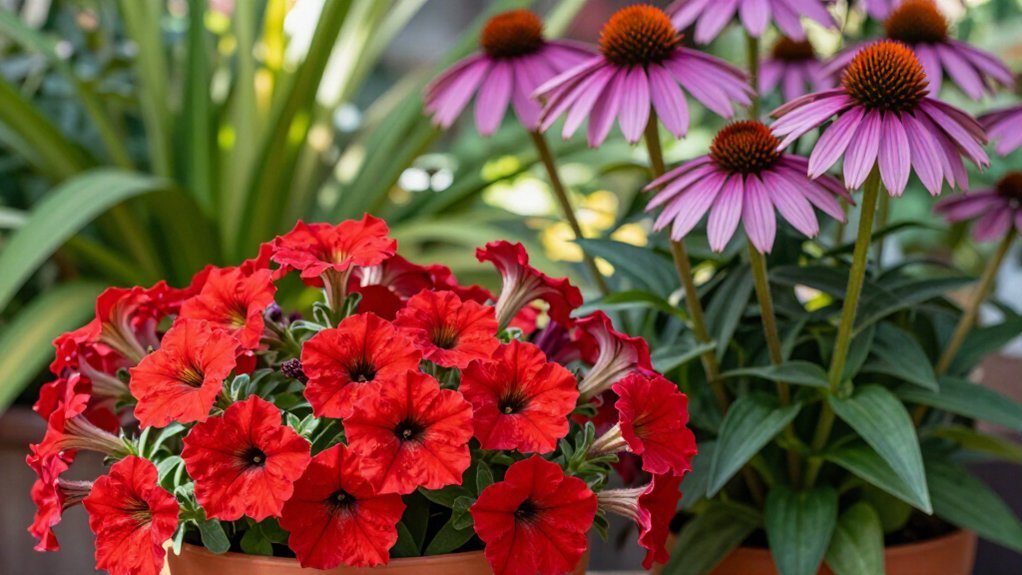
Because you want color that persists from spring frost through autumn chill, you’ll need to orchestrate annuals and perennials as complementary partners rather than competing elements. Successful pairing demands strategic garden design that accounts for staggered bloom times and cohesive color schemes.
- Anchor your border planning with long-blooming perennials, such as daylilies (Hemerocallis ‘Stella de Oro’, USDA zones 3-9) and echinacea (Echinacea purpurea, zones 3-8), then weave in annuals like petunias and zinnias for uninterrupted color through the season.
- Use perennials for early-season scaffolding and repeat blooms, filling gaps with fast-growing annuals that provide rapid texture changes.
- Deadhead annuals weekly to maintain continuous bloom, while allowing perennials to rebound naturally for successive years, and plan for reseeding annuals, such as sweet alyssum, to extend color while perennials establish.
Recommended Products

PREMIUM VARIETY: 24 perennial wildflower seeds mix with high germination rate; Non-GMO wild flower seeds create stunning garden flowers; Perfect for butterfly garden seeds and pollinator seed mix; Includes popular varieties for outdoor planting

1. Freshest Seeds, Zero Fillers: Our butterfly & hummingbird mix includes 23 beautiful perennial varieties — no cheap annuals. We pack the freshest flower seeds to maximize your garden's success. 99% pure live seed, absolutely no filler. Whether you buy wildflower seeds bulk or small packs, quality stays the same. Just pure, sprout-ready seeds for planting.