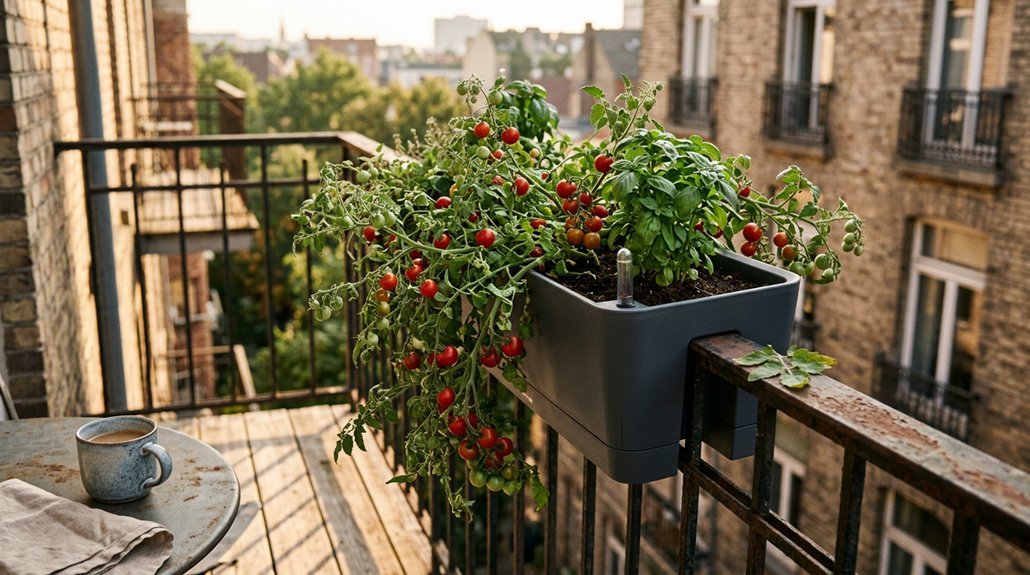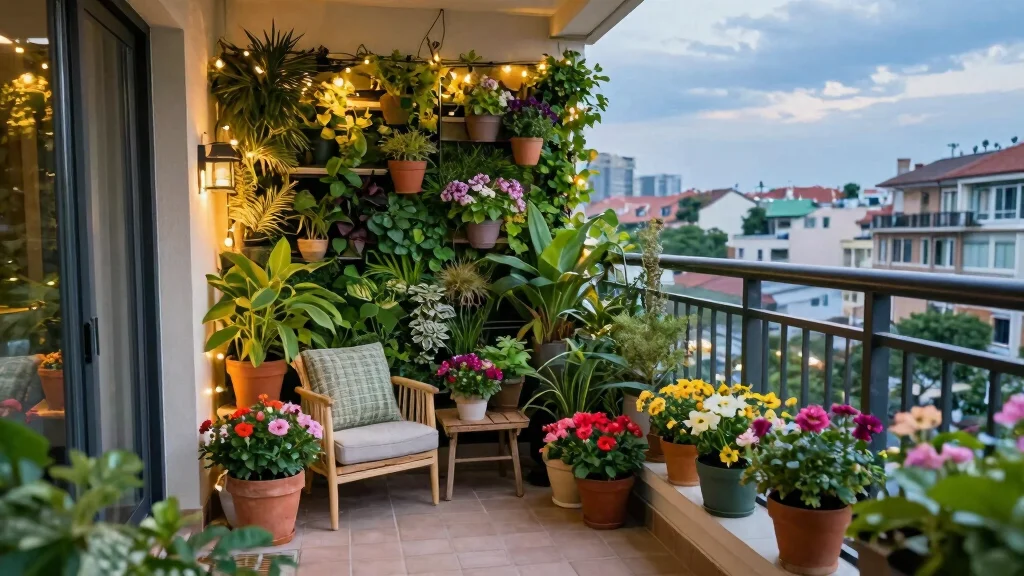



By 2026, urban balconies will produce up to 40% of a household’s fresh produce when you select cultivars bred specifically for confined spaces and fluctuating microclimates. You’ll need plants that tolerate wind exposure, limited root depth, and 6 to 8 hours of direct sunlight, which means choosing determinate tomatoes like ‘Patio Princess’ or ‘Tiny Tim’ that reach only 18 to 24 inches.
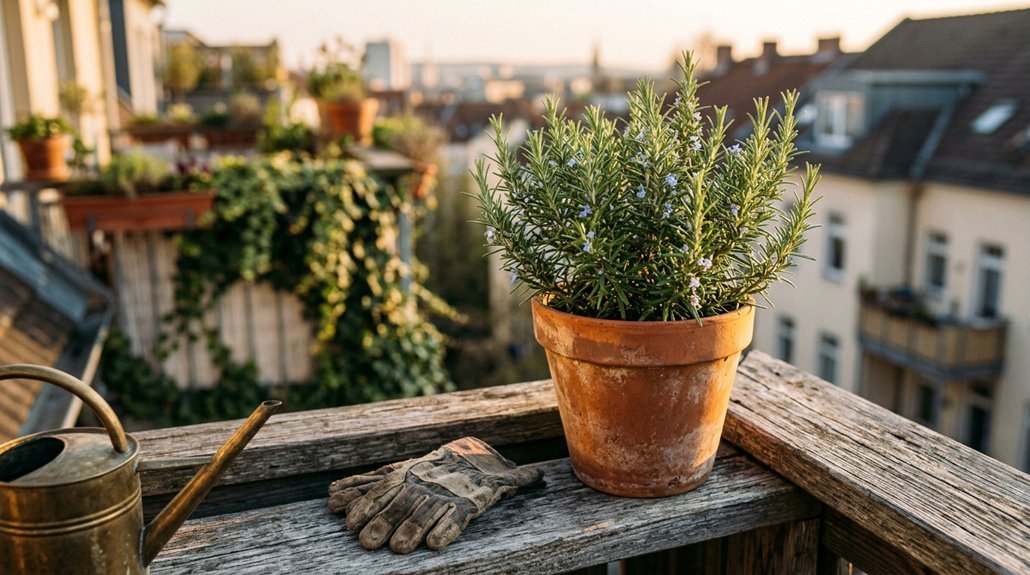
Your selection should also include compact peppers such as ‘Lunchbox Orange’ for vertical visual interest, and trailing strawberries like ‘Seascape’ to exploit your railing’s linear growing area. Your herb selection should prioritize drought-tolerant perennials, including rosemary, thyme, and oregano, which thrive in USDA zones 5 through 10 with weekly watering once established.
Leafy greens such as ‘Salad Bowl’ lettuce allow staggered harvests every 21 days. For structure, you’ll pair these with a Bamworld-style tall stand or Layyah double-layer setup, ensuring wind resilience through weighted bases and strategic placement against your balcony wall.
The question isn’t whether your small space can sustain growth, but which specific cultivars will maximize your yield per square foot.
Dahey 15 Inches Railing Planter Box 3 Pcs Metal Hanging Flower Pots, Black

Balcony Rail Planter: Rectangular outdoor planters was designed to maximize inside growing space allowing dirt and roots to grow strong and deep.This special design can be...
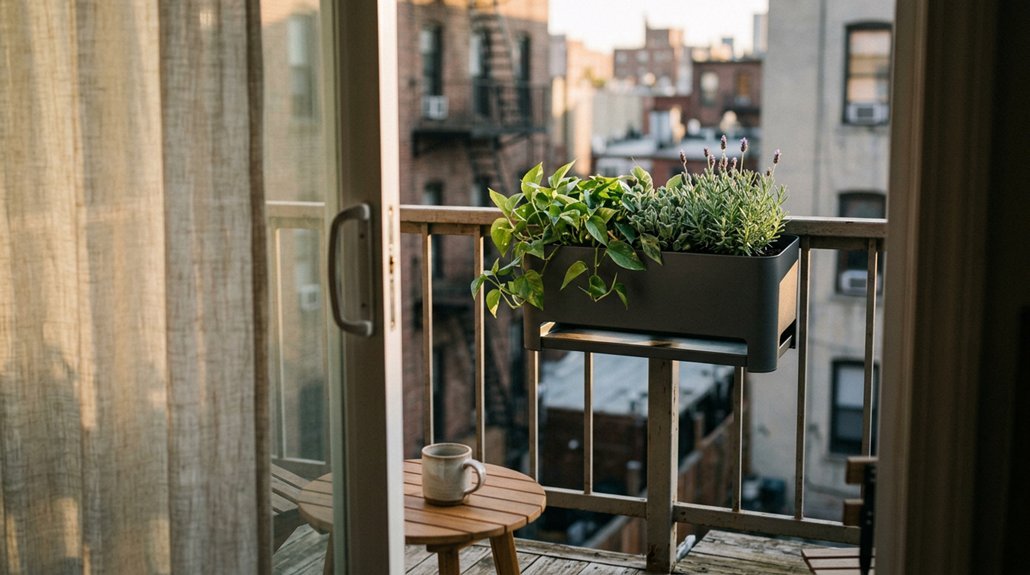
When you’re working with limited square footage on a balcony, the Dahey 15 Inches Railing Planter Box gives you vertical growing space without sacrificing your floor area. You mount this 15.74 x 6.10 x 5-inch rectangular metal planter directly onto railings up to 2.7 inches thick, creating elevated growing beds where dirt and roots develop strong and deep. The three-piece set arrives with hooks disassembled, so you’ll complete simple self-assembly before installation.
You can cultivate compact determinate tomato cultivars like ‘Patio Princess’ or ‘Tiny Tim’ in USDA zones 5-10, positioning them to receive six to eight hours of direct sun. The built-in drainage holes prevent root rot, though you may drill additional openings if your potting mix retains excess moisture.
For herbs, you should plant drought-tolerant rosemary, thyme, and oregano together, watering only when the top inch of soil dries completely.
The countryside-style black finish complements brick walls and wooden sheds, functioning equally well as a desktop container or window-mounted herb garden. You might alternate trailing strawberries with upright pepper plants, ‘Jalapeno M’ or ‘Cayenne Long Slim’, maximizing your 15-inch horizontal growing length.
For leafy greens, succession-plant ‘Salad Bowl’ lettuce every two weeks, harvesting outer leaves at four to six inches while inner crowns continue producing.
This system transforms apartment balconies, front porches, and patio railings into productive growing zones without structural modifications or floor clutter.
Best For: Apartment dwellers and homeowners with limited outdoor space who want to grow vegetables, herbs, and flowers on balconies, railings, or porches without sacrificing floor area.
Pros:
- Maximizes vertical growing space on railings up to 2.7 inches thick without requiring structural modifications or floor clutter
- Built-in drainage holes with option to add more openings for customizable moisture control
- Versatile countryside-style design works as railing planter, window-mounted herb garden, or indoor desktop container
Cons:
- Requires self-assembly of hooks and iron bucket upon arrival due to disassembled shipping
- Limited to railings 2.7 inches or thinner, excluding thicker deck or balcony rails
- 15-inch horizontal growing length restricts planting to compact or determinate plant varieties
Recommended Products
Balcony Rail Planter: Rectangular outdoor planters was designed to maximize inside growing space allowing dirt and roots to grow strong and deep.This special design can be hung on the balcony, window, garden,railing, anywhere in the room,also can be used as desktop.

Balcony Rail Planter: Rectangular outdoor planters was designed to maximize inside growing space allowing dirt and roots to grow strong and deep.This special design can be hung on the balcony, window, garden,railing, anywhere in the room,also can be used as desktop

Balcony Rail Planter: Rectangular outdoor planters was designed to maximize inside growing space allowing dirt and roots to grow strong and deep.This special design can be hung on the balcony, window, garden,railing, anywhere in the room,also can be used as desktop
Artificial Geranium Fake Flowers for Outdoor Decoration (6 Bundles, UV Resistant)

Package: Total 6 bundle of artificial geranium flower, Pot not included. High Quality: Faux geranium flowers and leaves are made of high-quality silk, with a real touch and...
Why settle for high-maintenance blooms when you need reliable color without the workload? You will find your solution in HyeFlora’s Artificial Geranium Fake Flowers, six UV-resistant bundles engineered for outdoor endurance. Each measures 3 inches in diameter, 4.5 inches wide, and 9 inches tall, with three dark purple and three purple silk blooms featuring real-touch texture and vein-detailed leaves.
You will appreciate the metal-and-plastic stem construction, which withstands rain, sun, and temperature swings without fading or deteriorating. No watering schedule complicates your routine, no deadheading steals your weekend hours, and you will reuse these bundles across seasons.
You can arrange them in planters, hanging baskets, window boxes, or porch containers, the versatility extending from everyday balcony displays to wedding aisle decorations. For Mother’s Day gifts or reception centerpieces, you will deliver lasting impact without demanding ongoing care from recipients. Note that pots require separate purchase, so you will select containers matching your aesthetic vision.
Best For: Homeowners and event planners seeking vibrant, maintenance-free outdoor floral decor that withstands harsh weather conditions without fading or requiring ongoing care.
Pros:
- UV-resistant, waterproof construction ensures year-round outdoor durability without fading or weather damage
- Zero maintenance required—no watering, weeding, or deadheading needed for lasting visual appeal
- Versatile 6-bundle set suits multiple applications from everyday patio displays to special occasion centerpieces
Cons:
- Pots and containers must be purchased separately, adding to setup effort
- Fixed 3-inch diameter and 9-inch height may not suit all planter sizes or dimensional preferences
- Limited to two purple color variations (dark purple and purple), lacking broader color customization options
Recommended Products
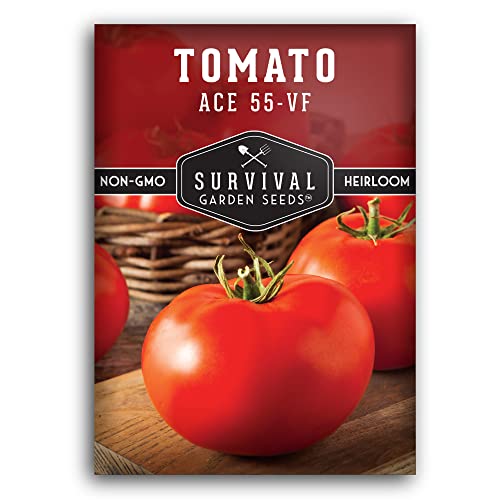
LOW ACID TOMATOES – Enjoy mild, low-acid fruits ideal for those sensitive to acidity; perfect for fresh eating, canning, or making smooth tomato sauces without bitterness

High Yield Determinate Variety: Celebrity tomato seeds for planting produce uniform bush tomato plants with deep oblate red fruit. Heirloom seeds designed for gardens and raised beds, tomato plant offer reliable yields in USDA zones 2–11.

PERFECT FOR SMALL SPACES – Tiny Tim’s compact plants thrive on patios, balconies, or sunny windowsills, giving you fresh cherry tomatoes even without a traditional vegetable garden plot
The Balcony Gardener: Creative ideas for small spaces

The reprint edition maintains its practical focus through measured, visual instruction rather than aspirational photography. This means you can replicate the container combinations, irrigation setups using 2-gallon reservoir planters, and seasonal rotation schedules without guessing at scale or proportions.
You will find 144 pages of step-by-step guidance covering planting layouts, container choices, and space optimization tailored specifically for balconies and compact outdoor areas.
The book emphasizes creative solutions for limited square footage, teaching you to maximize vertical surfaces, select appropriate cultivars for your USDA zone, and establish maintenance routines that improve growth conditions. You can reference specific project sequences when designing your irrigation system or planning seasonal rotations.
The paperback format allows quick consultation while you work, ensuring you apply expert horticultural instruction without interruption. CICO Books designed this 2018 reprint for immediate practical application, not passive inspiration.
Best For: Urban gardeners with limited balcony or compact outdoor space who want practical, replicable guidance rather than aspirational inspiration.
Pros:
- Provides measured, visual instruction with specific details like 2-gallon reservoir planters and scale-accurate proportions for reliable replication
- Offers 144 pages of step-by-step, actionable guidance covering planting layouts, container choices, and space optimization tailored specifically to small spaces
- Paperback format enables quick on-the-job consultation without interrupting hands-on gardening work
Cons:
- Reprint edition may lack updated cultivar recommendations or newer container gardening techniques developed since 2018
- Measured, instructional approach prioritizes practicality over aspirational photography, which may disappoint readers seeking visual inspiration
- Focus on balcony-specific constraints means less relevance for gardeners with ground-level plots or larger outdoor areas
Recommended Products

High Germination Rate: Mini bell peppers heirloom seeds sprout in 7–10 days, producing uniform baby peppers garden seeds on compact 20–30 inch baby bell pepper plant for small gardens.

SPICY HEIRLOOM PEPPERS – Hot Thai chili pepper seeds for planting, these hot red chilis deliver 50K–100K SHU Bird’s Eye peppers for Asian cooking, pickling, or drying

EXTREMELY HOT PEPPER SEEDS FOR PLANTING – Mini white habaneros deliver an intense 100,000–350,000 Scoville units of fiery spice balanced by subtle tropical sweetness, perfect for sauces and salsas
Ouddy Decor 3 Pcs Artificial Hanging Flowers for Outdoor Decor, Purple

Packaging Content: Fake hanging flowers for outdoors consist of 3 bundles of artificial petunias flowers, each 19 inches long, 12 forked, with a total of 144 flower heads;...
Looking for vibrant color without the upkeep? You’ll find it in the Ouddy Decor 3 Pcs Artificial Hanging Flowers for Outdoor Decor, Purple, which delivers 144 UV-resistant flower heads across three 19-inch bundles of silk-and-plastic petunias.
You insert these clusters into containers, adjust their positioning, and step back to admire your work. Unlike living specimens demanding watering schedules, pruning routines, and zone-specific hardiness considerations, these artificial blooms maintain their bright appearance indefinitely without intervention.
You receive twelve forked stems per bundle, providing sufficient density for full, attractive displays on your balcony railing, porch ceiling, or patio wall. The clear, smooth textures and realistic construction satisfy close inspection. The purple coloration persists through sun exposure.
For spring and summer decorating, or as a practical gift for fellow home enthusiasts, you’ll appreciate how this Ouddy Decor offering eliminates maintenance entirely while preserving visual impact.
Best For: Homeowners and renters seeking vibrant outdoor floral displays without maintenance, particularly those with balconies, porches, or patios who want year-round purple color without watering, pruning, or sun damage concerns.
Pros:
- Zero maintenance required—no watering, pruning, or seasonal replacement needed
- UV-resistant materials maintain bright purple coloration despite prolonged sun exposure
- 144 realistic flower heads across three dense bundles create full, attractive displays
Cons:
- Fixed appearance with no natural growth or seasonal variation
- Plastic and silk construction may degrade or fade over extended outdoor exposure despite UV resistance
- Requires container purchase separately for installation
Recommended Products
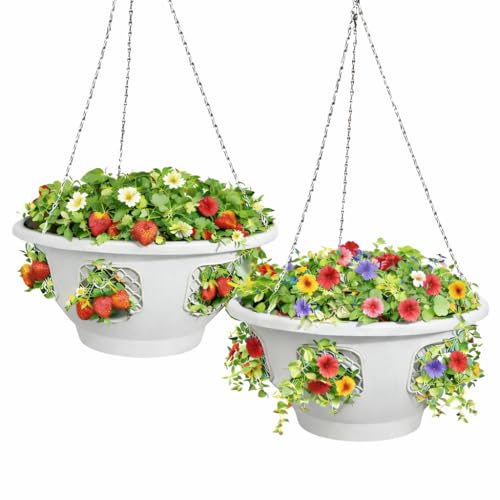
MAXIMIZE YIELD IN ONE HANGING BASKET – Designed for growing hanging strawberries, herbs, vegetables, and flowers with bigger, fuller results than traditional hanging planters. Ideal for patios, balconies, porches, and small spaces.

Enjoy a great harvest that creates culinary inspiration when you choose easy-to-grow Bonnie Plants Strawberry with Miracle-Gro Pour & Feed Singles Ready-to-Use Plant Food 4-pack for your garden; trust the experts with more than 200 years of experience
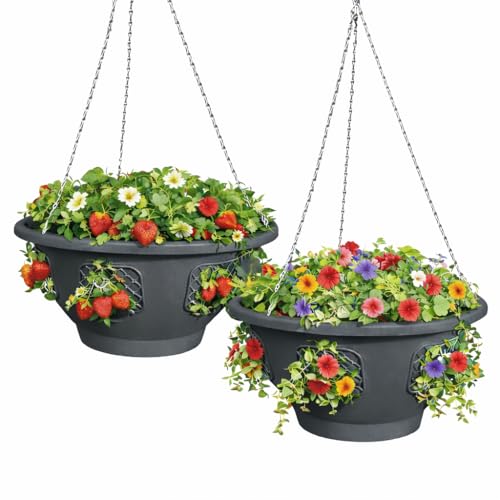
MAXIMIZE YIELD IN ONE HANGING BASKET – Designed for growing hanging strawberries, herbs, vegetables, and flowers with bigger, fuller results than traditional hanging planters. Ideal for patios, balconies, porches, and small spaces.
Apartment balcony garden guide

Who benefits most from this 2026 plant selection? You do, if you’re navigating limited square footage, unpredictable wind exposure, or strict building codes while craving productive green space. This guide, drawn from the 62-page Kindle reference published March 2026, equips you with systematic approaches to balcony cultivation.
First, you’ll assess your specific conditions: measure your balcony’s dimensions, confirm weight limits with your building manager, and track sun exposure across seasons. You’ll select containers matching your railing type, install drip irrigation for consistent moisture, and choose plants suited to your USDA hardiness zone and microclimate.
You’ll optimize vertically with trellises and wall-mounted planters, pairing compact vegetables like ‘Patio Princess’ tomatoes with pollinator-friendly ornamentals. You’ll monitor for wind damage, adjust feeding schedules by plant type, and troubleshoot nutrient deficiencies before they spread.
Your balcony becomes both productive sanctuary and sustainable ecosystem through deliberate, zone-appropriate choices.
Best For: Apartment dwellers with limited square footage, unpredictable wind exposure, or strict building codes who want to create a productive, sustainable balcony garden through systematic, zone-appropriate cultivation methods.
Pros:
- Comprehensive coverage of structural assessments (weight limits, sun tracking, wind patterns) specific to balcony constraints that most generic gardening guides overlook
- Detailed vertical optimization techniques including trellis systems and wall-mounted planters designed for railing compatibility and space efficiency
- Integrated sustainability focus with water reuse, composting options, and container-compatible practices for environmentally conscious urban growers
Cons:
- No specific discussion of budget considerations for container types, irrigation systems, or plant varieties
- Lacks troubleshooting guidance for common building management restrictions or neighbor conflict resolution related to balcony modifications
- Container-specific composting and overwintering sections may be insufficient for gardeners in extreme climates with limited indoor transition space
Recommended Products

EXTRA LARGE PACKET contains over 1 full ounce of pure live seeds (7,500+ seeds) - Enough to cover 100 square feet.

HEAT & DROUGHT READY CROPS - Selected vegetables that perform in hot weather and low-water conditions, ideal for southern gardens, dry climates, and challenging growing seasons

DROUGHT TOLERANT WILDFLOWER SEEDS: Create a colorful, water-wise garden with a carefully selected mix of heat-tolerant annual and perennial wildflowers that thrive in dry conditions and western landscapes. Ideal for low-water gardens, xeriscapes, and sunny areas.
Bamworld Tall Wood Plant Stand Indoor Outdoor Brown

>10 Pots Large Plant Table: The wooden plant shelf includes 10 shelves, which can hold 11-25 pots of regular size. it can hold a high plant pot plant; Bearing up to 150...
Struggling to maximize your limited balcony footprint? You’ll transform your compact space with the Bamworld Tall Wood Plant Stand, a 42.5-inch vertical solution that holds 11 to 25 pots across ten shelves while occupying just 30 by 11.8 inches of floor area.
You’re gaining structural integrity through carbonized eucalyptus wood, heat-treated at 300°C for waterproof performance that withstands outdoor exposure. You’ll extend its lifespan by positioning it in semi-protected balcony corners.
You’ll distribute weight strategically, placing heavier containers on lower tiers to optimize the 150-pound capacity. Meanwhile, you’ll cascade lighter specimens, such as trailing pothos (Epipremnum aureum) or string of pearls (Senecio rowleyanus), from upper levels.
You’ll appreciate the hanging option for vertical dimensionality. You’ll assemble the unit swiftly using provided instructions.
You’re creating a multi-functional display that converts your balcony into organized botanical habitat without sacrificing accessibility for daily care routines.
Best For: Urban gardeners and plant enthusiasts with limited outdoor space who need a high-capacity, vertical storage solution for 11-25 potted plants on balconies, patios, or small indoor areas.
Pros:
- Space-efficient vertical design maximizes plant capacity (11-25 pots) within a compact 30″ x 11.8″ footprint
- Carbonized eucalyptus wood heat-treated at 300°C provides waterproof durability for indoor and outdoor use
- 150-pound load capacity with strategic tiered weight distribution accommodates varied pot sizes and plant types
Cons:
- Outdoor durability is reduced compared to indoor use, requiring semi-protected placement for longevity
- 42.5-inch height may limit stability in high-wind balcony environments without additional anchoring
- Fixed shelf configuration offers no adjustability for oversized or irregularly shaped containers
Recommended Products

FITS DIFFERENT RAILS – Accentuate your home or business with a planter that works with decks and balconies with wood and metal railings that are 1.25” to 3.875” wide (2x1, 2x4 and 2x6 railings traditionally) wide. The included fasteners help stabilize the planter over the rail.

Instant Installation with Detachable Hooks: Say goodbye to complicated tools. Each planter features heavy-duty detachable metal hooks that securely clamp onto railings up to 2.36 inches wide—the perfect fit for standard apartment balconies, deck banisters, and porch fences. Simply hang, fill, and enjoy; no drilling or screws required. Ideal for renters seeking non-permanent solutions.

VERSATILE USE: Measuring 12" D x 24" W x 9" H, these outdoor planters fit standard 2" x 4" and 2" x 6" deck rails. Ideal for flowers, herbs, or plants, and suitable for patios, decks, railings, fences, or garden areas.
Layyah Double-Layer Plant Stand for Indoor Storage

Double-Layer Design – This spacious double-layer plant stand accommodates a variety of plants, allowing you to display your favorite greenery and decorative items in a...
Why let limited square footage dictate your gardening ambitions when the Layyah Double-Layer Plant Stand transforms even the smallest balcony into a thriving vertical oasis? You will maximize every inch of your limited outdoor footprint by stacking your greenery across two spacious tiers. Each tier is capable of hosting compact cultivars like dwarf tomato ‘Tiny Tim’ (Solanum lycopersicum, USDA zones 3-10) or trailing nasturtium ‘Jewel Mix’ (Tropaeolum majus, zones 9-11 as annuals).
You gain structural confidence from the stand’s marriage of high-quality wood and metal, a combination that supports root balls and saturated soil without wobbling. You position this unit against your balcony railing, where morning light reaches the upper shelf while shade-tolerant ferns occupy the lower level.
You maintain flexibility, since the neutral-toned minimalist design transitions seamlessly between indoor winter storage and outdoor summer display. You water thoroughly until drainage exits the bottom, you rotate pots weekly for even light exposure, and you wipe metal frames monthly to prevent corrosion. Your plants thrive because you chose infrastructure that respects both your space constraints and your horticultural goals.
Best For: Urban gardeners with limited balcony or indoor space who want to grow compact vegetables, herbs, and trailing flowers in a sturdy, weather-resistant vertical setup.
Pros:
- Space-saving double-layer design maximizes growing area in small footprints like apartments and balconies
- Durable wood-and-metal construction supports heavy pots with saturated soil without instability
- Neutral minimalist aesthetic transitions seamlessly between indoor winter storage and outdoor summer display
Cons:
- Limited to compact plant varieties due to tier height and depth constraints
- Requires monthly maintenance (wiping metal frames) to prevent corrosion
- Open design offers no protection from wind, temperature extremes, or pests for exposed plants
Recommended Products

US Grown Super Productive and Tasty Tomato, Easy to Grow in Container Year Round

Small, compact plants produce heavy crops in containers or gardens

Factors to Consider When Choosing Plants for a Balcony Garden

Before you select any cultivars for your 2026 balcony garden, you’ll need to evaluate your specific growing conditions. These include sunlight exposure levels, which determine whether you’re working with full sun (6+ hours), partial shade (3-6 hours), or deep shade (under 3 hours). Also consider wind and weather patterns that can desiccate foliage or topple containers, space constraints that dictate whether you’re gardening in 4 square feet or 40, weight capacity limits that typically range from 20 to 100 pounds per square foot depending on your building’s structural engineering, and container compatibility, since a 24-inch terracotta pot weighing 80 pounds when saturated demands very different support than a 6-inch plastic nursery container.
You’ll want to measure your balcony’s dimensions, track sun patterns across three days, and consult your building’s management for load-bearing specifications before purchasing a single plant. Matching the right species, such as drought-tolerant Sedum ‘Autumn Joy’ (USDA zones 3-9) for hot, exposed sites or delicate Impatiens walleriana for shaded, sheltered corners, to these five factors determines whether your garden thrives or fails within the first growing season.
Once you’ve documented these parameters, you’re ready to select plants that won’t just survive but will flourish in your unique microclimate, turning your balcony into a productive, beautiful extension of your living space.
Recommended Products

An edible ornamental plant that produces blue-purple peppers 1-2 inches long; The peppers are extremely hot; As the crop ripens, the color changes from pale blue to dark blue when ripe


Sunlight Exposure Levels
How much light actually reaches your balcony, and when it arrives, will determine whether your tomatoes thrive or your basil bolts before you can harvest a single leaf. You need to measure your actual exposure: full sun means six or more hours of direct light, partial sun delivers three to six hours, and shade offers fewer than three hours daily.
Your balcony’s orientation shapes everything. East-facing spaces capture gentle morning sun, perfect for cilantro, lettuce, and parsley that appreciate cooler starts.
West or south exposures blast intense afternoon heat, ideal for determinate tomatoes, peppers, and rosemary, though you’ll water more frequently.
Height, nearby walls, and reflective surfaces alter your effective light, sometimes intensifying it beyond expectations. In drought-prone zones, select xeric species like lavender or portulaca, or rig temporary shade cloth during peak hours to prevent scorch.
Wind and Weather
While you’re evaluating sunlight, you’ll need to account for wind, which can be just as crucial in determining which plants survive and which ones shrivel before midsummer. Balcony wind accelerates evaporation, desiccating foliage rapidly, so you’ll want drought-tolerant, wind-tolerant species from the start.
Constant breeze increases structural stress on lightweight containers and hanging planters, meaning secure mounting and sturdy materials become crucial investments. You’ll find that slightly larger, deeper pots stabilize root systems and reduce tipping risk during gusts.
Place taller plants or those with top-heavy growth lower, or anchor them firmly to mitigate breakage. Remember that wind dynamics vary with height, creating distinct microclimates: railings and edges differ substantially from sheltered corners, directly affecting which cultivars you’ll select for each zone.
Space Constraints
Where exactly will each plant live once you’ve accounted for every square foot of your balcony? You must measure your dimensions precisely, then select compact cultivars like ‘Patio’ tomatoes or dwarf Japanese maples (Acer palmatum ‘Shishigashira’, USDA zones 5-8) that mature under four feet with shallow, fibrous root systems.
You’ll maximize vertical space by installing wall-mounted planters, tiered shelving, or railing boxes, positioning sun-lovers such as succulents and lavender on south-facing surfaces while tucking shade-tolerant ferns beneath overhangs. Group plants by light requirements, placing morning-sun species eastward and afternoon-tolerant varieties westward.
Choose containers at least twelve inches deep with adequate drainage holes, filling them with lightweight, container-specific potting mix rather than garden soil. You’ll water when the top inch dries, preventing root rot in confined spaces where evaporation differs from ground-level gardens.
Weight Capacity Limits
Before you stack that third terra-cotta planter onto your balcony railing, you’re wise to pause and calculate whether your structure can actually bear the load you’re proposing. Always check the weight capacity of your balcony planters and shelves, as many stands specify a maximum load per unit and total weight to prevent bowing or collapse. You’ll want to distribute weight strategically, placing heavier pots toward the bottom or lower shelves to maintain stability and reduce top-heavy tipping risk.
When using hanging planters, account for both the pot weight and soil with water when full, as liquid adds significant load that can exceed railing limits. Prefer lightweight, durable materials, such as treated wood or metal with proper coatings, for balcony use to resist wind and weather while staying within weight specs.
Consider modular or tiered systems that allow incremental loading, enabling you to add plants gradually without surpassing the overall weight capacity.
Container Compatibility
Your container choice sets the foundation for every plant you’ll grow on your balcony, so you’ll want to match each pot to its occupant’s specific needs from the start. You’ll select containers with drainage holes, or you’ll drill them yourself, because waterlogging causes root rot in confined balcony environments. You’ll match container size to root depth, ensuring each pot provides adequate width and depth for mature root systems of your chosen cultivars.
You’ll prioritize lightweight, weather-resistant materials, such as durable plastics or coated metals, which ease handling during windy conditions. You’ll calculate total weight when filled, using lightweight growing media and compact varieties to respect your railing limits.
You’ll align sun requirements with your balcony’s microclimate, placing full-sun species like determinate tomatoes in south-facing exposures and shade-tolerant ferns in northern aspects.
Watering Accessibility
How will you keep every container hydrated when your balcony spans twenty feet from faucet to railing? You must align watering access with container height, so you can reach drip lines or watering cans without moving pots on narrow balconies. Choose planters with drainage that prevents water pooling, and allows easy flushing or canalization of excess moisture.
Favor containers with clear overflow paths and accessible saucers to simplify regular watering schedules. Consider vertical or tiered setups to minimize walking distance from a water source while maintaining even moisture distribution.
Group plants with similar watering needs, so you can water them together without exceeding balcony weight limits. These strategies transform a sprawling balcony into a manageable, efficiently irrigated growing space.
Climate Hardiness Zone
Where exactly does your balcony sit on the USDA Plant Hardiness Zone map, and why does that single number matter more than almost any other factor in your plant selection? This zone, determined by average minimum winter temperatures, dictates which plants survive your coldest nights without protection.
You must match plants to your zone rating, or resign yourself to treating tender species as annuals. Yet your balcony creates microclimates through sun exposure, wind patterns, and structural shelter, occasionally shifting effective hardiness by half a zone. Capitalize on this by positioning marginal plants against warm walls or behind windbreaks.
For extreme zones, implement overwintering strategies: bring containers indoors, apply insulated coverings, or cluster pots together. When selecting perennials, verify both zone compatibility and container-appropriate root depth, ensuring survivability in confined spaces where soil volume limits insulation.
Plant Growth Habits
Once you’ve mapped your hardiness zone and identified your balcony’s microclimates, you’re ready to match specific plants to the constraints of container life. Container-grown plants face limited soil volume, which restricts root depth and demands consistent watering and fertilization to prevent stress.
You’ll need to assess light requirements carefully. Sun-loving species require six hours of direct daily light, while shade-tolerant varieties perform best with indirect light or gentle morning exposure.
For drought-tolerant Mediterranean herbs like lavender and rosemary, select deeper containers with well-draining potting mixes to protect against root rot in warm, windy conditions. Choose compact or dwarf varieties for vertical and railing planters, maximizing your square footage without overcrowding.
Finally, track seasonal growth patterns, rapid spring growth followed by summer dormancy, so you can time pruning, container upgrades, and succession planting effectively throughout the year.