


You probably don’t know that the gnats hovering over your Monstera deliciosa aren’t fruit flies at all, but fungus gnats, Bradysia coprophila, whose larvae chew through fine root hairs in USDA zones 4 through 11 houseplants. These pests complete their life cycle in just seventeen to twenty-eight days at seventy-five degrees Fahrenheit, meaning you can break their reproductive loop with precise timing. You’ll need to confirm their presence first, then deploy BTI drenches while manipulating soil moisture, but the sequence matters more than you might expect. The method that actually works isn’t what most plant parents try first.
Confirm You Have Fungus Gnats in Indoor Plants
Why risk treating the wrong pest when a few minutes of observation can save you weeks of frustration? You need to confirm you’re dealing with fungus gnats before treating your indoor plants.
Start by examining your potting soil closely. Adult gnats are tiny, dark gray flies, about 1/8 inch long, and you’ll notice them hovering near work surfaces or flying around your greenery, especially where soil moisture remains high. Check the topsoil and any decaying organic matter for larvae, which appear white or translucent, roughly 5 mm long, with distinctive black heads.
For definitive confirmation, you can perform the potato test. Place raw potato slices on the soil surface, wait a few days, then inspect them for larvae presence. Persistent damp conditions in your potting soil will sustain the infestation, so accurate identification matters before you proceed.
Recommended Products

Quick acting formula

The only product with bti, bacteria toxic only to mosquito larvae

Corn cob granules coated in BTI, the Bits do not last long but provide a punch that will turn water, black with larvae, to a clear pool void of future mosquitoes
Kill Larvae With BTI: Make Mozzie Tea for Indoor Plants
Now that you’ve confirmed fungus gnats are the problem, you’re ready to strike at the root of the infestation by eliminating the larvae living in your potting soil.
Begin by making Mozzie Tea for your indoor plants. Steep four tablespoons of Mosquito Bits in a gallon of warm water for at least 30 minutes. This BTI infusion creates effective BTI water for larval control. Let the mixture reach room temperature, then strain and apply it directly to your potting mix.
Apply this BTI water across multiple watering events over two months. The BTI targets soil-dwelling larvae specifically, stopping them from feeding so they starve before reaching adulthood.
Meanwhile, place sticky traps in each pot to monitor adult fungus gnats while the Mozzie Tea works below the surface, enhancing your overall control strategy.
Recommended Products

[Catches Gnats, Fruit Flies, Whiteflies And More] Yellow sticky traps with top-grade adhesive grab fungus gnats, aphids, fruit flies, thrips, and whiteflies on contact from both faces. Place each card at soil level near drainage holes for fastest results. Works for indoor plants and outdoor gardens.
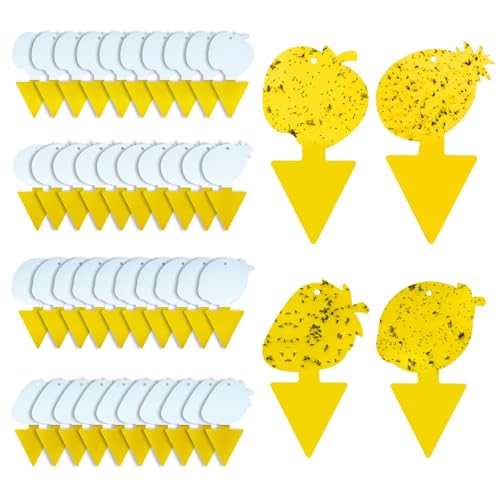
Powerful Insect Control: Captures fruit flies, gnats, whiteflies, aphids, midges, and other small flying pests using bright yellow color and extra-sticky glue

Ultra Sticky & Fast Acting: Bright yellow color attracts fruit flies and fungus gnats instantly, while extra-strong adhesive locks insects in place without dripping or drying out. Two Shapes: Sunflower, Butterfly
Trap Flying Adults With Sticky Traps
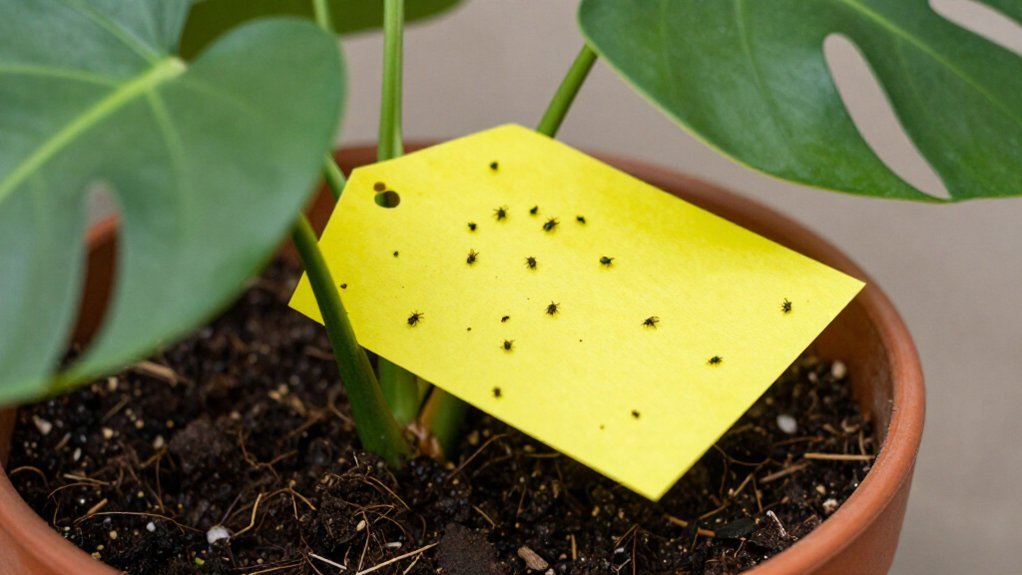
Where exactly are those tiny black specks hovering above your Monstera deliciosa or Ficus lyrata coming from, and how do you stop them from multiplying across your entire indoor collection? You trap those flying adults with sticky traps, specifically yellow traps or green traps designed for fungus gnats in indoor plants.
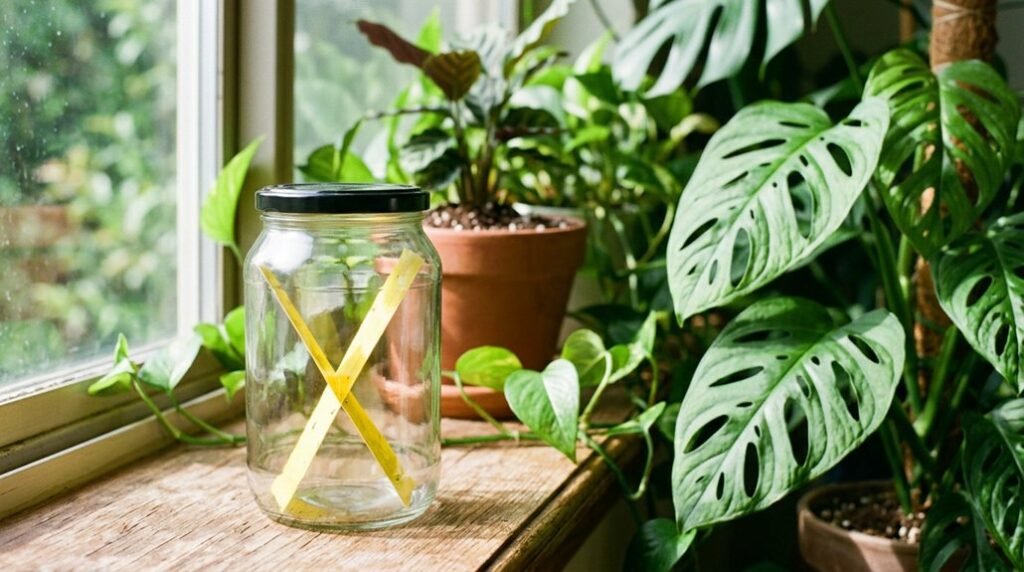
For yellow traps, you’ll remove one side’s paper backing, lay the sticky surface flat on the soil, or cut it into halves or quarters to fit smaller pots. Green traps slide onto pegs that you insert near the soil surface, making trap placement and movement between plants simple for ongoing monitoring. This adult capture method won’t eliminate larvae, so combine it with other treatments.
Sticky traps reveal population size through daily counts, guiding your decisions. You’re measuring, not guessing, and that control makes all the difference.
Recommended Products

Quick, at home results for Soil pH, Nitrogen, Phosphorous and Potash Innovative and inexpensive soil test kit features an easy-to-use capsule system and patented color comparators

KNOW BEFORE YOU GROW | Grow the healthiest, sustainable lawn and garden with the most accurate and easy to use professional soil test kit on the market

Accurate Soil pH Testing: Dewildetradingco Soil pH Test Strips offer measurements of soil pH levels (pH 3.5-9). As an essential tool for every gardener and grower, these test strips help determine the optimal pH for various plants, such as outdoor plants, indoor plants, gardens, grass lawns, fruit trees, flowers, vegetables, and forest shrubs.
Speed Results: Let Soil Dry Between Waterings
How quickly can you disrupt a fungus gnat infestation without reaching for chemicals? You can achieve meaningful larval control within one to two weeks by adjusting your watering schedule to allow soil surface drying.
Let the topsoil moisture drop until the top 5 cm, about 2 inches, becomes dry to your touch. This soil drying exposes fungus gnat larvae to unfavorable conditions, reducing their numbers significantly. You’ll notice fewer adults emerging, though you haven’t eliminated the problem entirely.
Once you’ve reached that 1.5-inch dryness threshold, resume watering carefully, avoiding saturation that would restart the gnat lifecycle. Balance matters here, because chronic underwatering harms your indoor plants.
For best results, combine this approach with sticky traps you’ve already placed and consider BTI treatments. This integrated strategy interrupts multiple life stages simultaneously.
Recommended Products
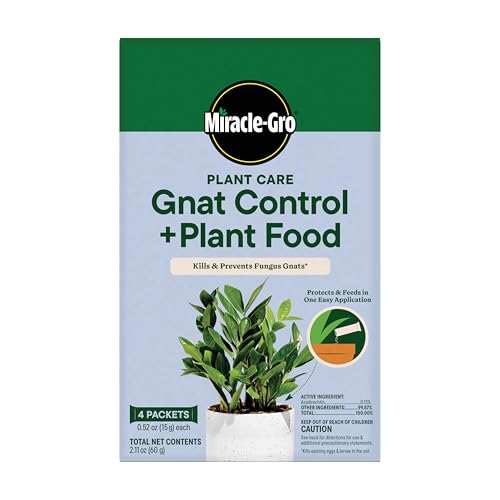
Fungus Gnat Control and Plant Food: Miracle-Gro Plant Care Gnat Control + Plant Food kills and prevents pesky fungus gnats (kills existing eggs and larvae in soil) while also providing your plants with the vital nutrients they need to thrive

GNAT CONTROL FOR INDOOR PLANTS: This bundle includes our natural plant bug spray and 12 gnat sticky traps for plants; this powerful gnat spray for indoor plants kills fungus gnats, spider mites, and fruit flies; use it with our sticky traps for enhanced pest control, ensuring thorough coverage and effective elimination of bugs and pests in your home and garden; it's the perfect solution for getting rid of fruit fly and fungus gnats (please contact us if the traps are missing and we will send a replacement)

SLOW-RELEASE NEMATODES FOR EFFECTIVE PEST CONTROL – Ready-to-use granular formulation that provides continuous protection against fungus gnats, thrips, whiteflies, and other garden pests.
Timeline: When Gnats Disappear and How to Prevent Return
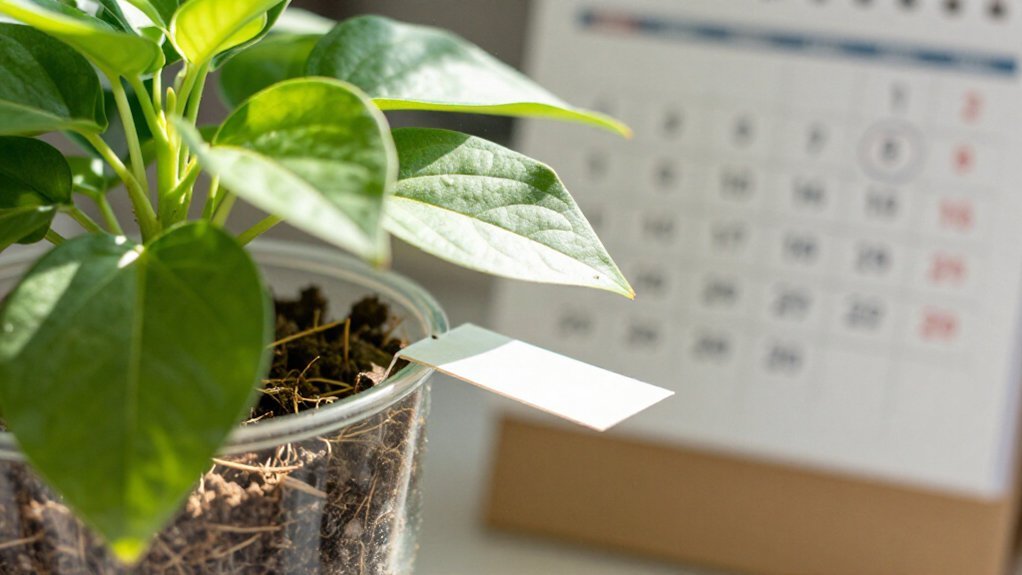
You’ve established a solid foundation by drying your soil, yet patience remains your most valuable tool as you move toward complete elimination. Most approaches show gnat reduction over 1–2 months, since adults lay up to 300 eggs per week and larvae take the active role in the lifecycle. You can accelerate this decline by combining BTI (Mosquito Bits) drenches to kill larvae with sticky traps to capture adults.
Expect several watering cycles, typically 4–8 weeks, using BTI-treated water and dry-out periods between applications for best results. During this time, monitoring with yellow traps and the potato test helps you gauge remaining adult activity and larval presence.
Prevention of re-infestation hinges on consistent topsoil drying, isolation of new plants for 2–4 weeks, and adopting bottom-watering to keep surfaces inhospitable.
Recommended Products

Useful Yellow Sticky Traps for Gnats: Fungus traps bright color attract flying insects, and high quality glue keeps them from escaping. Fungus gnat killer specially designed for flying plant pests. Fruit fly traps great for indoor or outdoor plant, especially potted plants.

Powerful Attraction That Works: The bright yellow color on leaf shape traps acts like a magnet, drawing in fungus gnats and other flying insects, turning these sticky plant fly traps into a simple yet powerful solution for indoor fly management.

【Non-toxic and Odorless】Our double-sided sticky sheets are made of environmentally friendly materials and coated with a safe, odorless, non-toxic adhesive that does not contain any chemicals, which is not only harmless to humans and pets, but also effectively controls pests and breaks their breeding cycle.