


You might not realize it, but your living room could harbor threats as dangerous as any household chemical. According to the ASPCA, over 30,000 pet poison cases involve plants annually, with certain cultivars capable of killing a 50-pound dog from a single leaf. Sago Palm (Cycas revoluta), hardy in USDA zones 9-11, tops every veterinary toxicology list: its cycasin toxin destroys liver cells within hours, and survival rates drop below 50% even with aggressive intervention. You’ll want to scan your shelves now, because six other common houseplants, including the ubiquitous Peace Lily (Spathiphyllum spp.) and variegated Pothos ‘Marble Queen’, carry insoluble calcium oxalate crystals that trigger immediate pain, excessive drooling, and airway obstruction. The question isn’t whether these plants can harm your dog—it’s whether you’ve already got one sitting within reach.
7 Indoor Plants Most Toxic to Dogs (Quick Identification Guide)
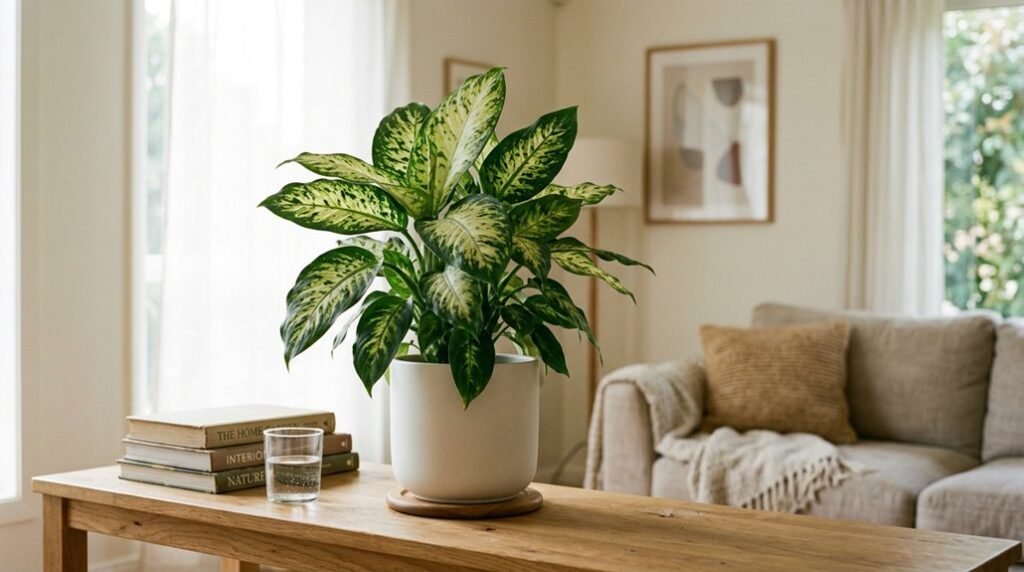
Although you might assume your home is a safe haven for your dog, several common houseplants pose serious health risks that every pet owner should recognize immediately. You’ll want to watch for Sago palm, which causes liver toxicity even in tiny amounts, and Dumb Cane, which triggers severe mouth irritation upon ingestion. When your dog chews Philodendron or pothos, you’re dealing with calcium oxalate crystals that burn the mouth and digestive tract. Snake Plant brings nausea and vomiting, while Peace Lily, another calcium oxalate carrier, creates throat swelling alongside oral distress. You must act fast if you spot drooling, pawing at the mouth, or vomiting after any plant contact. Remove these seven toxic varieties from your home, and you’re protecting your pet from potentially fatal consequences before they occur.
Recommended Products

Ornamental Elegance: Distinctive thick coat of fibers on its trunk adds unique texture and visual interest to any landscape.

🌞【UV Resistant Indoor & Outdoor Performance】Built with special UV shielded material, this artificial sago palm stands up to strong sunlight. As a reliable faux outdoor tree, it avoids fading, brittleness and surface deterioration. It retains bright tropical tones year round, great for palm trees for outside patio and other sheltered outdoor spaces as well as indoor decoration.
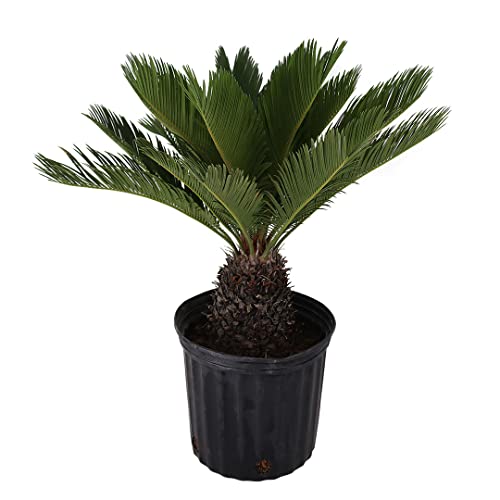
Live Sago Palm Plant – A slow-growing, ornamental palm with lush, feathery fronds and a striking trunk, perfect for indoor and outdoor décor
Sago Palm: The #1 Most Toxic Plant for Dogs
You’ll need to understand that even a single seed from Cycas revoluta, commonly known as Sago Palm and hardy in USDA zones 8-10, can kill a medium-sized dog by causing rapid liver failure, which means you must recognize the symptoms of vomiting, lethargy, and seizures within hours of ingestion. If you suspect your pet has chewed any part of this plant, including the stiff, feather-like fronds or the orange-brown seeds, you’re facing a true emergency that demands immediate transport to a veterinary clinic, where activated charcoal and aggressive supportive care, often including IV fluids and liver protectants administered over 72 hours, offer the only chance of survival. You should also keep the ASPCA Animal Poison Control Center number, 888-426-4435, saved in your phone, as their toxicologists can guide you through initial stabilization steps while you’re en route to professional care.
Recommended Products

All of our listings have very representative pictures of what you would receive.

2X MORE VALUE: The 16 oz of HiThrive Peace Lily Plant Food makes 96 gallons of nutrient-rich indoor plant fertilizer, while the 32 oz delivers 192 gallons, ensuring lasting care for your Peace Lilies.

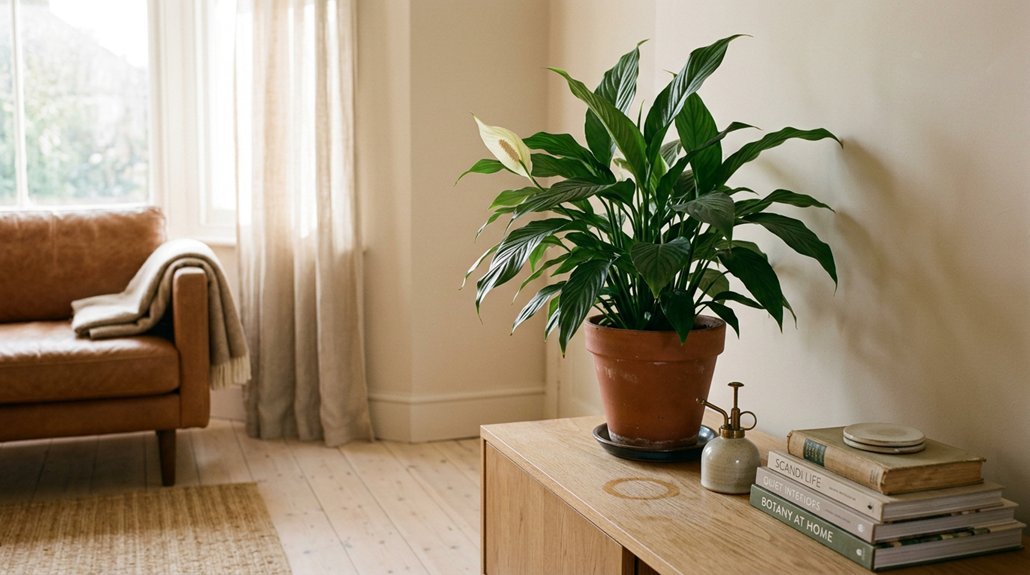
Spathiphyllum Peace Lily
Fatal Ingestion Risks
Where does the gravest danger hide among your houseplants? The Sago Palm, a deceptively beautiful Cycas revoluta, stands as the most lethal threat in your collection. Every part of this plant, from its glossy fronds to its underground seeds, delivers potent toxins directly into your dog’s system.
You must recognize that Sago Palm ingestion triggers rapid dog poisoning, attacking the liver within hours of consumption. Even a single seed or a few chewed leaflets can destroy liver cells irreversibly, pushing your companion toward complete liver failure. This makes the plant the undisputed champion among hazardous houseplants for pet owners.
Watch for warning signs: vomiting, diarrhea, and sudden lethargy signal brewing catastrophe. Do not wait for symptoms to worsen. Any suspected contact demands immediate veterinary emergency intervention, because hesitation transforms treatable exposure into tragedy. Remove or relocate this plant today.
Emergency Response Steps
How quickly can you act when your dog’s life hangs on your response? Sago palm plant toxicity demands immediate, decisive action, and you’ll need to move fast to protect your companion from potentially fatal liver damage.
If you suspect dogs ingestion of any Sago palm part, remove your pet from the area immediately, then contact poison control without delay. Call ASPCA Animal Poison Control at 888-426-4435 or Pet Poison Helpline at 855-764-7661 for specific guidance tailored to your situation. Do not wait for vomiting, drooling, or lethargy to appear, these symptoms indicate advancing liver failure that complicates treatment.
Gather your dog’s weight, the estimated amount consumed, and your location before calling. Then proceed directly to emergency veterinary care, bringing plant samples if possible. Speed determines survival when facing this severe toxicity.
What to Do Immediately If Your Dog Eats a Toxic Plant
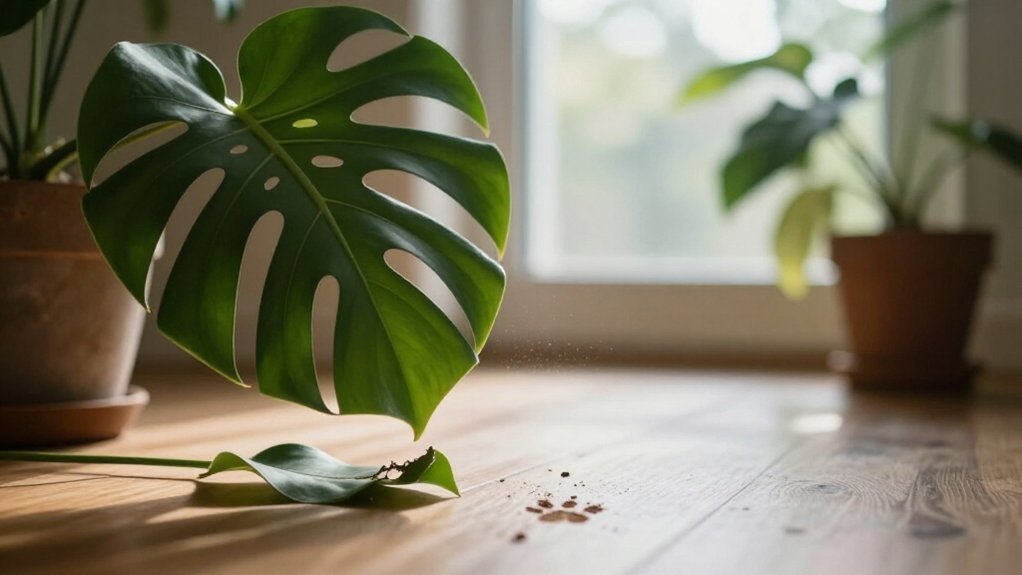
What should you do the moment you catch your dog chewing a leaf from your Monstera deliciosa, that popular tropical houseplant thriving in USDA zones 10 through 12? You stay calm, remove that toxic plant from reach, and contact poison control immediately at ASPCA (888-426-4435) or Pet Poison Helpline (855-764-7661).
You gather critical details first: the exact plant species, approximate quantity consumed, and time of exposure. You don’t wait for symptoms, because prompt action protects your pet’s safety. If signs like vomiting or lethargy appear, you’ll call emergency veterinary services without delay. Keep after-hours clinic numbers accessible, and follow their decontamination instructions precisely. Your quick response transforms a potential dog ingestion crisis into a manageable situation with full recovery possible.
Recommended Products

POTTED POTHOS PLANT QUEEN: Now’s the time to add a live pothos plant queen to your collection of live indoor house plants. She outshines common office plants and is an impressive plant gift. Your live plant will arrive in a 4” nursery pot, ready to display.

All of our listings have very representative pictures of what you would receive.

Live Trailing Houseplant – Marble Queen Pothos features striking green and creamy white marbled leaves, making it perfect for hanging baskets, climbing trellises, or draping over shelves
Peace Lily & Pothos: Mouth-Burning Irritants for Low-Light Spaces
Why do so many dog owners turn to Peace Lilies and Pothos when filling dim corners of their homes? You likely choose these hardy ornamentals because they thrive in low-light conditions, tolerate neglect, and tolerate USDA zones 10 through 12 with ease. Yet you must recognize that both plants present serious dog toxicity risks you cannot ignore.
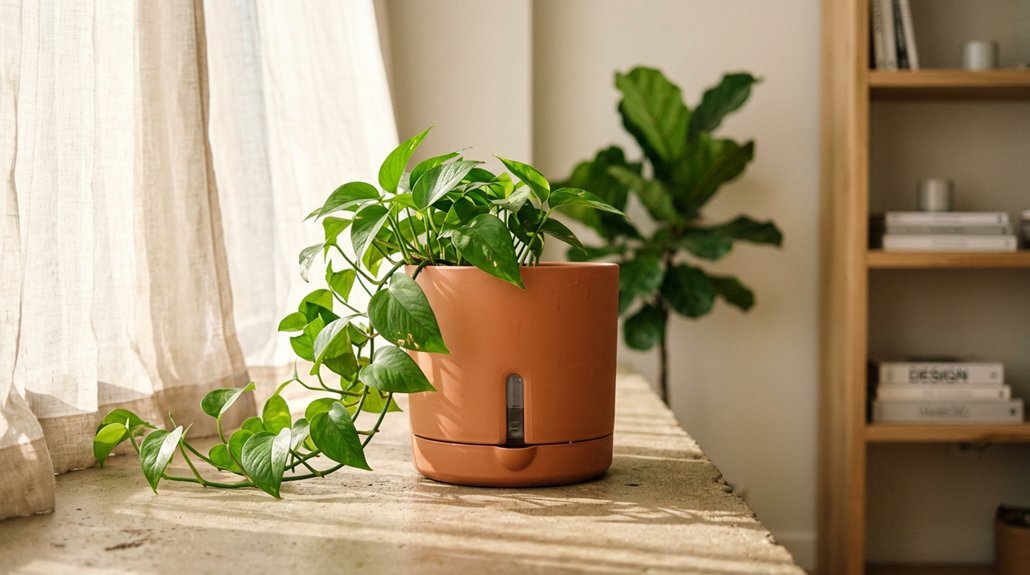
Peace Lily (Spathiphyllum spp.) and Pothos (Epipremnum aureum) contain sharp calcium oxalate crystals throughout their leaves and stems. When your dog chews either plant, these microscopic needles embed in oral tissues, causing immediate mouth irritation, excessive drooling, and pawing at the muzzle. You may observe vomiting, difficulty swallowing, or throat swelling within minutes.
Contact your veterinarian or poison control immediately if ingestion occurs. Monitor your pet closely for worsening symptoms, and relocate these plants to inaccessible shelves or consider safer alternatives like spider plants or Boston ferns for your shaded spaces.
Recommended Products

SUPERIOR WATER MANAGEMENT- Quickly drain away excess moisture after each watering to protect roots and grow a happy plant

Give your snake plant every opportunity to grow strong with a little help from Farmer’s Secret.
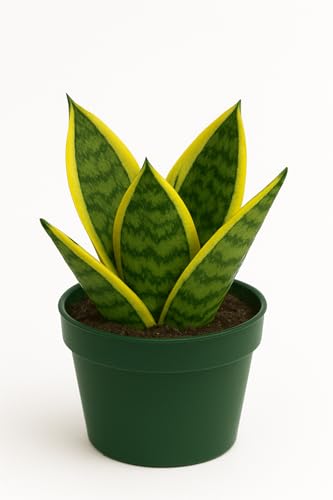
NASA-Recommended: Recognized by NASA's Clean Air Study, the Snake Plant is a top choice for improving indoor air quality. Enjoy peace of mind knowing you have a plant that not only looks good but contributes to a cleaner, fresher atmosphere.
Philodendron & Dieffenbachia: Swelling Risks That Block Airways
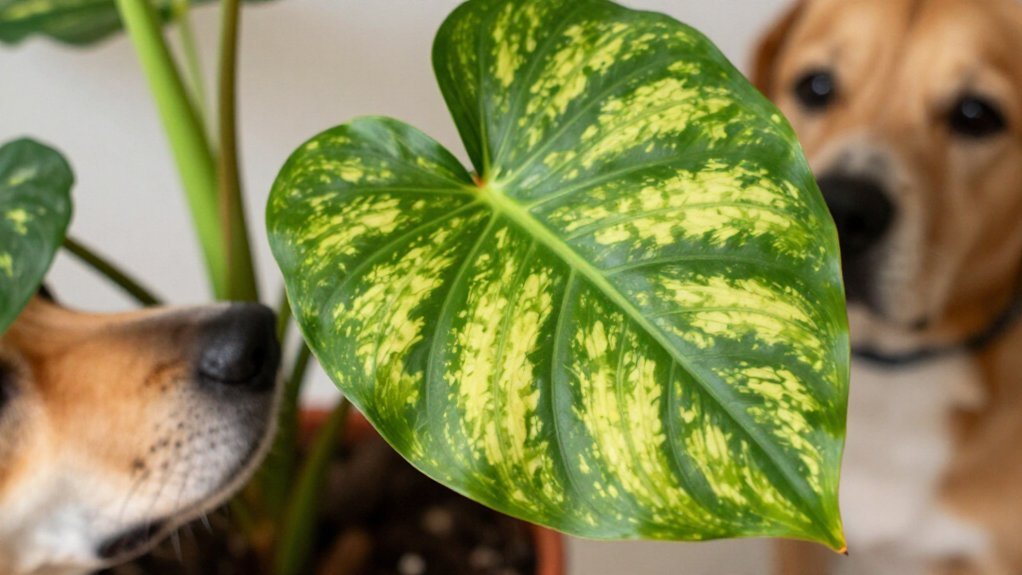
Philodendron and Dieffenbachia present dangers that extend beyond the mouth irritation you have already encountered with Peace Lily and Pothos, because these popular houseplants carry swelling risks that can compromise your dog’s ability to breathe.
Both philodendron and dieffenbachia contain insoluble calcium oxalate crystals that penetrate soft tissues upon contact. When your dog chews these leaves, the crystals trigger immediate burning and progressive swelling that can lead to airway obstruction.
Watch for these warning signs after exposure:
- Excessive drooling that appears suddenly
- Repeated coughing or gagging motions
- Visible difficulty swallowing food or water
- Pawing at the mouth with distress
You must act quickly if you observe these symptoms. Remove any plant material from your dog’s reach immediately, and contact your veterinarian or animal poison control without delay, as timely intervention prevents the swelling from becoming life-threatening.
Recommended Products

🌞【UV Resistant Indoor & Outdoor Performance】Built with special UV shielded material, this artificial sago palm stands up to strong sunlight. As a reliable faux outdoor tree, it avoids fading, brittleness and surface deterioration. It retains bright tropical tones year round, great for palm trees for outside patio and other sheltered outdoor spaces as well as indoor decoration.

Cycas Revoluta Realistic Prehistoric Design – Features detailed, scientifically inspired prehistoric cycas, capturing the unique look of ancient jungle trees for educational and imaginative play.

Unique & world-class design, new release, natural feel technology;
ZZ Plant & Snake Plant: Hardy Plants That Trigger Vomiting
You’ll recognize the ZZ Plant, Zamioculcas zamiifolia, and the Snake Plant, Sansevieria trifasciata, as nearly indestructible houseplants that tolerate low light and sporadic watering, yet these same resilient species contain calcium oxalate crystals that wreak havoc on your dog’s gastrointestinal system when chewed. When your dog ingests either plant, you’ll likely observe vomiting, diarrhea, and noticeable nausea within hours, symptoms that stem from insoluble oxalate needles embedding in oral and stomach tissues rather than systemic toxicity. To protect your pet without sacrificing your interior design, you’ll want to position these architectural specimens on elevated surfaces exceeding 36 inches, suspend them in macramé hangers beyond jumping reach, or relocate them to rooms your dog cannot access, while always keeping your veterinarian’s number and the ASPCA Animal Poison Control Center contact readily available should accidental ingestion occur.
Recommended Products

Performs best in medium to bright indirect light and tolerates lower-light spaces

*CANNOT SHIP TO CALIFORNIA or ARIZONA due to state policies*
Gastrointestinal Symptoms Explained
How do two of the most forgiving houseplants become unexpected hazards for your dog? When your dog chews on ZZ Plant or Snake Plant material, you’re facing more than a mess, you’re triggering a cascade of gastrointestinal upset that demands your immediate attention.
Vomiting serves as the primary warning sign, often accompanied by nausea and diarrhea, signaling that your pet’s system is actively rejecting these toxic compounds. You’ll notice your dog becoming lethargic, refusing food, or displaying abdominal discomfort within hours of ingestion.
Consider these critical points:
- ZZ Plant ingestion produces rapid stomach irritation, with vomiting typically appearing within two to four hours
- Snake Plant consumption generates similar GI distress, though symptom onset varies by your dog’s size and the amount eaten
- Both plants cause persistent vomiting that can lead to dangerous dehydration without intervention
- You must seek veterinary urgent care immediately, as prolonged gastrointestinal upset threatens your dog’s electrolyte balance and overall health
Don’t wait for symptoms to resolve on their own.
Calcium Oxalate Content
Your dog’s vomiting isn’t random misfortune, it’s a direct chemical response to calcium oxalate crystals embedded in the very tissues that make ZZ Plants and Snake Plants so resilient. When your dog chews these hardy specimens, the microscopic calcium oxalate shards penetrate oral and gastrointestinal membranes, triggering immediate irritation that cascades into nausea, vomiting, and diarrhea. The ZZ plant, known botanically as *Zamioculcas zamiifolia* and hardy in USDA zones 9-11, packs concentrated toxicity in its waxy leaves and stems. Similarly, the snake plant, or *Sansevieria* (now *Dracaena*), with its architectural, sword-like foliage rated for zones 10-12, delivers comparable danger. Both plants store calcium oxalate as a defense mechanism against herbivory, a biological strategy that proves hazardous when your curious companion mistakes them for snacks.
Preventive Placement Strategies
Where can you position two of the most bulletproof houseplants known to horticulture so they remain within your aesthetic vision yet safely beyond your dog’s reach? You can employ preventive placement strategies that keep your ZZ Plant and Snake Plant accessible to your eyes yet inaccessible to curious mouths.
- Suspend plants from ceiling hooks at 6+ feet, well above jumping height
- Place on tall, narrow stands with no climbable lower shelves
- Group behind decorative barriers: thorny rose clippings, citrus-scented deterrents, or motion-activated alarms
- Apply bitter apple spray to leaf edges as secondary protection
These hardy specimens tolerate low light, so you needn’t sacrifice prime window real estate. Remember, dog ingestion of either species triggers vomiting and diarrhea. If preventive placement fails, contact your veterinarian or poison control immediately, noting plant type and estimated quantity consumed.
Aloe & Jade: Human Healers That Harm Dog Digestion
Although aloe vera and jade plants have earned devoted followings among human wellness enthusiasts and indoor gardeners, you’ll need to keep these succulents well beyond your dog’s reach if you want to protect your pet’s digestive health. Aloe vera toxicity presents a serious risk, causing vomiting, lethargy, and urine changes in dogs who ingest the gel or latex. Jade plant toxicity, affecting Crassula ovata and its cultivars, triggers comparable distress. Both succulents, hardy in USDA zones 10-11 and popular as low-maintenance houseplants, can provoke dogs GI upset within hours of consumption. You’ll recognize trouble through drooling, abdominal discomfort, or diarrhea. Should your pet sample either plant, contact pet poison control immediately, then seek canine veterinary guidance without delay. Prevention remains your most reliable strategy; position these plants on high shelves, in hanging containers, or within closed rooms your dog cannot access.
Recommended Products

About the Plant: Marble Queen Pothos is an easy-to-care-for houseplant growing heart-shaped leaves marbled with creamy white and green variegation. Pothos grow well in different lighting conditions including lower light levels, however brighter light will produce more prominent variegation. Its trailing vines look great in hanging baskets, shelves, or any room in your home! Marble Queen Pothos is also identified by NASA as an air purifying plant, helping you to breathe easy!

All of our listings have very representative pictures of what you will receive.