
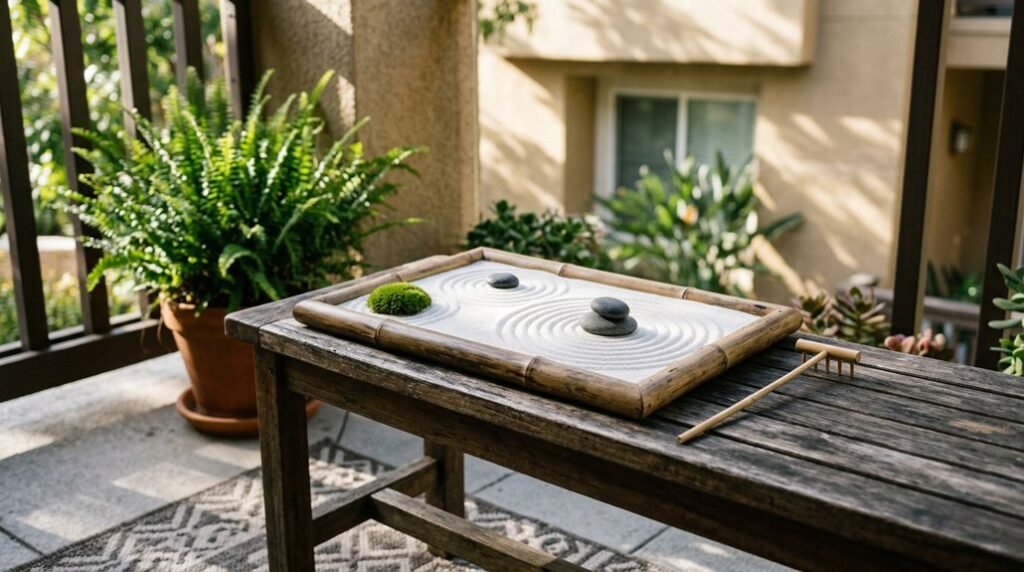


You probably don’t know that Zen gardens were never designed for walking through, that their original purpose was to be viewed from a single seated position on a wooden platform. When you sit before a karesansui, or dry landscape garden, you’re meant to observe fifteen-ton granite boulders representing islands, raked gravel standing in for ocean currents, and moss islands suggesting forests, all from one fixed point. Your eye follows the deliberate asymmetry, the empty space, the texture of weathered stone against uniform gravel, and something shifts in your breathing. This isn’t accidental. The design emerged in 14th-century Japan when Zen monks needed visual aids for meditation, and the same principles still work today because your brain processes pattern, balance, and repetition as safety signals. You don’t need a temple to experience this. A desktop version with 8 inches of fine white sand, three small stones, and a bamboo rake can trigger the same focused attention in your office or apartment. The question isn’t whether you have space for contemplation, it’s whether you’ll recognize the tool when you see it.
What Zen Gardens Actually Are
A Zen garden, also known as a Japanese rock garden or dry landscape garden, invites you into a practice of deliberate simplicity where raked sand or gravel, carefully placed rocks, moss, and minimal plants work together to symbolize water and mountains, fostering meditation and calm.
You’ll recognize this dry landscape garden by its deliberate minimalism, where every element earns its place through careful intention. The rocks anchor your eye as enduring symbols of mountains, their weight and scale guiding the visual balance you perceive. Meanwhile, you rake the gravel into flowing patterns that simulate water ripples, using small and wide-toothed rakes to create meditative textures. This interplay between positive space, those solid rocks, and negative space, the raked gravel, conveys nature’s symbolism directly to your senses.
Your Zen garden encloses itself with walls or hedges, giving you a secluded, uncluttered space dedicated to contemplation.
Recommended Products

High carbon steel Japanese weeder

3 Thick Claws Design: The hand cultivator garden tool is a practical gardening tool with 3 claws for loosening, cultivating, digging and weeding. The deep and curved tines are designed to penetrate deeply into the soil for effective aeration

Strong but lightweight Japanese hand hoe
How 5 Design Elements Create Instant Calm
You will find that rock placement balance and sand raking patterns form the foundation of your garden’s calming effect, as carefully positioned stones, typically 12 to 24 inches in height and spaced 3 to 5 feet apart, create visual anchors that represent enduring mountains while leaving generous negative space between them. When you rake fine gravel, ideally 1/4 to 3/8 inch in diameter, into parallel wave patterns or concentric circles around these rocks, you are not merely maintaining the garden but engaging in a meditative practice that quiets your mind through repetitive, purposeful motion. Your rake strokes, spaced 6 to 8 inches apart and maintained weekly during growing season, transform inert material into flowing water symbolism, completing a composition that invites contemplation without demanding interpretation.
Recommended Products

Wonderful High End Japanese Gift- Reward yourself or bring calm & happiness to loved ones. Japanese Zen Garden for desk; gorgeously packaged with the elements for inner peace. A deluxe, Zen gift set

✔COMPLETE ZEN DECORATION KIT: Our mini Japanese zen sand garden kit includes all the accessories for a peacefully moment of meditation: solid wood tray 8.5 x 6.7 x 0.5 inches, white sand, bamboo rake, rocks, 2 figures. Ideal for desks, tables, countertops & more

Instantly transport yourself to the beach with this idyllic zen garden
Rock Placement Balance
Why does stepping into a Zen garden immediately quiet your mind? You experience this effect because deliberate rock placement creates positive negative space that your eye instantly reads as balanced and serene.
Large rocks serve as positive space, representing mountains that endure through eternity, while surrounding gravel forms negative space suggesting water. You’re witnessing asymmetrical harmony, where vertical stones evoke heaven and weathered surfaces whisper of time passing. Seven guiding principles, simplicity, austerity, asymmetry, naturalness, mystery, stillness, and the unconventional, shape every arrangement into a contemplative visual story.
You maintain this balance through careful attention to scale, ensuring rock dominance harmonizes with gravel patterns without overwhelming them. Regular raking sustains crisp edges that reinforce order and quiet. Your meditative focus deepens as you tend these elements, discovering how asymmetry achieves equilibrium more profoundly than perfect symmetry ever could.
Sand Raking Patterns
How do the simple lines you rake into gravel transform scattered stone into flowing water? In your Zen garden, you’ll create sand raking patterns, ripples, straight lines, chevrons, and waves, that represent flowing water, conveying movement and calm through meticulous design. You’ll use small rakes, fine-toothed and wide-toothed, to build and maintain these patterns as regular meditation practice.
The act of raking demands your full attention, clearing your mind and supporting contemplation and stillness. You’re practicing mindfulness with every stroke.
Your patterns emphasize the relationship between positive space, your rocks, and negative space, your gravel, guiding visual balance and symbolic meaning. You’ll maintain sharp, fresh patterns through regular upkeep, reinforcing order and tranquility. This practice transforms your garden into a living meditation, where every line you draw deepens your connection to the present moment.
Why They Were Built for Meditation (and Still Work)
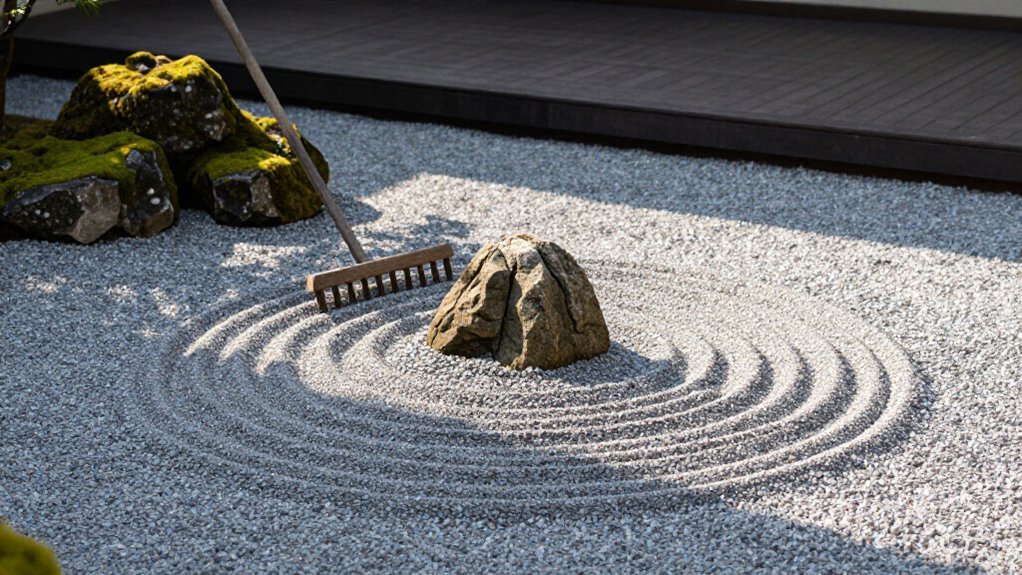
You might wonder how a few rocks and raked gravel could quiet your mind, but these gardens were engineered precisely for that purpose by Zen Buddhist masters who understood that visual simplicity strips away distraction. Their original function, meditation support through uncluttered focal points, translates seamlessly into your modern mindfulness practice because your brain still responds to deliberate negative space and balanced asymmetry. When you sit before those rippled sand patterns, you are participating in a centuries-old technology of attention, one that requires no belief system, only your willingness to breathe and observe.
Recommended Products
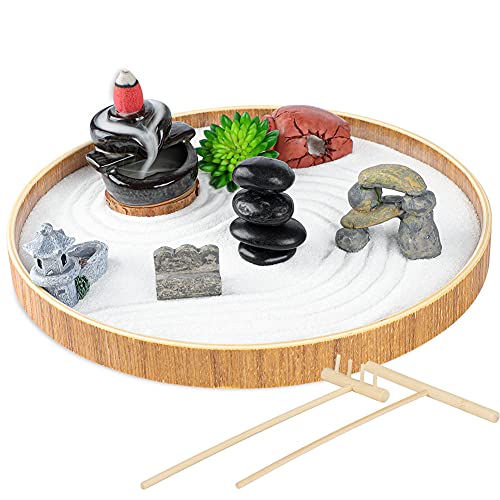
Multi-Piece Set: Comes with a tray, sand, 4 small rocks, lotus plant, broken vase, a rake, incense, an incense holder, 5 miniature zen accessories and tools for creating your own meditation zen garden.

Enhance Meditation & Relaxation: This Zen garden offers a peaceful and calming experience, perfect for meditation, mindfulness, and stress relief. Create intricate patterns in the sand to help clear your mind, reduce anxiety, and achieve inner peace. Ideal for a relaxing ritual at home or the office.
Meditation Origins
Where exactly did these serene spaces begin, and what keeps them relevant today? You’ll find their roots in medieval Japan, where Buddhist monks crafted these dry landscapes as direct aids for meditation and self-knowledge. They understood that raked gravel and carefully placed rocks could quiet your mind without requiring actual water or elaborate plantings.
When you trace the evolution of these spaces, you’ll notice four enduring principles that sustain their meditative power:
- Meticulous raking of sand creates flowing patterns that evoke water’s calming presence
- Large rocks anchor your attention, representing mountains and permanence amid change
- Minimal plantings eliminate visual clutter, allowing your mind to settle
- Negative space invites contemplation rather than demanding it
You don’t need to be a monk to experience this. The same Zen principles that guided fourteenth-century designers still support your meditation practice today.
Modern Mindfulness
The same gardens that served fourteenth-century monks now anchor your contemporary mindfulness practice, their design principles unchanged even as your daily stresses have multiplied. You enter a Zen garden, and the minimal elements, rocks, gravel, and moss, immediately shift your attention toward tranquility. The meticulously raked patterns in sand or gravel represent water, guiding your breathing into a slower, more focused rhythm that deepens your meditation.
You aren’t merely observing a landscape; you’re experiencing a metaphysical tool designed to connect you with nature’s essence. The deliberate contrast between positive space, the solid rocks, and negative space, the raked gravel, directs your gaze inward, fostering self-knowledge and inner balance. Your mindfulness practice benefits from this ancient architecture, proven across centuries to quiet the mind and restore equilibrium.
Zen Gardens for Home, Office, and Tiny Apartments
How might you transform even the most constrained living space into a sanctuary of calm? You might start by recognizing that a Zen garden, with its emphasis on minimalism and contemplation, adapts remarkably well to compact environments.
In your home, you’re creating a meditation corner where raked gravel and carefully placed stones invite daily reflection. For offices, you’re designing tabletop arrangements that reduce stress during demanding workdays. Even studio apartments accommodate this purposeful design.
Consider these elements when planning your space:
- Select containers 12 to 18 inches wide for desktop gardens.
- Use sterile white gravel, 2 to 4 pounds, for raked water patterns.
- Position one or two weather-resistant stones as mountainous focal points.
- Incorporate preserved moss requiring zero maintenance.
Through deliberate simplicity, you’re cultivating mindfulness regardless of square footage.
Recommended Products

Garden cultivator:lightweight and portable, and this hand rake is more convenient to store and carry out,hand rake garden tool

LARGE ZEN RAKE SIZE - This big full size 6-tines saw tooth rake is 48" long, 15.7" wide and 2.4" deep, and the largest space between two teeth is 2.5".This solid beech wood zen rake is about 1.6LB(730g) weight. It is made of hard wood.It’s sturdy and natural .

Heavy-Duty, Rust-Resistant Small Rake: This garden leaf rake is made of high-strength steel with a rust-resistant coating, making it far more durable than plastic rakes. Equipped with 11 sturdy metal tines, it will not loosen, bend, or break while raking leaves and debris.
So You Want to Start Raking?
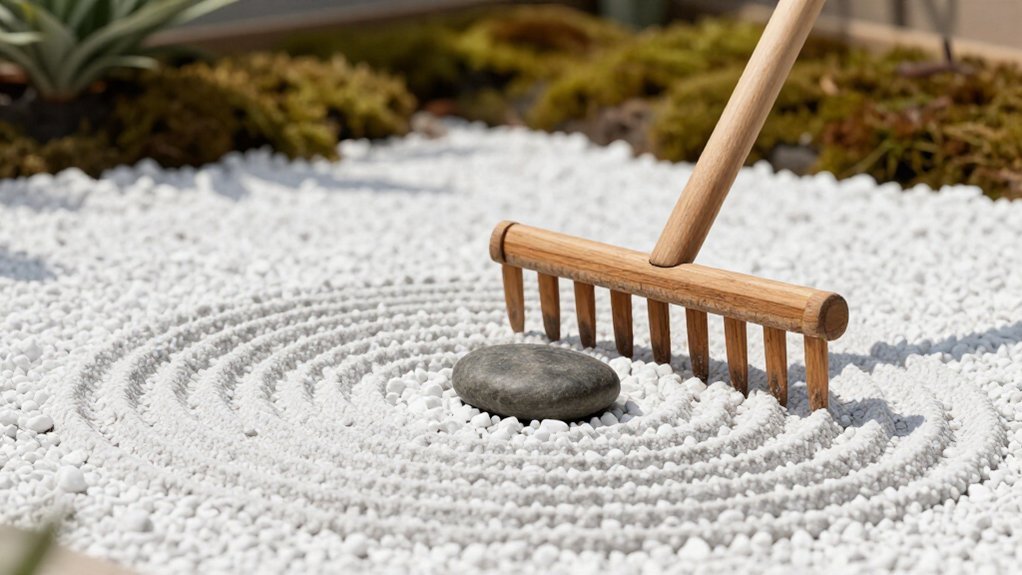
Begin each session by clearing debris with a soft brush, then establish your baseline pattern: straight parallel lines for beginners, progressing to concentric circles or asymmetrical waves as your confidence develops. You’ll discover that raking transforms ordinary sand or gravel into a living meditation, where each stroke requires deliberate attention and measured pressure, typically using a 12-inch fine-toothed rake for intricate ripple effects or an 18-inch wide-toothed model for broader swaths.
Your meditation deepens as you maintain consistent depth, approximately one-half inch, creating flowing forms that symbolize water without actual moisture. The gravel responds differently than sand, offering greater resistance and texture, so you’ll adjust your technique accordingly.
Practice daily, preferably during morning hours, allowing 15 to 20 minutes for complete rejuvenation of your pattern. Through this disciplined repetition, you’ll cultivate presence while honoring the garden’s fundamental purpose: contemplative stillness achieved through purposeful motion.
Recommended Products

One package includes 40 PCS(4sizes in total).

Mini Size for Detailed Creations: 20-piece mini artificial moss rocks set in 2 sizes: 4 large (3.74" x 2.36") and 16 small (1.97" x 1.57"). Perfectly sized for adding layered greenery details to miniature projects, filling small gaps, and bringing tiny scenes to life.

Package includes 50 pcs artificial green moss rocks in 5 difference sizes, they are made from lightweight premium quality foam, covered with bright green fuzz.
What Research Says About Zen Gardens and Stress
Why do researchers find such compelling evidence that your time raking gravel translates directly to measurable stress reduction? Studies consistently demonstrate that engaging with a Zen garden activates measurable physiological changes in your body, lowering cortisol levels and reducing heart rate through deliberate, repetitive motion.
Your interaction with raked sand creates what researchers call “embodied mindfulness,” where the physical act of pattern-making quiets your prefrontal cortex and anchors you in present-moment awareness. This isn’t abstract theory; it’s documented neurological response.
Consider these research-backed mechanisms:
- Visual focus on minimalist design reduces cognitive load and mental fatigue
- Tactile engagement with granular materials triggers parasympathetic nervous system activation
- Rhythmic raking patterns induce measurable alpha brain waves associated with relaxation
- Symbolic interpretation of rock and sand arrangements deepens contemplative states
You’ll find that regular maintenance of your Zen garden isn’t merely aesthetic upkeep, it’s evidence-based stress reduction you can cultivate daily.
Recommended Products

Professional Hand Tool Hoe produced by a classic Japanese blacksmith's factory.

NEXT-GEN JAPANESE GARDEN TOOL: Refined from the classic Nejiri Gama hoe with input from 6,500+ gardeners: SHARP EFFICIENCY, LIGHTWEIGHT EASE OF USE, and RUSTPROOF DURABILITY. Built for long-term use in raised beds, home gardens, gifts for gardeners

FULFILL YOUR GARDENING IDEA - You may have visions of how you want your garden to be and there are things to help you fulfill it. Small garden rakes have many functions for your backyard garden, even for weeding! 5 tines of this hand cultivator perfectly break and loosen the soil for air and water to penetrate deeply and drain more effectively.
Your Next Step: Visit, Build, or Buy
Wherever you stand on your Zen garden journey, three practical paths await your consideration, each demanding different commitments of space, time, and resources.
You can visit established Zen gardens at botanical centers or temples, where you’ll immediately access spaces designed for meditation and relaxation without maintenance burdens. Alternatively, you can build your own dry landscape garden using 2-3 inches of crushed gravel, selected rocks representing mountains, and sparse plantings of moss or Japanese forest grass (Hakonechloa macra, zones 5-9). Daily raking of patterns into the sand creates ritualistic contemplation. Finally, you can purchase pre-designed tabletop Zen gardens featuring miniature rakes and stones, suitable for apartments or offices. Each option supports your contemplation practice, though building offers deepest personal connection through ongoing cultivation.
Recommended Products
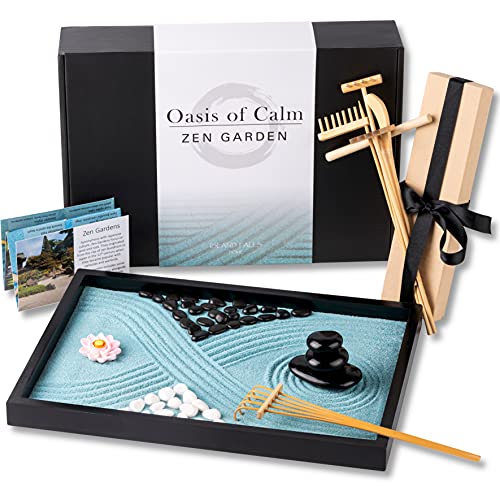
Wonderful High End Japanese Gift- Treat yourself or bring calm & happiness to loved ones. Japanese Zen Garden for desk; gorgeously packaged with the elements for inner peace. A deluxe, Zen gift set

Luxury Zen Gift Set – Inspire Calm & Mindfulness : Reward yourself or a loved one with this deluxe Japanese Zen garden set, designed to bring serenity, focus, and inner peace. This elegant gift encourages relaxation, making it a perfect stress relief present for birthdays, holidays, or self-care moments.

A Turtle Sandbox Zen Garden That Adds Calm to Any Desk: Bring a little nostalgia and levity to your workspace with this playful mini turtle sandbox zen garden for desk. Inspired by the classic backyard turtle sandboxes many of us grew up with, it blends a lighthearted throwback with soothing desk decor that works for men, women, coworkers, or anyone who could use a quick mental reset during the day