


Your thriving Monstera deliciosa sheds a perfect emerald leaf, yet your neglected ZZ plant pushes out new growth in a dim corner, and this contradiction reveals how leaf drop speaks a language you’re already equipped to decode. When you notice yellowing foliage tumbling from your Fiddle Leaf Fig or your Pothos’ stems going bare, you’re witnessing a plant’s survival strategy, not its death sentence, because shedding leaves conserves energy when conditions shift beyond optimal ranges. You’ll need to measure soil moisture with a meter, inspect roots for rot, and check for spider mites under leaves, since recovery depends on identifying whether you’re dealing with transplant shock, inconsistent watering between 40-60% moisture, or temperature drafts below 65°F. The clues are visible in new buds, stem flexibility, and root color, and recognizing these signs determines whether your plant rebounds or continues declining.
Is Your Plant in Shock? Why Leaves Drop After Moving
Why does your once-thriving Ficus lyrata suddenly shed its broad, violin-shaped foliage mere days after you’ve carried it from the garden center to your living room? You’re witnessing classic shock, a physiological stress response that triggers rapid leaf drop when environmental conditions shift dramatically. Your plant acclimates to unfamiliar light intensity, temperature fluctuations, and humidity levels, reallocating resources toward survival rather than maintaining existing foliage.
You’ll notice new growth emerging smaller than previous leaves, a telltale sign your plant’s conserving energy. This leaf drop, while alarming, indicates adjustment rather than imminent demise. To minimize shock, you should introduce changes gradually, positioning your Ficus in bright, indirect light within stable 65-75°F temperatures, away from drafts and heating vents. You’re supporting recovery by monitoring moisture consistently and resisting the urge to overcompensate with excessive watering or fertilization.
Recommended Products

Accurate Soil Moisture Detection: The XLUX Soil Moisture Meter can tell you if the soil deep inside your pot or garden is dry, moist or wet; whereas your eyes and fingers can only determine the moisture level of the soil surface. The probe is 5.5 inches (14 cm) longer than regular styles, allowing it to measure the soil moisture at the bottom of larger and deeper flower pots.

Accurate Soil Moisture Detection: The XLUX Soil Moisture Meter can tell you if the soil deep inside your pot or garden is dry, moist or wet; whereas your eyes and fingers can only determine the moisture level of the soil surface. The probe is 5.5 inches (14 cm) longer than regular styles, allowing it to measure the soil moisture at the bottom of larger and deeper flower pots.

Accurate Soil Moisture Detection: The XLUX Soil Moisture Meter detects deep soil moisture in pots or gardens (dry/moist/wet), unlike eyes or fingers that only sense surface soil.
Will Your Plant Recover? 3 Signs It’s Still Alive
You’ll assess your plant’s viability through three diagnostic checks that reveal whether recovery is possible, starting with stem flexibility, which indicates living tissue when you gently bend a woody stem and feel resistance rather than brittleness, then inspecting leaf buds for swelling or green coloration at nodes along stems, a sign that new growth remains queued for emergence, and finally evaluating root health by sliding the plant from its container to examine whether roots appear white or tan and firm rather than blackened and mushy, since these three indicators, when positive, confirm that your plant retains the biological capacity to regenerate foliage once you’ve stabilized its environment with appropriate light levels, consistent moisture measured by allowing the top inch of soil to dry between waterings, and humidity maintained at 40-60% for tropical species like Ficus benjamina, which typically occupies USDA zones 10-12 outdoors but thrives as a houseplant when you replicate these conditions.
Recommended Products
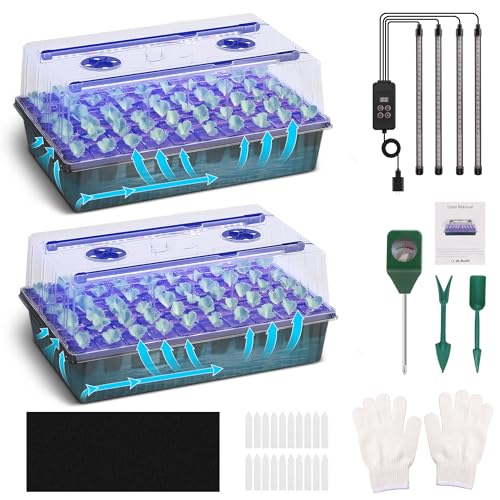
Advanced Grow Light with 1–24H Timer:Equipped with 56 high-efficiency LED beads per tray, simulating natural sunlight to promote faster and healthier seedling growth. The adjustable 1–24 hour timer allows precise control over lighting duration, catering to various plant stages.
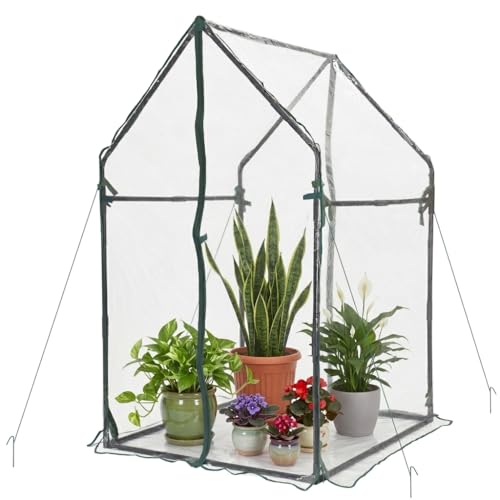
Some customers may experience minor issues with the product, if you encounter any challenges, please contact us directly. We are here to offer a quick resolution with a replacement or refund.

[ Small and Portable, Can be pasted or inlaid ] Diameter: 1.8" (4.5cm) , Thickness: 0.55" (1.4cm). Widely used for home, office, car, cellar, tank, humidifiers, 3d printer, Caring for reptiles, etc. Can be pasted on the wall, or punched and embedded in boxes, barrels, glass jars etc.
Check Stem Flexibility
How can you tell if your distressed plant still holds life beneath its withered exterior? You’ll want to assess stem flexibility, a reliable indicator when your plant begins to drop leaves and you’re questioning its viability. Gently twist or bend several stems near their base, applying slight pressure with your thumb and forefinger. If they yield and bend without breaking, your plant likely retains living tissue capable of recovery.
Examine any flexible stem more closely by making a shallow nick with clean shears. Visible green tissue inside signals intact vascular systems and potential for regrowth. However, if stems snap crisply or reveal dry, brown interiors, those portions have died. Brittle, woody stems without new growth suggest advanced stress. Monitor for new leaf emergence over the next one to three weeks, confirming your plant’s return to health.
Inspect Leaf Buds
Where should you look when stems offer hope but you’re still uncertain about your plant’s fate? You’ll find your answer in the buds, those tiny packages of potential where new leaves originate.
Press your fingers gently against the buds near stem tips. Alive buds feel firm and slightly turgid, springing back when lightly pressed, while dead ones crumble dry or squish mushy between your fingertips. Watch for swelling over one to three weeks, a promising signal that new leaf clusters are pushing through.
Check stem flexibility near these growth points, flexible tissue indicates living vascular connections feeding those buds. If several buds have withered but others remain plump, focus your care on these survivors, providing consistent moisture and bright indirect light to fuel their recovery into full foliage.
Assess Root Health
While stems and buds offer visible clues about your plant’s condition, the true verdict on survival rests beneath the soil where roots anchor, absorb, and sustain life. When leaves drop persistently, you’ll need to investigate root health directly to determine if recovery remains possible.
- Gently unpot your plant and examine the root ball for white, firm, tuberous structures indicating viability
- Discard any brown, mushy roots that crumble between your fingers, as these signal rot
- Trim damaged sections with sterilized shears, then repot in fresh, well-draining mix
- Water thoroughly after repotting, allowing excess moisture to escape through drainage holes
- Monitor for new growth within 2-4 weeks, which confirms your intervention succeeded
Healthy roots mean your plant can still recover, even when leaves drop dramatically above ground.
Overwatering vs. Underwatering: Which Is Causing Leaf Drop?
You need to distinguish between two culprits when your plant starts shedding foliage, as overwatering and underwatering produce distinctly different symptoms that demand opposite solutions. Overwatering typically manifests as yellowing leaves that turn soft and eventually black, often accompanied by root rot in species like Christmas cactus (Schlumbergera, USDA zones 10-12) and jade plants (Crassula ovata, zones 9-11), while underwatering creates brown, scorched-looking leaves that dry and crisp before dropping, a pattern common in indoor lemons (Citrus limon, zones 9-11) and Schefflera (zones 10-12). Before adjusting your watering schedule, insert your finger two inches into the soil, or use a moisture meter calibrated for your specific potting mix, since maintaining the delicate balance between root absorption and leaf transpiration, typically 40-60% soil moisture for most tropical houseplants, prevents the physiological stress that triggers premature leaf abscission.
Recommended Products

Signs of Overwatering
How can you tell if you’re giving your plant too much love with the watering can? Overwatering often announces itself through yellowing leaves, a frustrating signal that your enthusiasm has overwhelmed your plant’s needs.
Watch for these telltale signs:
- Yellowing leaves that progress rapidly, especially lower ones
- Very droopy leaves paired with browning edges
- Soft, black, or mushy roots when you inspect them
- Leaves that wilt and drop despite damp soil
- Consistently soggy top two inches of soil
Excess moisture blocks oxygen from reaching roots, which reduces your plant’s ability to uptake water and accelerates decline. You’ll notice this paradox: your plant looks thirsty while sitting in wet soil. Confirm your suspicion with a moisture meter or finger test before adjusting your watering schedule.
Signs of Underwatering
Underwatering presents its own distinct signature, one that often masquerades as simple neglect but carries serious consequences for your plant’s health. You will notice brown, crunchy leaves that appear after soil dries completely between waterings. Very dry potting mix causes wilted, drooping foliage that may drop leaves as your plant conserves precious moisture. Check the top two inches of soil: when it feels dry, you must water; damp soil means waiting protects roots. Underwatering also produces stressed, pale, or scorched-looking foliage before leaves abandon the plant. Remember how roots absorb moisture while leaves release it; when water becomes scarce, uptake declines and leaf drop follows. This hydraulic failure, common in Ficus benjamina or Schefflera arboricola grown in USDA zones 9-11, demands prompt intervention through deep, thorough watering until excess drains from the container’s base.
Low Light and Leaf Drop: Where to Move Your Plant
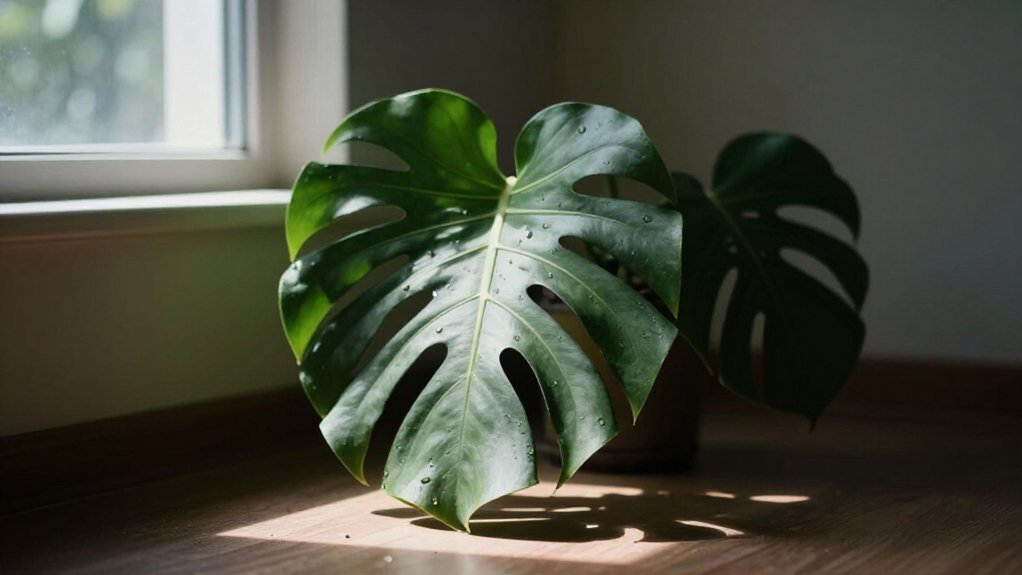
When your plant begins shedding leaves after you’ve relocated it, you’re witnessing a common physiological stress response rather than a sign of irreversible decline, and understanding this mechanism empowers you to intervene with precision rather than panic.
Low light triggers leaf drop when your plant cannot photosynthesize sufficiently, so you’ll need to assess your space carefully. Position your plant in bright, indirect light: near an east-facing window, 3–6 feet from a south-facing window, or supplemented with a 6500K grow bulb for 12–14 hours daily. Symptoms typically resolve within 7–10 days.
Here’s how to help your plant recover:
- Place it where it receives gentle morning sun but avoids harsh afternoon rays
- Watch for new growth; small leaves signal ongoing adjustment
- Maintain consistent temperatures between 65–75°F, avoiding drafts
- Check that light reaches lower branches, not just the canopy
- Allow 1–2 weeks before making additional changes
Recommended Products

【4 in 1 function】This is a 4-in-1 multifunctional soil tester.Our soil tester fastly to measure soil moisture, pH, temperature and sunlight to help you take better care of flowers and plants.You can know when you need to water your soil by measuring moisture and pH & Temperature value of the soil and sunlight level of plants with it.

✅ 1Dial & 1 LCD Screen - Replace/install all 3 batteries each time. Put button to %RH/°F to - Turn On, and put to LIGHT to - Turn Off. Read the LCD results in 3-5 mins. (Not Water Moisture Meter, so, please don't test liquid)

Is Your Water Too Hot or Cold?
You’ve addressed your plant’s lighting needs, yet leaf drop persists, so it’s time to examine another common culprit hiding in plain sight: the temperature of your water.
Water temperature directly impacts root health and can trigger sudden leaf drop when extreme. You’re shocking your plant’s system if you pour icy water straight from the tap or use steaming hot water straight from your kettle.
Extreme water temperatures shock your plant’s system and trigger sudden leaf drop—always check before you pour.
Cold water slows root metabolism, causing drooping and eventual leaf drop, while hot water scalds delicate root tissues, blocking moisture uptake entirely. Both extremes stress your plant unnecessarily.
Check your water temperature before every watering. Let tap water sit until it reaches ambient room temperature, approximately 68 to 72 degrees Fahrenheit. If you’ve noticed leaf drop immediately following watering, adjust your routine now. Your plant will stabilize once you eliminate this thermal stress.
Recommended Products

【Powerful 40W Output & Broad Even‑Light Coverage】Built with 192 high‑density LEDs, this Chiphy plant light delivers 40W output for your full houseplant collection. Unlike traditional halo, bar and spot lights creating shadow dead zones and over‑bright hotspots, its large 9.2‑inch panel (66.5 sq in) casts smooth balanced light over all plant layers. It illuminates canopies, side branches and hard‑to‑reach lower leaves, correcting spindly stems and lopsided growth. Seedlings, succulents, monstera, fiddle‑leaf fig and medium‑size houseplants stay full, vibrant and healthy year‑round. The included tray fits more pots, maximizing growing space with zero extra floor footprint.

【Powerful 40W Output & Broad Even‑Light Coverage】 Built around 192 high‑density LEDs, this chiphy plant light puts out solid 40W output to nourish your whole houseplant collection. Unlike traditional halo, bar and spot lights which leave frustrating shadow dead zones and over‑bright hotspots, its large 9.2‑inch panel (66.5 sq in) spreads smooth, balanced light across every layer of your plants. Its light covers top canopies, side branches and hard‑to‑reach lower leaves, fixing common issues like spindly stems and lopsided growth. Seedlings, succulents, monstera, fiddle‑leaf fig and other medium‑size houseplants stay full, vibrant and healthy all year long.

【Self-Watering Seed Starter Trays】This gardening supplies set includes everything you need for a successful indoor garden. Featuring self-watering seed starter trays, the kit ensures consistent moisture levels, preventing overwatering and promoting healthier root development. Once watered, your seeds will germinate into strong seedlings, perfect for novice gardeners.
Spotting Indoor Pests and Mold on Leaves
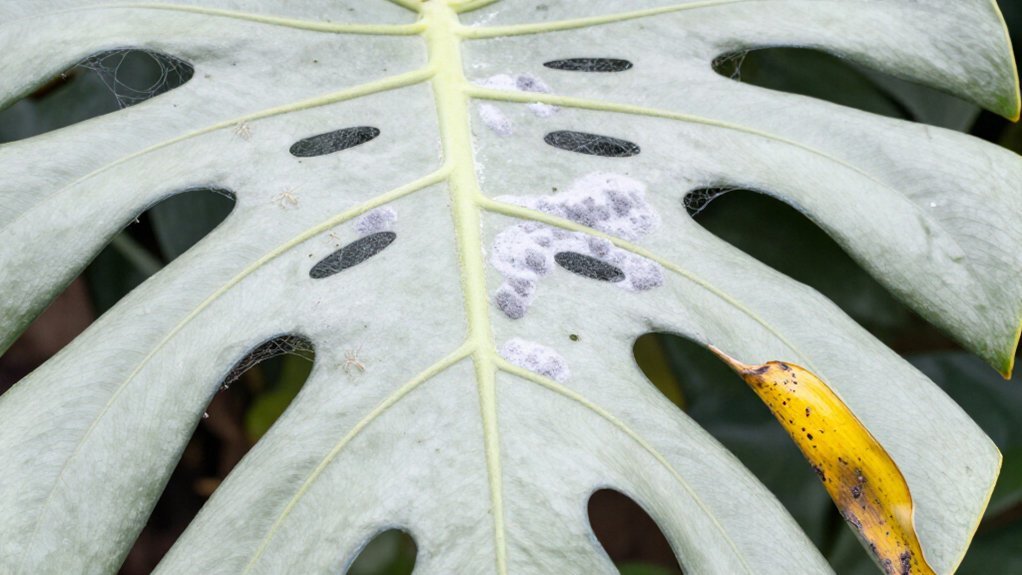
Where else might your plant be losing its leaves? Pests often hide on the undersides of leaves, causing wilting, curling, discoloration, or leaf drop as they feed or molt. You’ll need to inspect fallen leaves for holes, molting debris, or other infestation signs to catch problems early.
- Check leaf undersides weekly with a magnifying glass for tiny invaders
- Isolate new plants for 14 days before placing them near established collections
- Treat outdoor plants with broad-spectrum insecticides before bringing them indoors
- Apply Sevin products for spot treatments when pests spread across multiple leaves
- Monitor persistently over days to weeks, since infestations develop gradually
Your vigilance prevents widespread leaf loss. When you spot pests early, you protect your plant’s remaining foliage and stop the cycle of damage before it devastates your indoor garden.
Fixing Nutrient Deficiencies Without Fertilizer Burn
Pests aren’t the only culprits behind falling foliage, since your plant’s diet plays an equally significant role in keeping leaves attached and thriving.
You must first diagnose nutrient deficiencies before treating them. Pale leaves, yellowing between veins, or purple-red patterns signal specific gaps, such as magnesium or sulfur shortages that weaken attachment points. When you spot these symptoms, resist simply increasing fertilizer doses, since overfeeding causes fertilizer burn that damages roots and accelerates leaf drop despite apparent lush growth. Instead, supplement strategically: dissolve one tablespoon of Epsom salt per gallon for magnesium deficits, water thoroughly, and repeat monthly during growing season. Apply balanced plant food, like Alaska Fish Fertilizer 5-1-1, at half-strength every two weeks, adhering strictly to labeled rates. This micronutrient-rich approach supports vigor without risking root damage, ensuring your plant retains its foliage.
Recommended Products
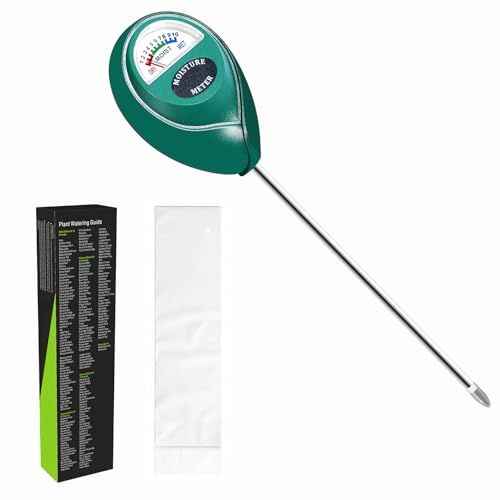
Trusted Since 2015: Become one of the many plant lovers who rely on the proven accuracy of XLUX. Established in 2015, our soil moisture meter has earned over 60,000+ verified ratings for its consistent performance. While many many newer brands come and go, we provide the long-term reliability and quality that American households have trusted for over a decade.
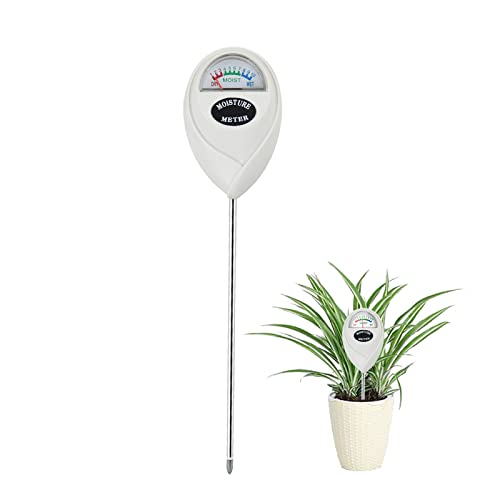
【SAVE YOUR PLANTS】: Over watering can cause problems with your plants or even kill them. This soil moisture meter helps you know the soil is dry, moist or wet.No more over watering!

3-in-1 Soil Tester: This meter can test soil moisture, light and pH value; You can switch modes with one button; It makes gardening and plantng more efficient
Is It Time to Repot? Root-Bound Plants and Leaf Drop
When roots run out of room, your plant sends distress signals through its foliage, and recognizing these warnings early prevents unnecessary leaf loss. Root-bound plants develop crowded roots that circle the pot, limiting water and nutrient uptake, which triggers leaf drop as a stress response.
Crowded roots can’t support healthy leaves—spot the warning signs before your plant starts dropping foliage.
Watch for these telltale signs:
- Roots peeking through drainage holes or circling the surface
- Soil drying out within a day or two of watering
- New leaves growing smaller or fewer than before
- Overall dull, stressed foliage despite proper care
- Visible roots forming a dense mat when you gently remove the plant
Repotting solves this, but choose a pot only one size larger to minimize shock. Use fresh, well-draining potting mix and ensure drainage holes exist. Your plant will recover, pushing new growth once roots expand freely.
Recommended Products

24 Full Spectrum LED Beads for Optimal Growth: Includes 4 powerful grow lights with 24 full spectrum LED beads to simulate natural sunlight, enhancing seedling growth and photosynthesis.

Fast Refresh & High Accuracy: The digital hygrometer indoor thermometer keeps monitoring room temperature and humidity, updated every 5 seconds. Stay informed with real-time data and historical 24-hour MAX/MIN values, ensuring accurate data for decisions on humidifiers or air conditioner

【Remote WiFi Monitoring Anywhere, Anytime】- Connect your WiFi thermometer hygrometer to 2.4GHz WiFi and monitor temperature and humidity remotely via the Smart Life app. View real-time data, receive instant app alerts, export historical records up to 1 year, and create smart automation scenes with other Tuya compatible smart home devices. Switch between °F/°C and 12/24-hour formats easily.
When Winter Dormancy Is Normal (And When to Worry)
Why do your houseplants seem to sulk as days grow shorter, and how can you tell if their leaf drop signals a problem or simply follows nature’s rhythm? Winter dormancy explains this seasonal shift, as many species slow growth and shed older leaves when daylight drops below 10-12 hours and temperatures fall to 50-65°F (10-18°C).
You’ll notice reduced vigor, fewer new leaves, and yellowing lower foliage on Ficus, Pothos, or Dracaena in USDA zones 9-11. This energy conservation is normal; resume regular watering when the top inch of soil dries, and hold fertilizer until March.
Growth should restart by April as light increases. If leaf drop continues into May, or you see wilting, mushy stems, or pest damage, investigate further. Persistent symptoms outside winter cues demand attention, not patience. Trust the seasonal cycle, but verify your plant’s specific dormancy needs.