


You bring home a Sago Palm, Cycas revoluta, thinking you’ve added a touch of tropical elegance to your living room, yet you haven’t checked whether its cycasin toxins concentrate in your cat’s liver within fifteen minutes of ingestion. You’ll notice drooling first, perhaps vomiting, then a terrifying slide toward liver failure that kills twenty to thirty percent of exposed cats even with aggressive veterinary intervention. True lilies, Lilium species including Stargazer and Easter varieties, pose equal lethality: two petals, mere pollen on a paw, or vase water can trigger irreversible kidney failure within seventy-two hours, and no antidote exists. You must know these dangers before you place another houseplant, because your vigilance determines whether your cat survives accidental exposure. Five specific species demand your immediate attention, and the following sections outline exactly which plants threaten your pet, how their toxins operate, and what protocols you’ll follow when minutes matter.
Sago Palm and True Lilies: The Two Plants That Kill Cats Fast
You will find Sago Palms marketed as “palm-like” accents for patios and indoor spaces, typically reaching 3–10 feet in container culture and up to 10–15 feet in ground plantings across their hardiness range. You must understand that Sago Palm plant toxicity poses lethal risks to cats, with ingestion triggering vomiting, diarrhea, and rapid progression to liver failure without immediate veterinary care.
True Lilies present equally devastating dangers. You cannot allow cats access to any Lilium species, as even minimal exposure causes fatal kidney damage. You will observe rapid onset vomiting and lethargy, with renal injury worsening when treatment delays occur.
You must seek immediate veterinary care if ingestion occurs, and you should bring plant samples to aid diagnosis. You cannot afford hesitation with these particular toxins.
Recommended Products

DOG & CAT SAFE PLANTS: Calathea are pet-friendly house plants with unique and colorful leaves
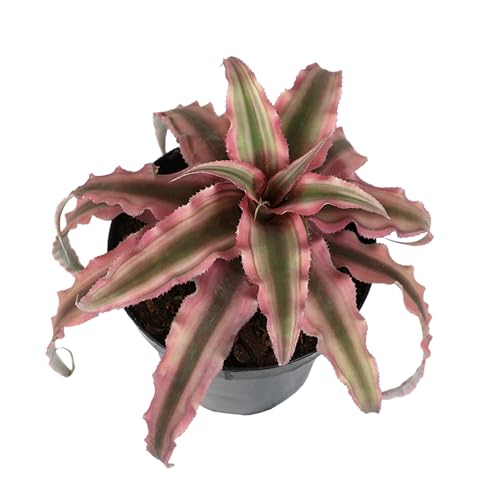
CRYPTANTHUS EARTH STAR: A star-shaped rosette with vibrant variegation, this perennial grows slender and serrated leaves that resemble a star.

Peace Lily, Pothos, and Philodendron: Painful but Usually Survivable
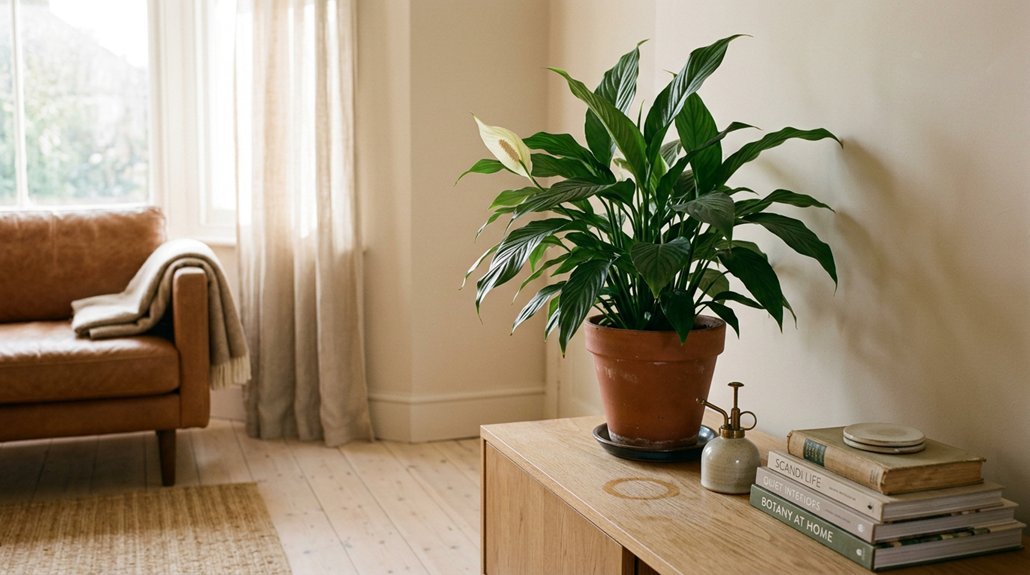
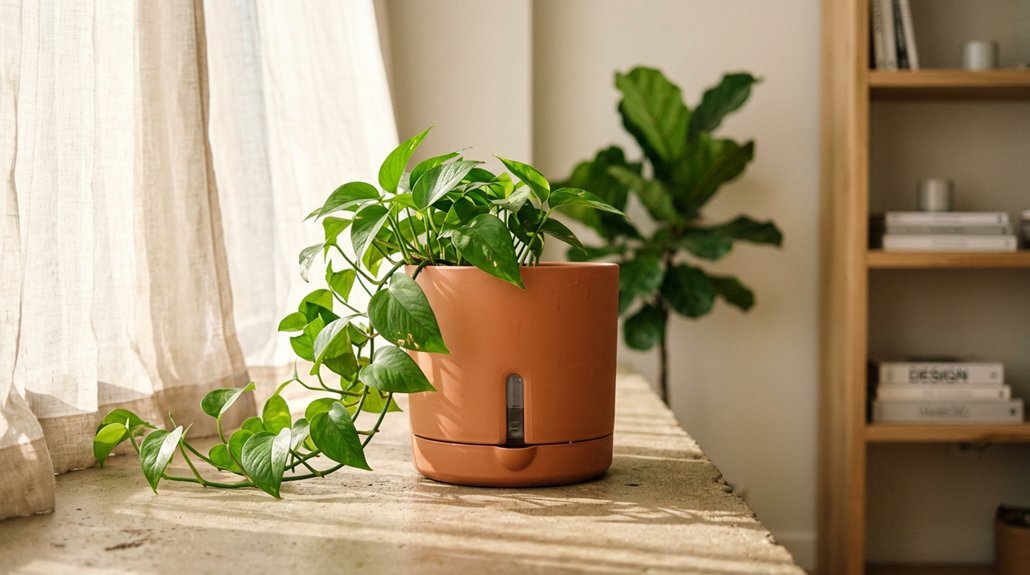
Why do so many cat owners assume that common houseplants must be harmless? You might think popular varieties pose little risk, but peace lily, pothos, and philodendron all carry real toxicity for cats. Ingestion of any of these plants triggers immediate, painful reactions. Your cat experiences oral irritation, excessive drooling, and vomiting as calcium oxalate crystals penetrate soft tissue. The discomfort is unmistakable, though fatalities remain rare with timely intervention.
You must recognize symptoms quickly and pursue veterinary care without delay. Bring a plant sample to aid identification, since prompt confirmation streamlines treatment. Veterinarians typically manage these cases with supportive care, including pain relief and fluid therapy. While peace lily, pothos, and philodendron lack the lethal speed of sago palms or true lilies, you cannot ignore their threat. Secure these plants beyond reach, and respond immediately if exposure occurs.
Recommended Products

FARM-DIRECT PACKAGING & ARRIVAL: Each Money Tree is hand-selected at the greenhouse and secured in breathable, reinforced transit-safe materials. This direct-from-nursery process maintains plant integrity and soil moisture, providing a healthy houseplant ready for immediate indoor display

Air Purifying Rattlesnake Calathea: Perfect addition to your living room decor, office decor, or garden decor. This live Calathea Rattlesnake plant not only brings color but also acts as an air purifier.

HOUSE PLANT BOX: Includes a rotating assortment of 4 greenhouse-grown, low-maintenance plants in 4.25" nursery pots
Aloe, Jade, and Asparagus Fern: The ‘Safe’ Plants Vets See Most
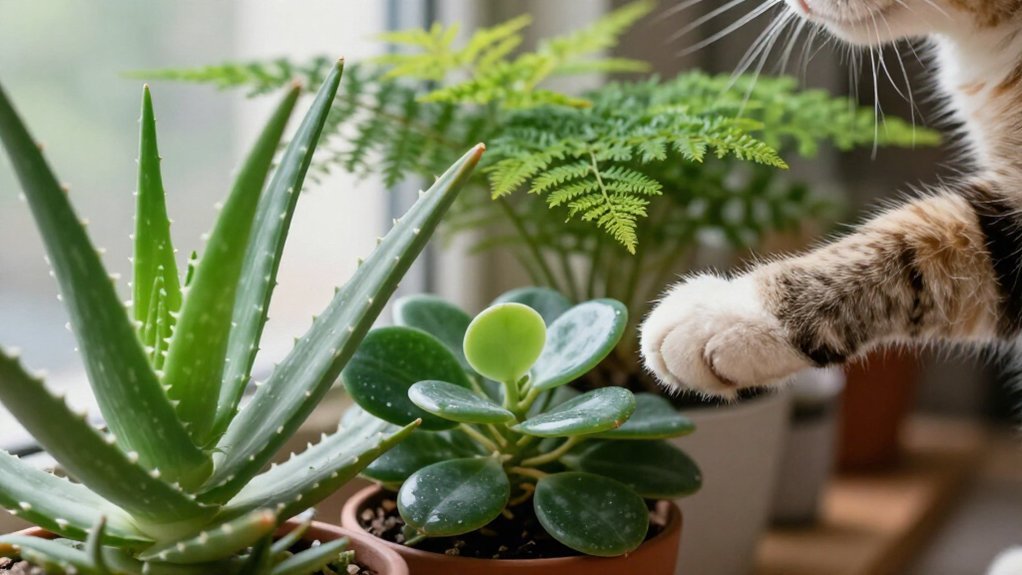
How often do you browse houseplant shelves, spotting aloe vera, jade, and asparagus fern among the recommended “pet-friendly” selections? You may assume these plants carry minimal toxicity for your cats, yet veterinarians frequently treat cases involving all three species.
Aloe vera, prized for its medicinal gel, can trigger vomiting, diarrhea, and abdominal pain in cats following significant ingestion. The Jade plant (Crassula ovata), with its thick, water-storing tissues, causes similar gastrointestinal upset alongside mild depression when your curious cat chews its succulent leaves. Asparagus fern (Asparagus densiflorus) presents double trouble: its delicate, needle-like foliage irritates oral tissues upon contact, while ingestion produces vomiting and diarrhea.
You must recognize that “safe” remains relative. Individual cats show varying sensitivities, and even modest nibbling can produce adverse effects. Monitor your pets closely around these plants, positioning them beyond reach when possible, because preventing exposure protects your cat from unnecessary gastrointestinal distress.
Recommended Products

Plant Pot Grid Set: you will receive 3 pieces of plant pot cover, each piece comes with 8 pieces of stakes, enough for you to fix and protect different sizes of pots

Plant Pot Grid Set: you will receive 3 pieces of plant pot cover, each piece comes with 8 pieces of stakes, enough for you to fix and protect different sizes of pots

[Complete Plant Pot Grid Kit] This anti squirrel plant protector kit comes with a roll of 15.7" W x 63" L PE mesh, 50 zip ties, 10 ground stakes and an instruction manual. It's can effective to stop pets from digging up plants, keep surroundings neat and safeguard plant growth
Poisoning Timeline: Symptoms That Appear in Minutes vs. Hours
When your cat samples a toxic leaf or stem, do you know whether you’ll be racing to the vet within minutes or watching anxiously through a sleepless night? Lethal timing varies dramatically by plant, and you’ll need sharp observation skills to catch the warning signs. Rapid onset symptoms minutes after ingestion include intense drooling, pawing at the mouth, and vomiting, often signaling immediate tissue irritation. Other threats unfold more slowly; symptoms hours later can mask life-threatening progression. Sago palm exposure typically triggers vomiting within several hours while silently inflicting liver damage. Lilies present subtler early warnings yet cause rapid kidney failure from minimal contact. Because timelines shift unpredictably, you’ll want veterinary guidance immediately, bringing plant samples to accelerate precise, urgent treatment tailored to your cat’s specific exposure.
Recommended Products

Easy to use: The cat deterrent indoor mat made of high-density lightweight new PET material, the size is 13X16 inches, it can be arbitrarily cut into the size you need.

𝐇𝐮𝐦𝐚𝐧𝐞 𝐒𝐨𝐥𝐮𝐭𝐢𝐨𝐧 - Humane plastic cat spike mat, Safe and animal-friendly pet repellent device, that is the perfect and humane way to deter pets and small wildlife from digging and scratching.

Ideal Area Coverage: Protect your home and garden with scat mats for dogs and cats; each mat measures 16.5 x 13.2 inches, ensuring extensive coverage to keep unwanted animals away from your spaces
Emergency Response: When to Call Poison Control Before the Vet
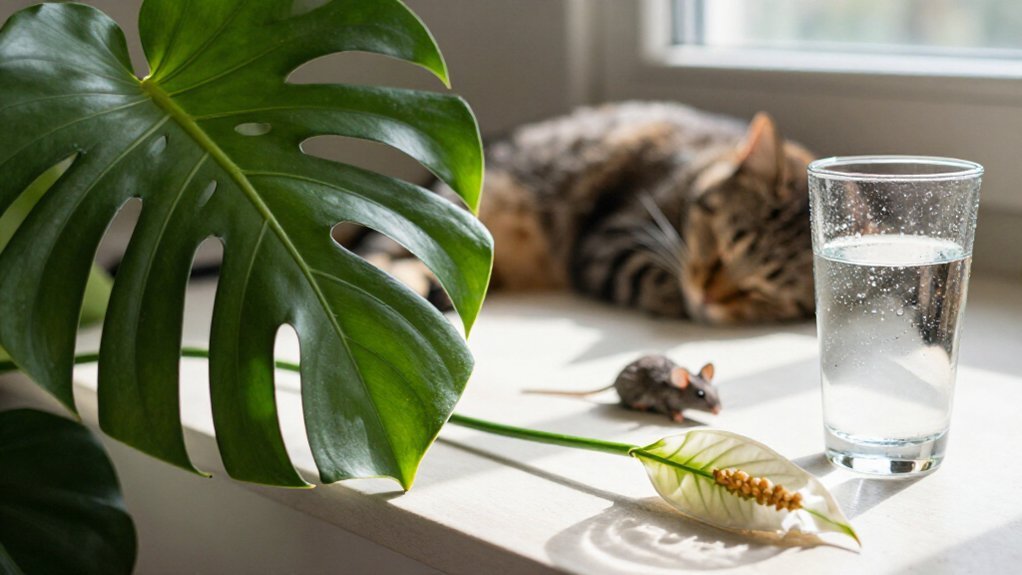
Before you dial, gather three pieces of information: the exact plant name or a clear photograph, your best estimate of how much your cat consumed, and the time elapsed since exposure.
You should call poison control immediately after suspected ingestion, as rapid plant identification determines whether home monitoring suffices or urgent veterinary care becomes necessary. The specialist you’ll reach will assess signs of poisoning you’ve observed, vomiting, drooling, lethargy, or breathing difficulty, then direct your immediate action.
Do not induce vomiting unless instructed; instead, secure cat safety by removing your pet from the plant’s vicinity while awaiting guidance. If seizures, collapse, or rapid deterioration occur, bypass the helpline and rush to urgent veterinary care without delay.60% of toxicity cases resolve with prompt, protocol-driven intervention.
Recommended Products


【Packing】100pcs Cat nail caps (5 colors x 20pcs ) + 5pcs Adhesive + 5pcs Applicators + Manual

【🌱 FAST SPROUTING CAT GRASS】Watch fresh cat grass grow in as little as 2 days! Our premium cat grass kit grows faster than traditional kits, giving your cat a fresh, natural snack they’ll love sooner.