
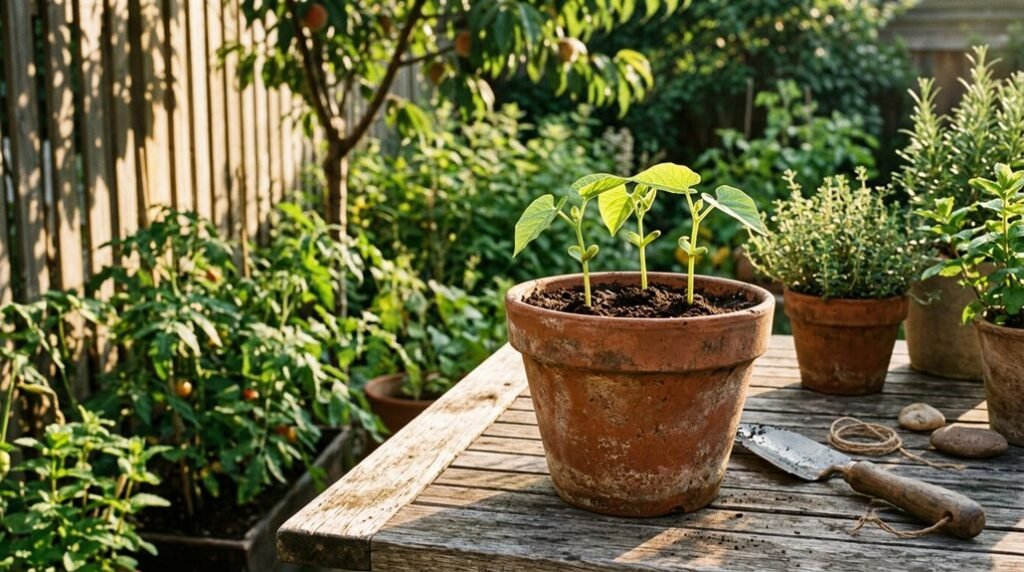


Your vegetable garden promised abundance, yet you’re harvesting disappointment instead of tomatoes, peppers, or squash. You’re not alone, and you’re not failing, most production problems stem from five fixable factors that quietly undermine even experienced growers. Insufficient sunlight, compacted soil, temperature swings, erratic watering, and overlooked cultural habits each sabotage fruit set in distinct ways you can diagnose this week. You’ll need to measure your actual light hours, test your soil’s NPK, and track your watering depth, but the solutions require no specialized equipment, just observation and adjustment. The first step starts now.
Is Lack of Sunlight Stopping Fruit Set?
Why do your tomatoes flower abundantly yet stubbornly refuse to set fruit? You’re likely witnessing how insufficient sunlight cripples your vegetable garden yield, because eight or more hours of direct sun powers the photosynthesis that fuels fruit development in warm-season crops.
When your garden receives fewer than six hours of sunlight, you’ll see stunted growth and failed fruit set in tomatoes, peppers, and cucurbits. Your plants cannot manufacture enough energy to mature their offspring. You can’t relocate established beds, so you must practice strategic shade management instead. Select root and leafy vegetables for dimmer spots, or install reflective mulch to amplify available light. Match variety selection to your actual conditions, ensuring photosynthesis proceeds efficiently despite constraints.
Recommended Products

Higher Growing Power & Energy Saving: SANSI plant lights for indoor growing offer high growing power of PPFD: 804 μmol/s/㎡@1ft. Through the lens for secondary scientific light distribution, improves light utilization, giving plants more supplementary light. Using only 40W of power, equivalent to 600W incandescent bulbs. Based on 18 hours per day usage, save up to ninety PCT electricity, annual estimated cost 26.28

[GOOD SOLUTION FOR DOING ORGANIC GARDENING:If you are doing organic gardening, or just want to reduce pesticide use, Remiawy plant cover is good choice. This plant blanket is made from lightweight and breathable fabric. The material allows sunlight and moisture to reach plants. Remiawy plant covers for animal protection work great for keeping the birds,insects,critters and deer off your plant. You don’t need to have a struggle with birds,worms and critters eating your veggies and fruit

THE SECONDARY OPTICAL DESIGN: PPFD: 804 μmol/s/㎡@1ft. Through the lens for secondary scientific light distribution, improves light utilization, giving plants more supplementary light. Using only 40 watt of power, equivalent to 600W incandescent bulbs. Based on 18 hours per day usage, save up to 90 percent electricity
The Soil Problem You Can Fix in One Afternoon
Your soil might look innocuous, but it’s likely the silent saboteur behind your disappointing harvests, because compacted, nutrient-depleted earth starves roots of the oxygen and minerals they need to fuel vegetable production. You can transform this situation in one afternoon by spreading a handful of organic fertilizer around each plant and digging it into the root zone, which immediately boosts nutrient uptake and plant vigor. Incorporate compost or organic matter to improve soil structure, or build raised beds if your ground remains stubbornly compacted. While this quick fix helps, you’ll need a comprehensive soil test, including NPK analysis and lab review, to address deeper fertility imbalances. Schedule annual re-testing to monitor soil health improvements and refine your fertility strategy based on results and plant performance.
Recommended Products

Feed your raised bed for up to 3 months

Ready-to-Use Formula: No mixing or extra steps required. Simply pour and plant - perfect for gardeners of all experience levels.

Feed the soil not the plants - stimulate microbial activity in your soil and boost probability of success with all types of plants… like composting but faster
Are Heat Waves and Cold Nights Killing Your Flowers?
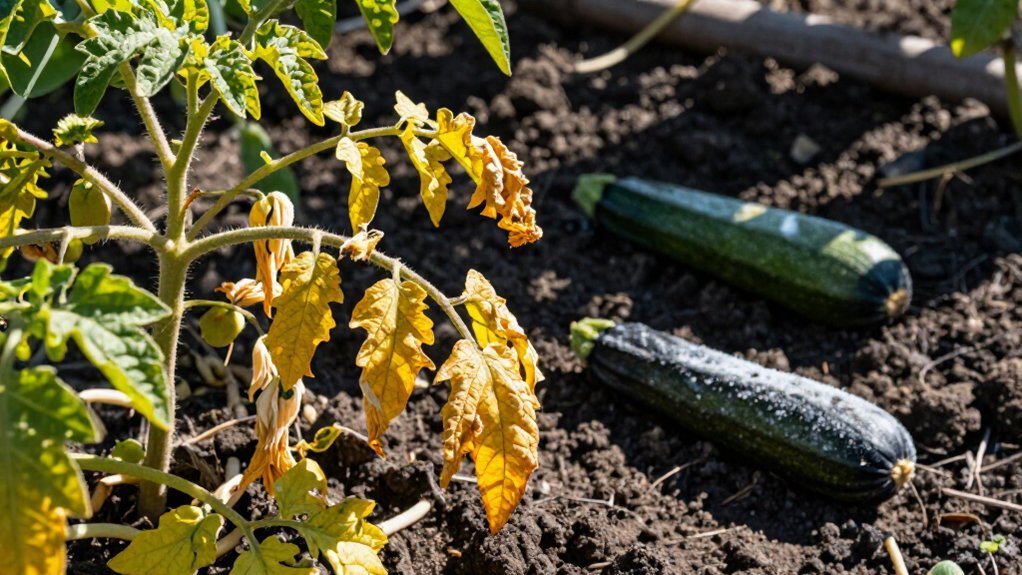
You have spent an afternoon improving your soil structure and fertility, yet your plants still refuse to set fruit, and the culprit might hide in your recent weather patterns rather than your garden bed. Temperature stress disrupts delicate reproductive processes in your vegetable garden, particularly when heat waves push daytime highs above 85°F while cold nights drop below 60°F.
Your tomato flowers suffer most dramatically under these fluctuating conditions. The pollen becomes sterile, styles desiccate, and fruit set fails even when pollinators visit faithfully. Prolonged heat causes flower abortion, while chilly evenings slow metabolic processes essential for ovary development.
- Monitor local forecasts and track when sustained heat waves threaten your region, typically USDA zones 7-9 during July and August.
- Install 30-50% shade cloth over determinate varieties like ‘Celebrity’ when temperatures exceed 90°F for consecutive days.
- Apply 2-3 inches of organic mulch to buffer soil temperature swings and maintain consistent root zone moisture.
Protecting developing blooms requires anticipating temperature stress before damage occurs.
Recommended Products
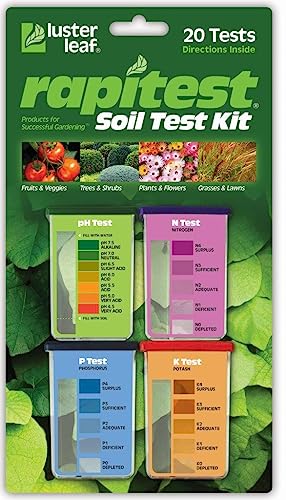
Quick, at home results for Soil pH, Nitrogen, Phosphorous and Potash Innovative and inexpensive soil test kit features an easy-to-use capsule system and patented color comparators

50 safe, easy, hands-on tests for nitrogen, phosphorus, and potassium using nonhazardous TesTab

KNOW BEFORE YOU GROW | Grow the healthiest, sustainable lawn and garden with the most accurate and easy to use professional soil test kit on the market
Are You Watering Often Enough: or Too Much?
The balance between hydration and suffocation often proves trickier than it appears, especially when you’re standing at the spigot wondering whether your tomatoes need another drink or a chance to breathe.
Most vegetables prefer some drying between waterings, so you’re actually harming root health when you keep soil moisture constantly soggy. Aim for one inch of water weekly, increasing irrigation during hot spells or in sandy soils that drain quickly.
Let the soil breathe between drinks—soggy roots rot, but one inch weekly keeps vegetables thriving.
Deep watering at the root zone beats daily sprinkling, as it encourages robust roots to seek moisture downward rather than lingering near the surface. Spread mulch two to three inches thick to regulate soil moisture and cut watering frequency.
Watch your drainage carefully, particularly after heavy rains, because standing water smothers roots and invites disease faster than drought stress ever could.
Recommended Products

This blossom spray is designed to help peppers, tomatoes produce larger fruit and reduces end rot. For use on Tomatoes, Beans, Cucumbers, Eggplants, Melons, Okra, Peppers,...
5 Fixable Habits That Sabotage Fruit Production
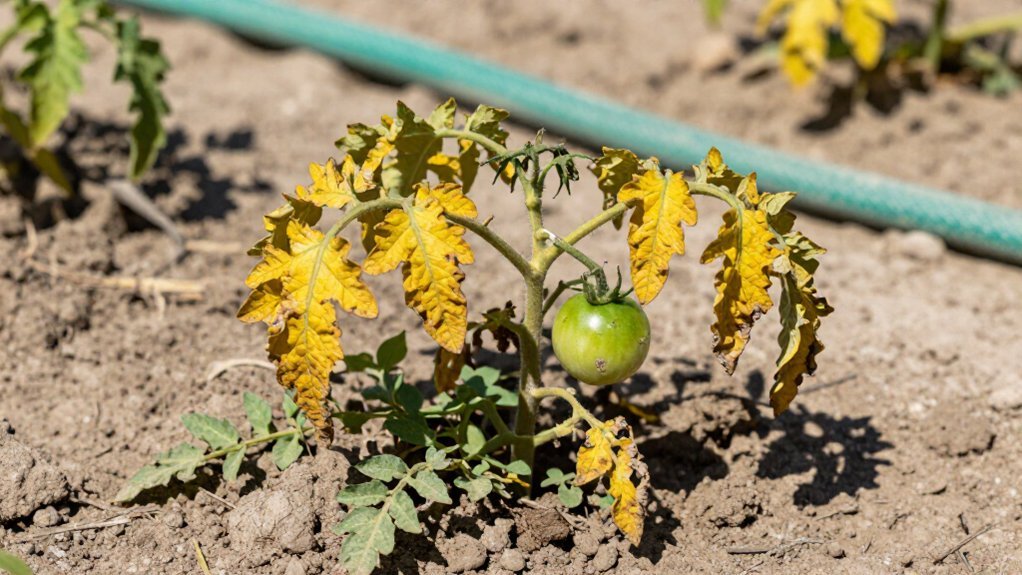
What hidden routines might be quietly undermining your harvest before a single blossom forms? You might not realize that everyday habits you’ve developed are sabotaging your fruit production, but recognizing these patterns lets you reclaim control of your garden’s productivity.
- Neglecting pollination support leaves cucurbits and other crops without adequate pollen transfer, so you must attract wild pollinators with companion plantings or hand-pollinate when natural activity lags.
- Poor fertilizer management, particularly excessive nitrogen on seedlings, diverts energy into leafy growth rather than reproductive development, meaning you should monitor NPK through soil analysis and adjust applications seasonally.
- Incorrect planting spacing creates resource competition that suppresses fruit set, so follow species-specific guidelines, typically 18-36 inches for tomatoes and 48-60 inches for squash, ensuring each plant accesses sufficient light and nutrients.
Additionally, you must address heat stress through consistent watering and mulching to prevent flower abortion, and you need to prioritize harvest timing by picking mature fruits regularly, which stimulates continuous flowering and sustained yields throughout your growing season.
Recommended Products

NO MORE HARD INSTALLATION - SET UP IN MINUTES. Tired of struggling with stiff barbed fittings? This drip irrigation system features quick-connect fittings that let you push, lock, and secure tubing effortlessly. No tools, no leaks, just a smooth setup experience. Enjoy a frustration-free installation and get your garden watering system running in minutes.

🌿 Complete 50FT Irrigation Kit – Ready to Install Includes 50FT tubing, 12 brass misting nozzles, 12 three-port connectors, faucet connector, 2 end plugs, 20 hose buckles & 10 cable ties—everything needed for a full garden setup.

【Upgraded Tube Design & Water Saving】 Our adjustable garden watering system is upgraded to 1/2” diameter to support high water pressure. The 1/2” tee connector in the package so you can easily set up 2 drip irrigation systems as needed. Garden watering systems minimize stage water loss by recharging water directly to plant roots. While traditional irrigation often results in wasted water, this drip irrigation system saves up to 70% of water, no need for manual watering, saves water.