
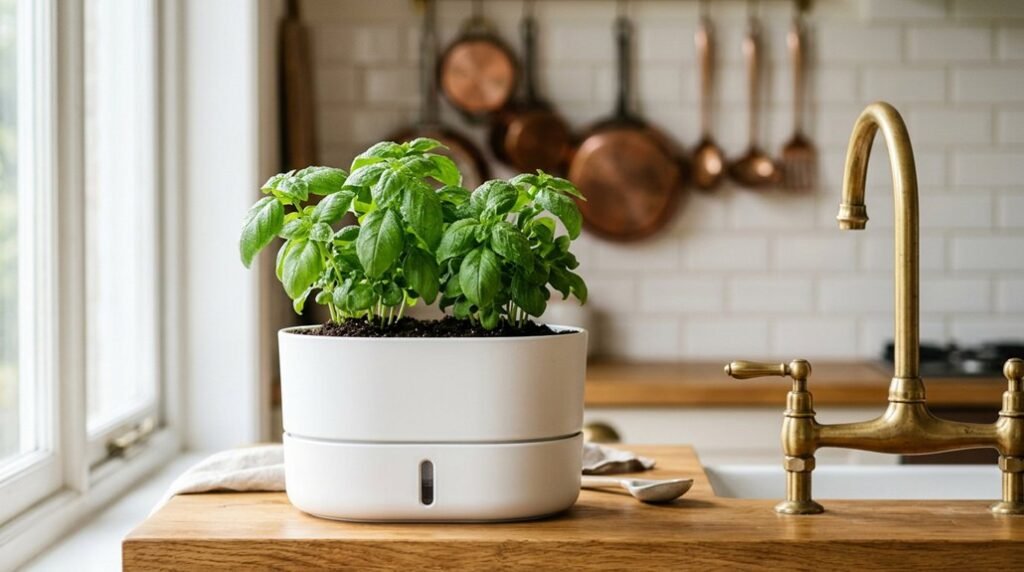


Your windowsill is a blank canvas, waiting for green life you can cultivate even when the sun hides behind clouds and concrete. You will learn to select shade-tolerant cultivars like ‘Genovese’ basil and flat-leaf parsley, hardy to USDA zones 4-9, then position them 6-12 inches from reflective white walls or mirrors to amplify every photon. You will master the measured rhythm of watering, letting potting mix dry to your first knuckle before saturating until drainage flows. The question remains: which single adjustment transforms struggling seedlings into thriving, harvestable plants?
Pick Low-Light Herbs That Actually Survive Indoors
Where should you begin when your windowsills offer little more than dim, filtered light? You’ll start by selecting low-light herbs that tolerate shade without demanding full sun exposure.
Mint proves remarkably forgiving, thriving in USDA zones 3-11 and tolerating the dimmest corners of your kitchen; you’ll prune it regularly to control its vigorous spread. Parsley performs adequately with moderate indoor light, yielding smaller but flavorful harvests throughout zones 2-11. Chives suit compact spaces beautifully, requiring minimal maintenance while occupying little counter area.
You’ll avoid cilantro, which struggles indoors without cooler conditions or supplemental support. Basil demands more attention, yet succeeds in larger containers with even modest artificial illumination. Choose mint, parsley, or chives for reliable results, and you’ll cultivate usable herbs despite your light limitations.
Recommended Products

Complete All-In-One Kit - No need to buy separate supplies. This herb starter set comes with 4 plastic planter pots, 4 soil discs, 4 plant markers 4 heirloom herb seed packets, and essential planting tools—everything you need to start your indoor herb garden immediately.

🌿【Complete 9-Herb Starter Kit】- Everything you need to grow a thriving indoor garden! Includes premium seeds (Basil, Rosemary, Thyme, etc.), 9 biodegradable pots, nutrient-rich soil discs, pruning shears, and markers—ready to plant instantly.
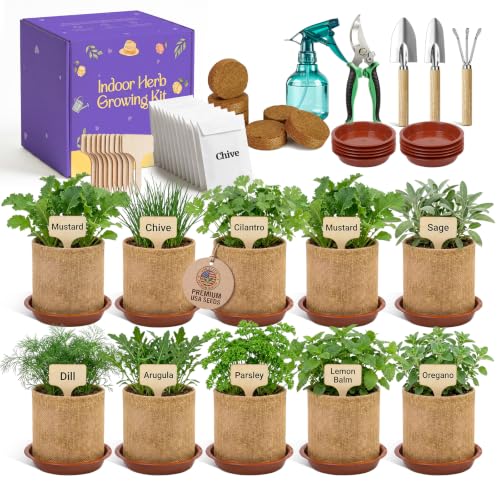
Complete Indoor Herb Garden Kit: Includes 10 jute fabric pots, 10 drainage trays, 10 plant labels, 10 packs of herb seeds, 7 coco coir soil blocks, a wide trowel, narrow trowel, cultivator, pruning shears, and spray bottle. Detailed planting guidance helps you get started.
Build a Simple Setup Without Grow Lights
How do you cultivate thriving herbs when elaborate grow light systems aren’t an option? You build a repeatable, low-tech foundation that prioritizes drainage, aeration, and consistency over expensive equipment.
Start with containers featuring drainage holes and a loose, well-aerated potting mix, because compacted soil suffocates roots faster than dim light stalls growth. You will establish a predictable watering routine, since moisture retention without proper drainage destroys more indoor herbs without grow lights than inadequate lighting ever does.
Rotate your pots regularly for even exposure, as lopsided growth from uneven light proves more limiting than slight watering variability. If possible, supplement with a modest LED or fluorescent setup, even a small one, to prevent leggy, stretched stems. You are creating sustainable conditions, not chasing perfection, and this balanced approach keeps your herbs productive through seasonal light fluctuations.
Recommended Products

Beautiful - Individual packets of popular culinary herbs including Mint (Mentha spicata), Lavender (Lavandula), Basil (Ocimum basilicum), Cilantro (Coriandrum sativum) & Parsley (Petroselinum crispum). This collection makes a wonderful gift.

Herb Seeds for Hydroponic Garden and Indoor Pots: These herb seeds for planting indoors thrive in hydroponic systems, AeroGarden, kitchen windowsill planters, or traditional soil. Perfect herbal seeds for apartment dwellers and urban gardeners short on outdoor space. Grow fresh herbs year-round in containers as small as 4 inches. Ideal seeds for planting herbs for renters, condo owners, and city gardeners who want homegrown flavor without a backyard.

Beautiful - Large color packet of the popular culinary herb Parsley (Petroselinum crispum).Fun and easy herb with tasty and attractive leaves that add a gourmet touch to dishes as both garnish and flavoring. Leaves may also be dried. A wonderful gift for the gourmet cook. Minimum of 1g per packet (about 475 seeds).
Position Plants for Maximum Available Light
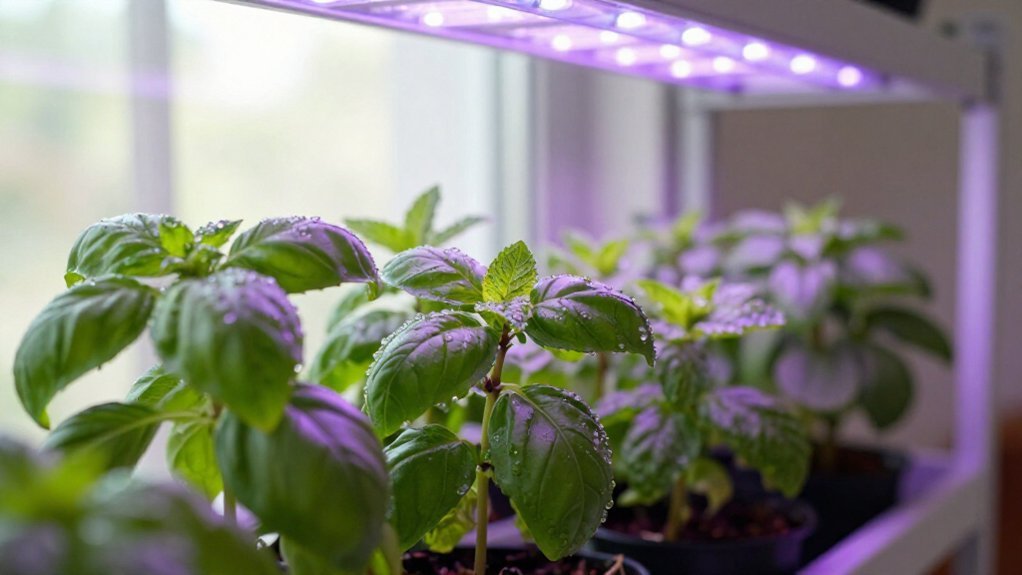
You should place your herbs directly in front of a south-facing window, which provides the strongest, most consistent natural light available indoors, and you’ll want to position reflective surfaces, such as white cardboard or Mylar sheets, behind and beside your plants to bounce stray photons back toward the foliage. Keep your pots within 6–12 inches of the glass, since light intensity drops sharply with distance, and avoid setting them on drafty windowsills where temperature fluctuations can stress tender basil or cilantro seedlings. By combining strategic placement with simple reflection, you’re maximizing every available lumen before considering supplemental lighting.
Recommended Products

【Indoor Herb Garden】Experience the joy of gardening with our specialized indoor herb planter. This set includes a planter with a tray but does not come with plants and seeds. Designed specifically for herb cultivation, these planters can be used both indoors and outdoors. Crafted from durable metal with a sleek, glossy white finish, they blend functionality with a farmhouse style to enhance your living space.

Drain Holes Design -- Window planter box design with many small drain holes,prevent excessive watering, maintain soil drainage and ventilation.

Indoor Herb Garden Planter with Tray - Add greenery to your home with this vintage metal windowsill planter. Herb planters for indoor plants with a farmhouse touch. Place the indoor herb planter on your kitchen counter or display the small herb planter as an apartment window planter.
South-Facing Window Priority
When you’re deciding where to place your indoor herbs, a south-facing window should be your first choice, since it delivers the strongest, most consistent natural light throughout the day. Position your pots within 6–12 inches of the glass to capture the most intense direct and near-direct light available.
If you notice the light striking unevenly, rotate your pots every few days so all sides receive comparable exposure, which prevents leggy, lopsided growth. Even with a prime south-facing window, some indoor spaces still fall short on sun, especially in winter months or shaded rooms. When this happens, supplement with a small LED grow light placed 6–12 inches above your herb canopy to boost daily light exposure. This combination of strategic window placement and targeted supplementation creates the foundation for vigorous, flavorful indoor herbs.
Reflective Surface Placement
Where might you find extra light when your windows fall short? You’ll discover it in reflective surfaces, strategically positioned to amplify every photon reaching your herbs.
Place your pots on or near light-colored, reflective surfaces, such as matte white walls, mirrors, or Mylar sheets, which bounce 20–40% more available light onto foliage. Position them within 6–12 inches of these surfaces to maximize capture without heat buildup. Angle a dedicated, uniform light source to create even illumination across all sides, letting reflectivity do the heavy lifting.
Rotate your pots every few days so all sides receive reflected light, preventing leggy growth. Avoid glossy or dark surfaces that create hotspots; choose matte white or lightly textured reflectors for balanced diffusion. You’ll transform dim corners into productive growing zones.
Distance From Glass
Reflective surfaces multiply what light you’ve got, but their benefit depends on where you place your plants in the first place. You need to position your herbs 6–12 inches from the window glass, a light distance that captures maximum available illumination without exposing tender leaves to scorching direct glare. Rotate your pots every 2–3 days so all sides receive equal exposure, preventing leggy, uneven growth that weakens your plants.
- Measure your window light with a simple hand test
- Adjust placement seasonally as sun angles shift
- Elevate pots slightly to improve airflow
- Monitor leaf color for distance stress signals
- Supplement with LED within 6–12 inches when needed
Keep herbs away from cold drafts near glass, and place reflective foil or light walls nearby to bounce photons onto multiple plant faces, amplifying what natural light reaches your indoor garden.
Water Indoor Herbs Less Than You Think
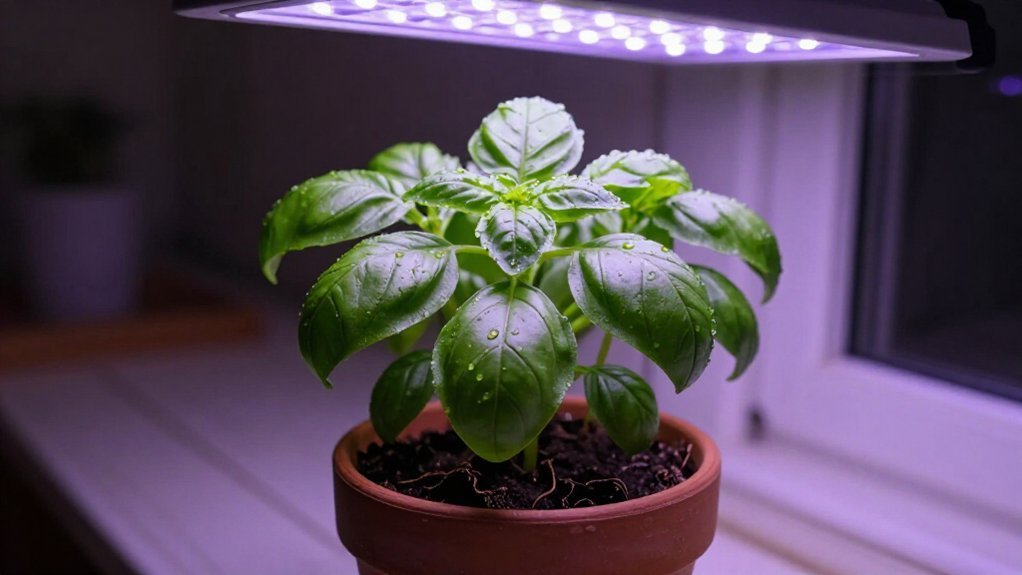
How often should you water your indoor herbs? You’ll want to water them about once weekly after bringing them indoors, though you’ll increase that frequency if you notice wilting. When watering, place your pots in the sink, let them drain completely, then return them to their growing spot.
Overwatering stands as the most common failure point for indoor herbs, so ensure your pots have proper drainage holes, and avoid decorative containers lacking them entirely. Water thoroughly until you see water draining from the bottom, then empty any excess from saucers to prevent root rot from developing.
During winter months, you may apply a weak all-purpose fertilizer or fish emulsion once or twice, though this step remains optional for most home gardeners maintaining culinary herbs indoors.
Recommended Products
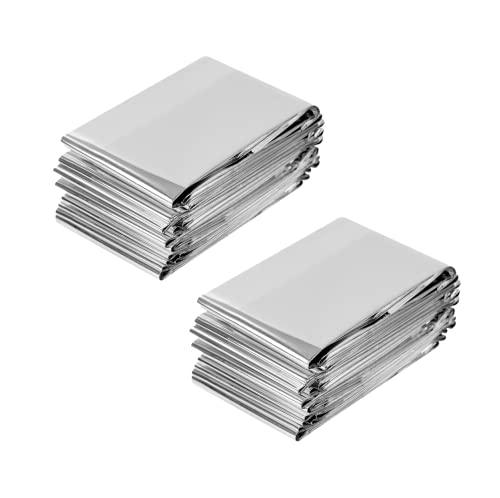
Reflective grow room material:Plant reflection film using safe,healthy,environmental protection,high-quality PETP(Polyethylene terephthalate) material,PETP film has excellent solar radiation transmission performance,it can be the most effective use of light reflection principle for your plants to provide lighting,to promote plant growth.

【Product Size】- Each pack includes 6 pcs 83x63in (210x160cm) mylar sheets, it can cut into any desired size or shape. Perfect for pairing with grow lights, this mylar flim reflects more artificial light, making your lights work better so plants get more light
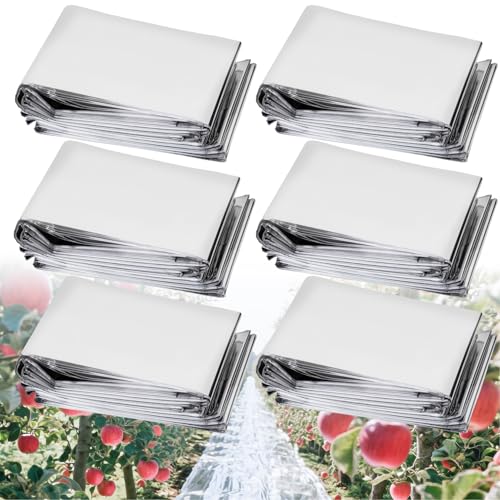
Boost Photosynthesis: Our silver reflective mylar film enhances light reflection to capture and redirect more sunlight, fueling stronger photosynthesis. This extra light exposure speeds up growth—ideal for gardens, greenhouses, or any setup needing better light distribution
Harvest Correctly for Months of Fresh Growth
Once you’ve established a reliable watering rhythm that keeps your herbs hydrated without drowning their roots, you’re ready to start reaping what you’ve sown, and proper harvesting technique will determine whether your indoor garden thrives for months or fizzles within weeks.
When you grow herbs indoors, you must harvest strategically to sustain production. Never remove more than one-third of any plant at once; this preserves enough foliage for photosynthesis and regrowth. You’ll want to rotate pots regularly so each plant receives even light exposure, preventing leggy, uneven growth in your indoor environment.
For basil, prune stems before flowers appear to delay bolting and maintain flavor. Mint demands frequent cutting to control its invasiveness and encourage compact, productive habits rather than weak, sprawling stems.
Follow these guidelines for continuous harvests:
- Snip basil, mint, parsley, and chives regularly to stimulate new growth
- Limit each harvest to one-third of the plant’s total mass
- Rotate containers weekly for uniform light distribution indoors
- Pinch basil flower buds promptly to extend the productive season
- Prune mint aggressively to prevent tall, weak stem development
Recommended Products
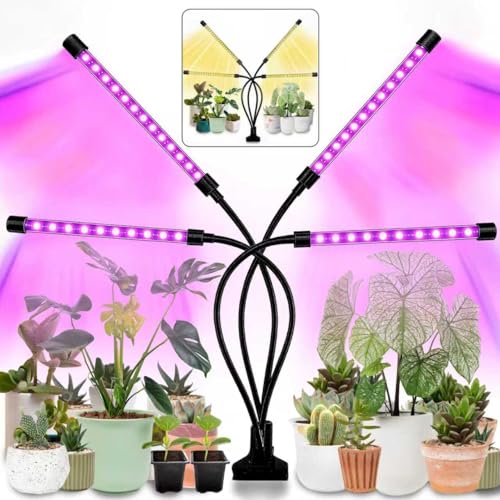
🌻Efficient LED Combination: This LED lamp has grow lights made up of 80 efficient growing LEDs ( 32 red lights, 12 blue lights,20 yellow lights and 16 white lights). It meets the conditions of plant growth without sunlight. 1--Full Spectrum(380nm-800nm): Suitable for all plants to root and sprout. 2--Red(660nm)+BLUE(460nm) Spectrum: for blooming and fruits. 3--Red+Blue+Full Spectrum: A mix of Red+Blue+Warm White is best to fuel the growth of your plants.

NOTE: The product stand needs to be pressed down by the flower pot to be stable. Not wireless style. 2 Installation Methods: Specially designed plant light for indoor plants, which can be inserted in the soil or stand for lighting.Unique and easy to assemble and disassemble.

NOTE: The product stand needs to be pressed down by the flower pot to be stable. 2 Installation Methods: Specially designed plant light for indoor plants, which can be inserted in the soil or stand for lighting.Unique and easy to assemble and disassemble.
Fix or Replace Dying Indoor Herbs
Why do your herbs struggle despite your best intentions? Overwatering kills more Herbs to Grow Indoors than any other mistake, so you must check your pots for drainage holes and let the top inch of soil dry before watering again. Yellowing leaves, drooping with moist soil, foul odors, or surface mold signal root oxygen deprivation, and you need to act fast.
You can rescue struggling plants by establishing a consistent routine: water thoroughly in the sink, let excess drain completely, then return pots to their spots. With limited light, choose fast-draining, loose potting mix and rotate pots weekly to balance exposure. Never use decorative containers without drainage, because they suffocate roots. Prioritize functional pots, and your Herbs to Grow Indoors will recover and thrive for months of harvest.
Recommended Products

All-in-One Package: Our kit includes 5 of the widely loved organic, non-GMO herb seeds—basil, parsley, rosemary, thyme, and mint. The set also comes with 5 burlap bags, 5 coconut soil discs, 5 plant markers, 3 gardening tools, 1 pruning scissors, 1 spray bottle, and an wooden box

HERB PLANTS & SEEDS - Start an indoor herb garden from seed with basil, chives, dill, cilantro and parsley, each in its own burlap pot.