
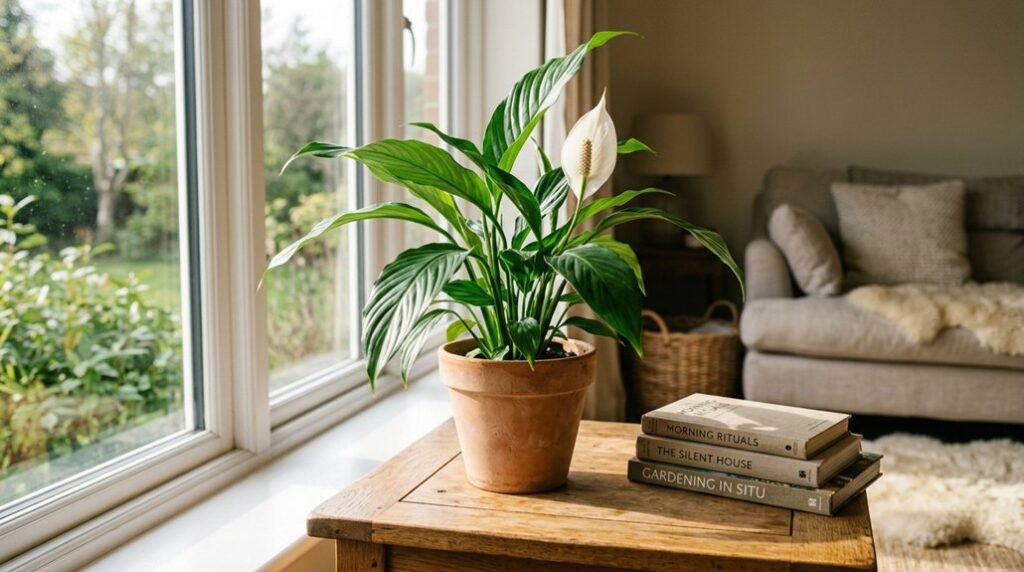


Your Peace Lily droops from thirst, drowns in excess, or wilts from hidden root rot, and learning to read these signals quickly separates salvageable plants from preventable losses. You’ll press your finger two inches into the potting mix, gauge the weight of the container, and sniff for musty decay before deciding your next move. The fix isn’t always more water.
Why Your Peace Lily Droops and How to Tell Overwatering From Underwatering
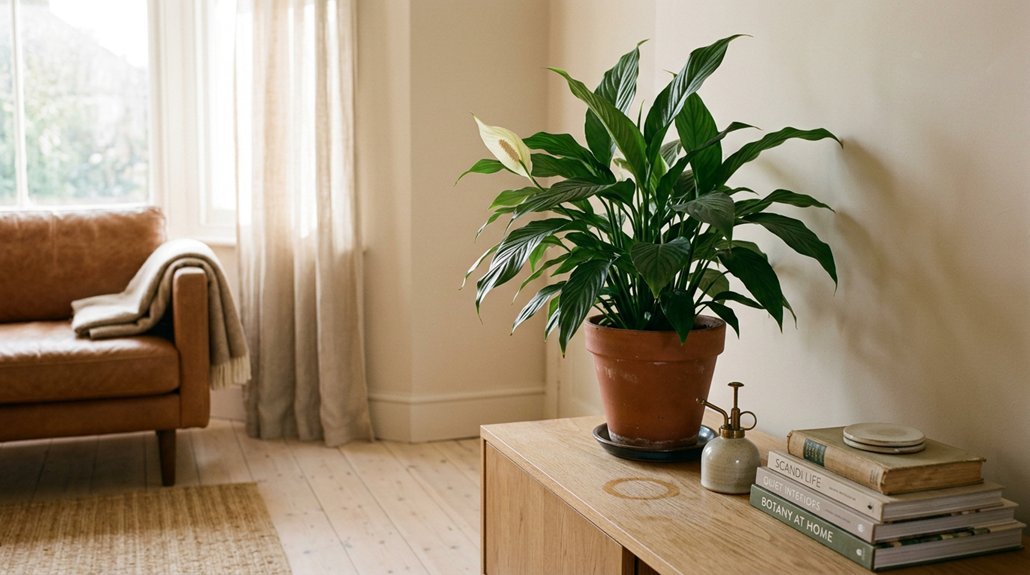
Where exactly does your peace lily’s droop originate when the leaves sag toward the soil, signaling distress that demands your immediate attention? You’re likely facing either underwatering or overwatering, and distinguishing between them requires examining your soil moisture with precision.
When underwatering strikes, you’ll notice the top inch dry for days, leaves turning crispy at the margins, and a plant that revives dramatically after you water thoroughly. Conversely, overwatering suffocates roots, leaves soil wet for extended periods, and produces a musty odor. Check the top inch: consistent dryness indicates underwatering, persistent wetness points to overwatering.
Water thoroughly until drainage flows freely, then discard standing water from saucers. This ensures proper moisture uptake without inviting root rot, keeping your Spathiphyllum cultivar thriving in its preferred conditions.
Recommended Products

Accurate Soil Moisture Detection: The XLUX Soil Moisture Meter can tell you if the soil deep inside your pot or garden is dry, moist or wet; whereas your eyes and fingers can only determine the moisture level of the soil surface. The probe is 5.5 inches (14 cm) longer than regular styles, allowing it to measure the soil moisture at the bottom of larger and deeper flower pots.
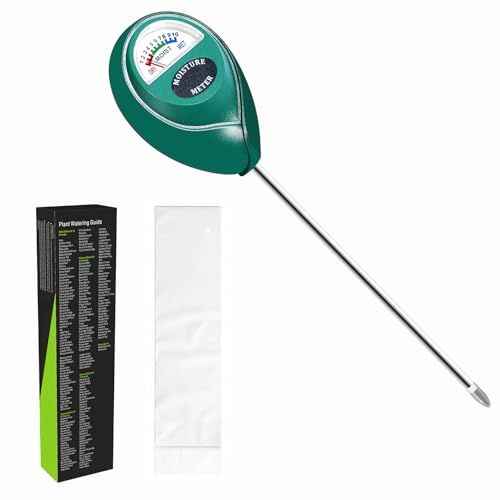
Trusted Since 2015: Become one of the many plant lovers who rely on the proven accuracy of XLUX. Established in 2015, our soil moisture meter has earned over 60,000+ verified ratings for its consistent performance. While many many newer brands come and go, we provide the long-term reliability and quality that American households have trusted for over a decade.

【4 in 1 function】This is a 4-in-1 multifunctional soil tester.Our soil tester fastly to measure soil moisture, pH, temperature and sunlight to help you take better care of flowers and plants.You can know when you need to water your soil by measuring moisture and pH & Temperature value of the soil and sunlight level of plants with it.
Why Won’t Your Peace Lily Perk Up After You Water?
You’ve given your Spathiphyllum ‘Mauna Loa’ a generous drink, yet those characteristic white spathes still hang limp above sagging foliage, and you’re wondering what went wrong. Persistent drooping after watering signals that your plant has suffered repeated stress from allowing the soil to stay dry between waterings, and the damage has accumulated beyond a single rescue drink.
To restore your peace lily, you must address these factors:
- Check that the top inch dry rule becomes your consistent rhythm, not an occasional rescue
- Verify soil moisture reaches the root zone, as compacted mix blocks absorption
- Adjust for light/temperature demands, since warm rooms require watering every 5–7 days
- Inspect for root or soil issues when water runs straight through without soaking in
Proper drainage ensures each watering counts.
Recommended Products

All of our listings have very representative pictures of what you would receive.

🌳 SUPPORT YOUR PEACE LILY'S GROWTH - Give your Peace Lily (Spathiphyllum) the ideal indoor growing environment with this professional soil mix designed for healthy root development and vibrant blooms. This premium ready-to-use potting soil enhances nutrient uptake, supports fertilizer absorption, and promotes strong plant structure. Perfect for indoor flowering plants, tropical houseplants, and container gardening, it helps your Peace Lily thrive with lush green foliage and long-lasting beauty.
🌿 SUPPORT YOUR PEACE LILY’S GROWTH: Give your plants the ideal environment with this professional peace lily soil designed for strong roots and vibrant blooms. This premium peace lily potting soil improves nutrient absorption and supports fertilizer efficiency, helping your peace lily plant indoor live thrive with lush foliage and healthy growth.
Check Your Peace Lily for Root Rot and Poor Drainage
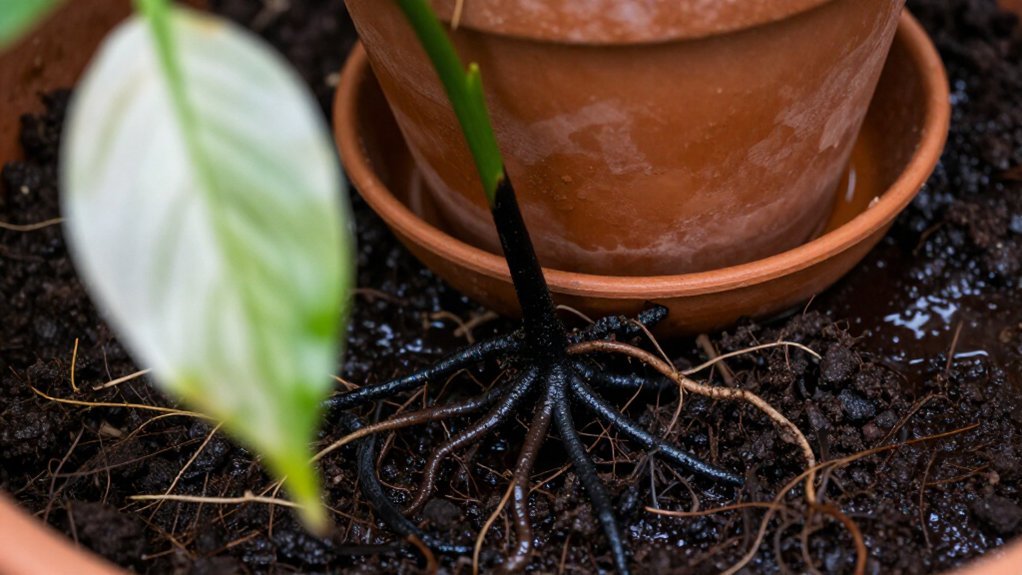
Perhaps your Spathiphyllum ‘Mauna Loa’ still droops despite your best watering efforts because the real trouble lies beneath the surface, where roots suffocate in stagnant moisture or decay from persistent overwatering.
Root rot announces itself through wilt that persists in wet soil, a sour, earthy odor, and brown roots that feel mushy between your fingers, all hallmarks of compromised drainage. You might notice water pooling for hours, sluggish drainage, or soil that looks muddy and smells stale, signs that oxygen cannot reach the root zone.
You’ll need to unpot your plant, trim away compromised tissue with sterilized shears, and proceed with repotting into a fresh, airy soil mix containing perlite or coarse bark. Ensure your container has adequate holes to restore proper water movement. Refresh the growing medium completely and monitor carefully. Firmer growth emerges once healthy water uptake resumes.
Recommended Products

100% NATURAL: Potting blend for Spathiphyllum (Peace Lily Plant), no chemicals or artificial fertilizers

INDOOR GROWING: Growing indoors is easy under the right conditions; Miracle-Gro Houseplant Potting Mix is an indoor plant potting soil that combines key elements container plants need to thrive

🌱 100% Natural & Organic Peace Lily Potting Soil Crafted from peat, coconut coir, perlite, worm castings, and humus—our chemical-free soil for indoor plants is ideal for your peace lilly plant indoor with pot and other houseplants.
Fix Your Peace Lily’s Light, Temperature, and Humidity Stress
Once you’ve ruled out root rot and drainage problems, turn your attention to the environmental conditions surrounding your Spathiphyllum ‘Mauna Loa’, since light, temperature, and humidity imbalances often masquerade as watering issues when they trigger similar drooping responses.
Peace lily drooping frequently stems from environmental stress rather than poor water quality alone. You need to position your plant in bright indirect light, avoiding direct sun that scorches leaves and collapses turgor pressure. Maintain temperature stability between 65–80°F (18–27°C), keeping your plant away from cold drafts and hot HVAC vents that cause shock.
Boost humidity through these methods:
- Mist leaves with room-temperature water each morning
- Set pots atop pebble-filled humidity trays with standing water
- Cluster plants together to create localized moisture zones
- Run a small humidifier nearby during dry winter months
Monitor soil moisture closely after relocation, ensuring proper drainage/soil moisture balance while your plant acclimates to steadier conditions.
Recommended Products

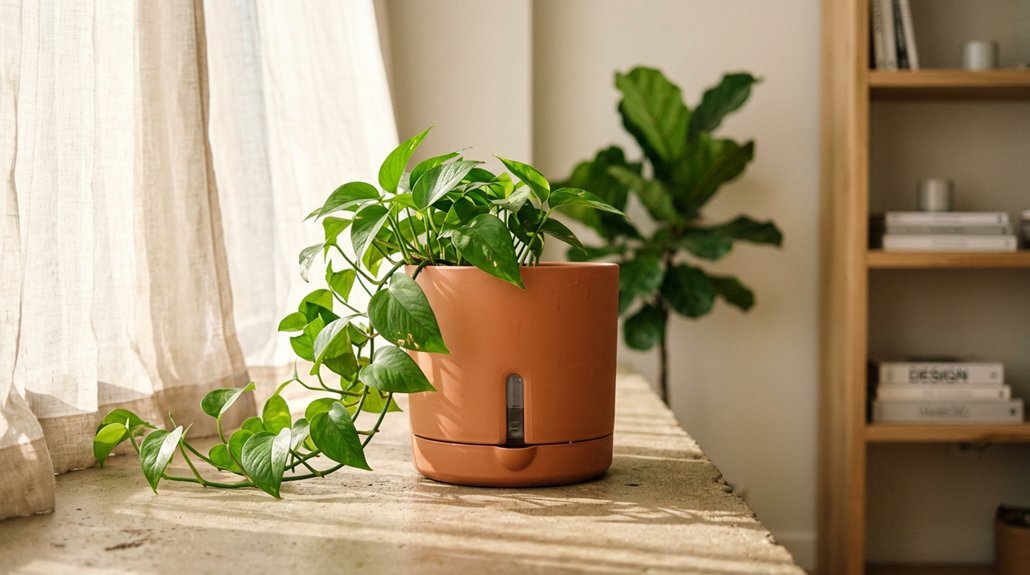
🌿 【Self-Watering Pots with Water Level Indicator】 Designed for busy plant lovers, our 8/10/12 self-watering pots feature a built-in ABSORBENT COTTON WICK SYSTEM that automatically draws water from the detachable bottom tray. The TRANSPARENT WATER LEVEL WINDOW WITH MEASUREMENT MARKINGS lets you monitor hydration at a glance, ensuring no overwatering or underwatering. Perfect for indoor/outdoor plants, this system keeps soil evenly moist for up to 7-10 days—ideal for vacations or hectic schedules.

🌿 【Self-Watering Feature】The Fielda 10 Inch Plastic Planter comes with a built-in self-watering system that uses absorbent cotton wicks to draw water from the bottom tray into the planter. This ensures your plants stay hydrated with less effort, saving you from frequent watering. Whether you're a busy gardening enthusiast or away for long periods, you can easily maintain your plants' moisture balance, ensuring they get the right amount of water and nutrients.

🌿 【Efficient Self-Watering System for Low-Maintenance Plant Care】 The Fielda 8-inch self-watering pots for indoor plants use COTTON WICKS to auto-feed plants for 7-10 days! Ideal for busy individuals or frequent travelers, this design reduces the need for daily watering, promoting healthier plant growth.
Repot Your Peace Lily to Fix Persistent Drooping
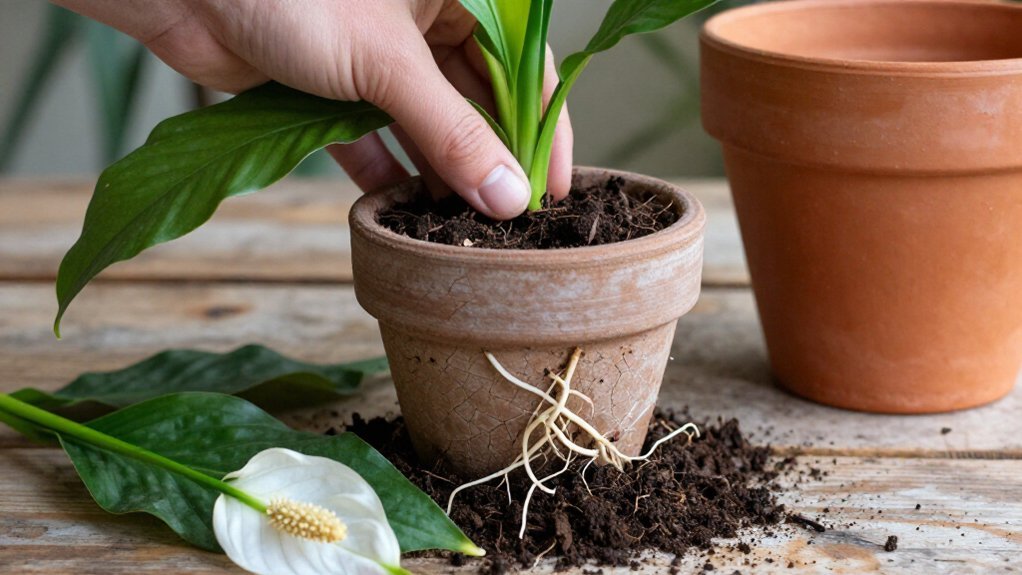
When your Spathiphyllum ‘Mauna Loa’ continues to wilt despite careful watering and environmental adjustments, compacted roots or degraded soil may be suffocating the root system and preventing proper water uptake. You’ll know your Peace Lily needs repotting when roots circle the pot, water rushes through drainage holes, or soil stays wet too long, signaling poor drainage and a root-bound condition.
Choose a pot with drainage holes and prepare a fresh mix of 2 parts houseplant soil, 1 part fine bark, 1 part perlite or pumice, plus a touch of coco coir for balance. This blend improves drainage and root oxygenation, directly addressing persistent drooping.
Repot in spring or early summer to minimize transplant shock. Position the root ball at the same soil level, fill gaps, moisten to remove air pockets, then wait to water until your plant settles.
Recommended Products

【12 Inch Self Watering Planter for Large Indoor Plants】 This 12 inch plant pot is ideal for large indoor plants such as monstera, fiddle leaf fig, palm, and dracaena, functioning as a reliable large indoor planter for home or office.

🌿 【Self-Watering Feature】The Fielda 10 Inch Plastic Planter comes with a built-in self-watering system that uses absorbent cotton wicks to draw water from the bottom tray into the planter. This ensures your plants stay hydrated with less effort, saving you from frequent watering. Whether you're a busy gardening enthusiast or away for long periods, you can easily maintain your plants' moisture balance, ensuring they get the right amount of water and nutrients.

SELF WATERING & NO MORE ROOT ROT - The smart unique sub-irrigation system is one of the most appealing aspects among all Dexceder planters. The easy-to-use separated integrated water reservoir or catcher- keeps your soil well aerated and automatic supplies plants with the right amount of ongoing moist air & nutrition for optimal growth. The insert indicator shows you the exact time to water again. The full water supply period can single-handedly last over 3 weeks based on different live plants