


You might be surprised to learn that a mature deer consumes four to ten pounds of vegetation daily, which means your carefully tended hostas and heirloom tomatoes represent a substantial buffet. When you understand how deer forage, you can build defenses that actually work rather than wasting money on gimmicks that fail after the first season. The three proven strategies you’re about to explore combine horticultural science with practical field testing, giving you measurable results in USDA zones 3 through 9. You’ll start by eliminating what draws deer in, then layer physical barriers they cannot breach, and finally deploy deterrent systems that prevent habituation. Each method builds on the last, creating a thorough defense that protects everything from your ‘Brandywine’ tomatoes to your foundation plantings.
Remove Deer Attractants and Secure Your Perimeter First
Why do deer keep returning to your garden even when you’ve tried to scare them off? You’re likely leaving deer attractants in place, and your perimeter security needs reinforcement.
Start with visibility and scent reduction. Harvest produce promptly, remove ripe fruit, and minimize lingering odors from tasty crops. Keep high-protein plants closer to your house, so deer feed there rather than venturing deeper. Trim dense plantings and eliminate hiding spots where deer bed down.
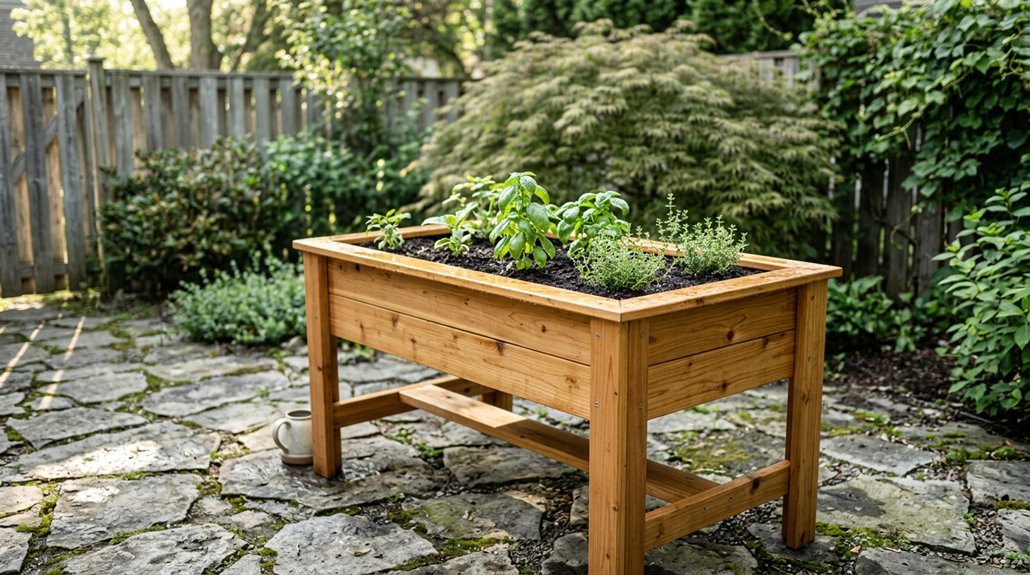
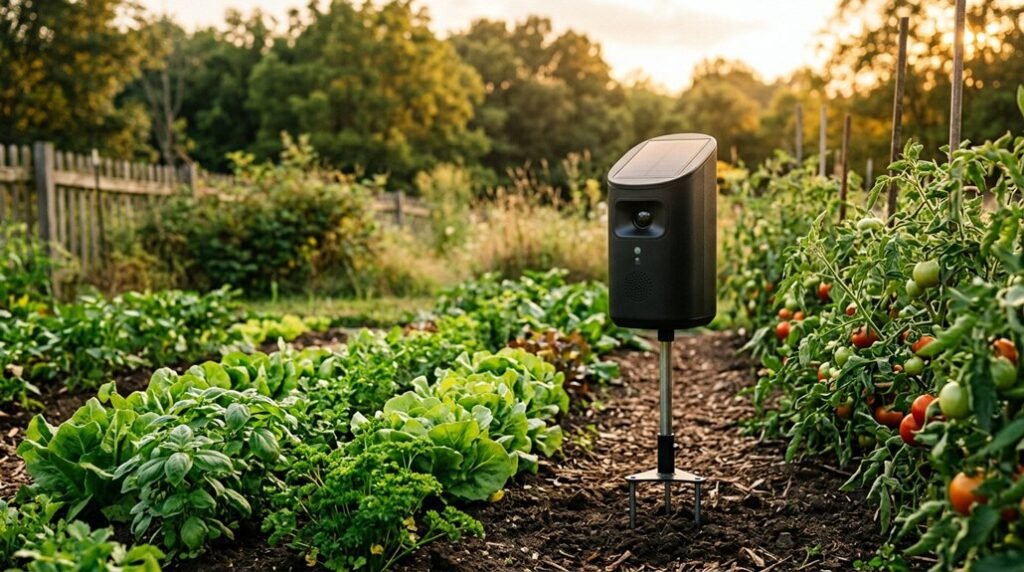
Layer your defenses. Install motion-activated sprinklers as sudden deterrents near vulnerable areas. Use deer repellent on prized specimens. Add raised garden beds as physical barriers. Combine fencing with other barriers for effective protection. These integrated strategies create multiple obstacles, making your yard less appealing without requiring complete deer fencing coverage.
Recommended Products

【Smart Animal Repellent with PIR Sensor】Automatically sprays water & flashing light when motion is detected, effectively scaring away deers, cats, dogs, foxes, skunks, raccoons, and other pests from the garden.
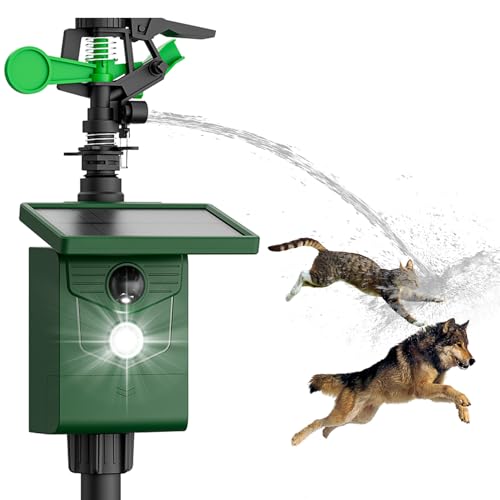
Precision PIR Dual‑Stimulation Repellent Performance: This motion sensor sprinkler features a 110° wide‑angle PIR sensor with detection distance up to 26 ft. It triggers synchronized water jet and bright strobe light upon detecting animal movement and avoids false activation caused by water splashes or raindrops.

Motion Activated Sprinkler: Experience the innovative motion activated sprinkler that combines a sudden water spray and flashing lights to deter unwanted animals. This powerful deterrent is designed to teach deer, cats, raccoons, and other pests to stay away from your yard and garden.
Build 8-Foot Solid Fencing or Double-Layer Barriers
When perimeter deterrents and repellents fall short, you’ll need to commit to physical barriers that deer cannot breach, and that means building fences designed specifically for their athletic capabilities.
When deterrents fail, commit to physical barriers designed specifically for deer’s athletic capabilities.
For reliable deer exclusion, you’ll install an eight-foot fence, since deer rarely attempt jumps exceeding that barrier height. A solid fence, particularly a stockade-style fence, outperforms see-through designs because deer hesitate before dense, visible obstacles they cannot assess for landing zones.
Alternatively, you’ll construct a double-layer barrier using an exterior fence of 4–5 feet paired with an interior fence five feet inside, creating psychological depth that deters jumping. Consider these specifications:
- Install stockade-style fencing for maximum visual density
- Space exterior fence and interior fence five feet apart
- Use boxwire or chicken wire for cost-effective interior fencing
- Ensure netting reaches eight feet with secure ground anchoring
Recommended Products
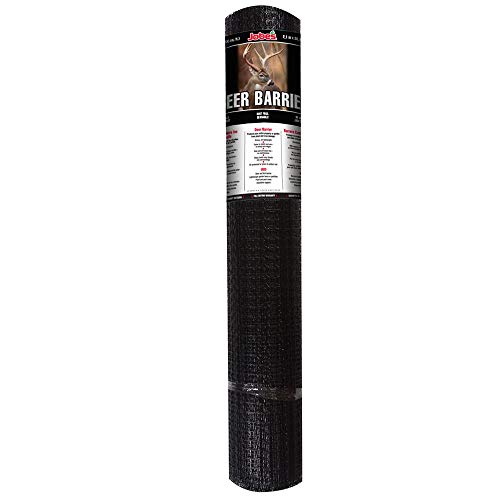
Tough durable deer fence; Protects landscape and crops from deer and other animals

material type: Plastic

EASY INSTALLATION: Designed for homeowner, farmer, pet owner and more. No professional installation required
Rotate Motion Sprinklers and Weekly Repellent Applications
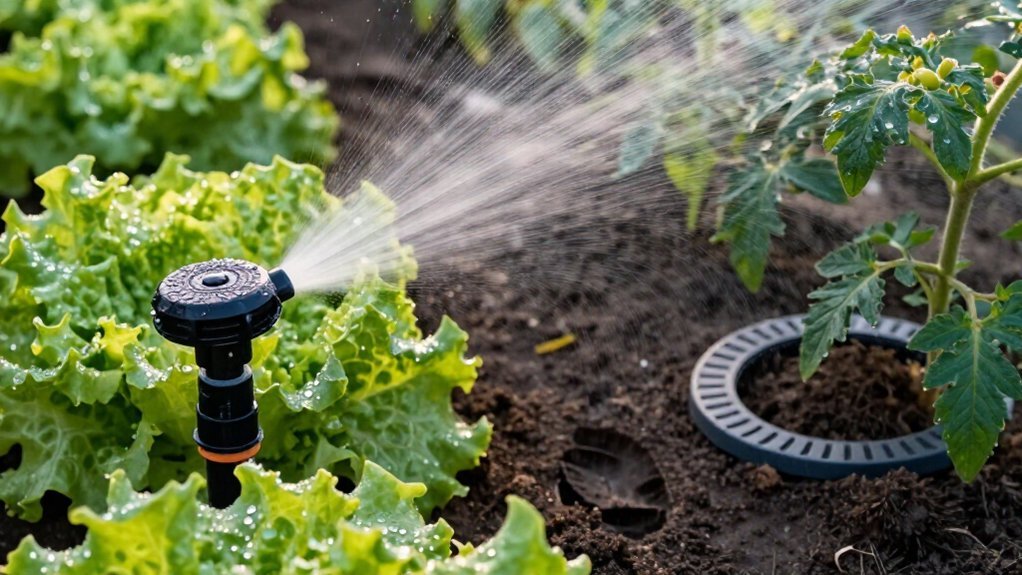
How exactly do you combine motion-activated sprinklers with repellent applications for maximum deer deterrence? You deploy infrared sensor sprinklers as dynamic deer deterrents, positioning multiple units across your garden protection zones for overlapping coverage against persistent deer pressure. You’ll rotate sprinkler locations every three to four days, preventing habituation while maintaining unpredictability throughout your deer-proof perimeter.
Your weekly repellent applications require equal discipline, since consistency outweighs product selection for lasting results. You reapply immediately after heavy rain and reapplication events, always spraying dry foliage to ensure proper adhesion and residue retention. Select battery-powered, infrared sensor sprinklers for reliable, low-maintenance irrigation that operates effectively from dusk through dawn. This integrated approach, combining sudden water bursts with maintained chemical barriers, creates layered defense without demanding excessive daily intervention from you.
Recommended Products

Dog Fence for Yard --- Each panel of the dog fence measures 40" H x 29" W, can be connected and expanded into different shapes based on your specific needs. Comes with a lock and the flexibility to choose whether or not you want to install a gate. Upgraded to 40-inch heightening design to prevent large dogs from entering the garden.

【55GSM High-Strength HDPE Mesh】Premium bird netting for garden boasts a thick, high-strength structure, 55 g/m²(1.62 oz/yd²)—5-6x heavier than regular nets. Features superior tear resistance, corrosion resistance and UV stabilization for long-lasting outdoor use, no easy damage from sun or friction.

6.5 x 50 FT Deer Fencing: Constructed from tough, high‑density polyethylene (HDPE), it is built to be UV‑resistant, weatherproof, reusable and resistant to rot and rust. This garden fencing won't tear easily even with animal bites, provides a heavy‑duty, long‑lasting barrier that reliably shields your garden from deer, dogs, chicken and other foraging animals for years to come