


Odysseus knew the value of choosing the right path through shifting sands, and you face a similar trial when selecting plants for your gritty, fast-draining beds.
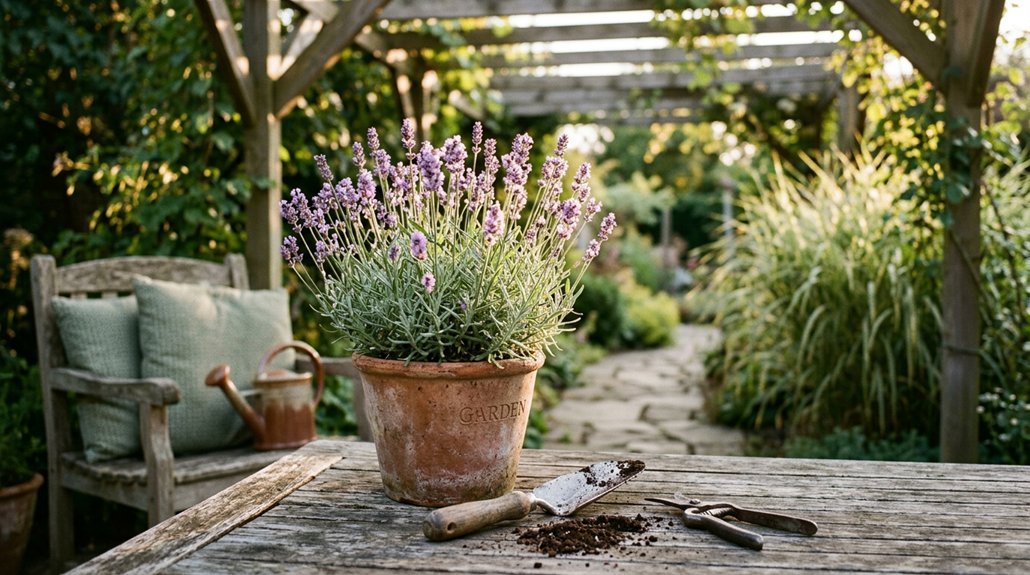
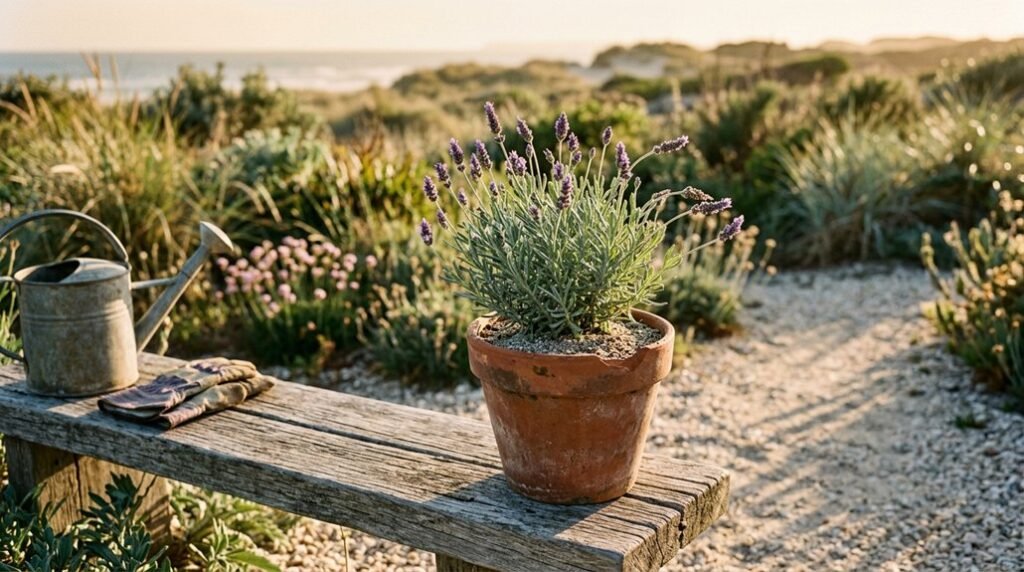
In 2026, you will find your best allies among species engineered by nature, not laboratories: Lavandula angustifolia cultivars ‘Hidcote’ and ‘Munstead’ anchor alkaline rows in USDA zones 5-9 when you amend with 2-3 cups dolomitic lime per plant.
Perovskia atriplicifolia rises silvery and patient through heat waves you cannot control.
The question remains which three companions complete this roster of resilience, and how precisely you must adjust your watering schedule to transform scarcity into abundance.
Soil Sunrise Lavender Potting Soil Mix (8 Quarts)

100% Natural: Custom blend for Lavender plants container growing; no artificial ingredients Uses: Specially formulated for growing healthy lavender plants; indoor / outdoor...
If you’re cultivating lavender in sandy soil conditions, you’ll want a potting mix that bridges the gap between your native ground and what this Mediterranean herb actually needs. Soil Sunrise Lavender Potting Soil Mix, an 8-quart custom blend, provides exactly that transition, combining peat moss, perlite, horticultural charcoal, pumice, sand, worm castings, and lime into one 100% natural formula.
You’ll find this volume fills a large 12-inch container comfortably, giving your Lavandula angustifolia the aeration and drainage it craves while retaining enough moisture and nutrients for sustained growth. The added lime adjusts pH toward alkaline preferences, and worm castings deliver slow-release fertility without synthetic additives.
Whether you’re growing ‘Hidcote’ in USDA zones 5-9 or overwintering ‘Munstead’ indoors, this mix supports root health through deliberate ingredient selection. Apply it straight from the bag, water thoroughly after planting, and place your pot where sunlight exceeds six hours daily. You’ve eliminated the guesswork of amending native sand, and your lavender will reward this precision with vigorous, fragrant growth.
Best For: Gardeners growing lavender in containers who need a ready-to-use, pH-balanced natural potting mix that provides proper drainage and aeration without having to amend native sandy soil.
Pros:
- 100% natural custom blend specifically formulated for lavender’s unique growing requirements, including alkaline pH adjustment from added lime
- Excellent aeration and drainage from perlite, pumice, and sand while maintaining adequate water retention and nutrient availability through peat moss and worm castings
- Convenient 8-quart size fills a large 12-inch container straight from the bag, eliminating guesswork in soil preparation
Cons:
- Limited to container use only, not suitable for in-ground garden bed applications
- 8-quart volume may be insufficient for multiple large containers or frequent repotting needs
- Contains peat moss, which is a non-renewable resource and may concern environmentally conscious gardeners
Recommended Products
100% Natural: Custom blend for Lavender plants container growing; no artificial ingredients

【Completely Natural】Tailored Blend for Lavender Plant Growth; Free of Artificial Ingredients
【Completely Natural】Tailored Blend for Lavender Plant Growth; Free of Artificial Ingredients
FoxFarm Ocean Forest Potting Soil 1.5 cu ft

You will receive (1) 1.5-cubic foot bags of potting soil with 2 plant tags to easily label varieties and planting dates with per purchase. Ready for immediate use, no...
You’re seeking a potting soil that handles sandy conditions without constant amendment, and FoxFarm’s Ocean Forest 1.5 cu ft delivers precisely that foundation. This 1.5 cubic foot bag arrives ready for immediate use, requiring no additional mixing or preparation before planting.
You’ll find a carefully balanced composition: 50-60% aged forest products, sphagnum peat moss, perlite, sandy loam, and a rich fertilizer blend derived from fish emulsion, crab meal, shrimp meal, earthworm castings, kelp meal, and oyster shell. These ingredients work together to improve moisture retention around your roots while maintaining the excellent drainage properties that prevent root rot in sandy environments.
You can plant directly into this bag for container gardens, or transfer it to pots for houseplants, trees, shrubs, roses, and seedlings across USDA zones 5-9. The included customizable plant tags help you track varieties and planting dates with precision.
Best For: Gardeners in sandy environments seeking a ready-to-use, nutrient-rich potting soil that balances moisture retention with drainage for container gardens, houseplants, trees, shrubs, roses, and seedlings.
Pros:
- Arrives fully prepared for immediate planting with no mixing or additional ingredients required
- Superior moisture retention combined with excellent drainage prevents root rot in challenging sandy conditions
- Rich organic fertilizer blend from fish emulsion, earthworm castings, and kelp meal supports vigorous seedling development and robust plant growth
Cons:
- Limited to 1.5 cubic foot bag size which may require multiple purchases for larger projects
- Contains animal-derived ingredients (fish, crab, shrimp, oyster shell) making it unsuitable for vegan gardeners or those avoiding animal products
- Peat moss content raises sustainability concerns for environmentally conscious users seeking peat-free alternatives
Recommended Products

PREMIUM CACTUS SOIL MIX: Specially blended for cacti and succulents, this commercial cactus mix offers excellent drainage and aeration for healthy root growth in pots or containers.

[Enhanced Soil Aeration] - Perlite improves soil aeration, allowing roots to access oxygen more efficiently, which is crucial for healthy plant growth.

FAST-DRAINING GRITTY MIX: Specially formulated succulent potting mix with perlite and pumice for optimal drainage. Helps prevent root rot in succulents and indoor potted plants.
Back to the Roots Organic Indoor Potting Mix (6 Quart)
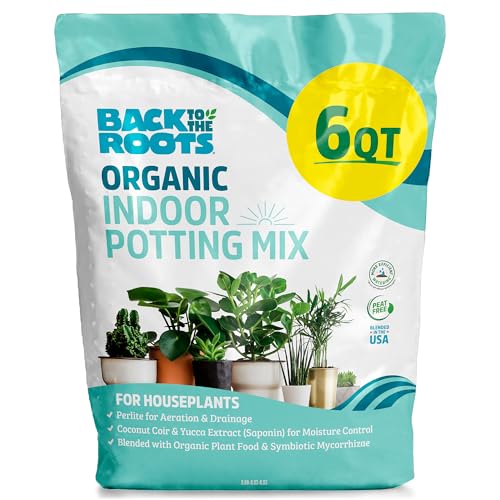
Includes 6qt of Back to the Roots Indoor Potting Mix. Our Potting Mix contains organic yucca extract that aids in retaining moisture in the soil which keeps your indoor...
Who needs a potting mix that actually respects your indoor ecosystem? You’ll find it in Back to the Roots Organic Indoor Potting Mix, a 6-quart, peat-free formulation that cuts greenhouse emissions while delivering serious horticultural performance.
Your houseplants absorb mycorrhizae-fortified nutrition through root systems that develop faster and stronger. Yucca extract holds moisture precisely where roots demand it. Dolomitic limestone stabilizes pH between 6.0-6.5, releasing phosphorus, potassium, and micronutrients for consistent feeding across 47 varieties from Sansevieria (USDA zones 10-12) to Ficus lyrata.
You’ll repot using this USA-made blend at 1:1 ratio with coarse perlite for sandy-loid amendments, or apply straight for moisture-loving tropicals. It’s labeled safe for pets and people, formulated without bark or compost that harbor nuisance gnats. Model 47016 ships ready to anchor your 2026 indoor garden with measured, trustworthy results.
Best For: Indoor gardeners seeking a peat-free, pet-safe potting mix that supports healthy root development across a wide variety of houseplants while minimizing environmental impact and pest problems.
Pros:
- Peat-free organic formula reduces greenhouse emissions and eliminates bark/compost that attract indoor gnats
- Contains mycorrhizae and yucca extract to accelerate root growth and improve moisture retention
- pH-balanced with dolomitic limestone for optimal nutrient delivery across diverse plant varieties
Cons:
- Requires mixing with perlite for plants needing sandy-loam conditions rather than working straight from the bag
- 6-quart size may be insufficient for repotting multiple large plants or extensive indoor gardens
- Limited to indoor use, requiring separate potting mix for outdoor container gardening
Recommended Products

OMRI Listed - Cz Dolomite Lime is an All-Natural mineral fertilizer listed by the Organic Materials Review Institute (OMRI). It may be used in certified organic production or food processing and handling according to the USDA National Organic Program regulations. (OMRI Certified 2024)
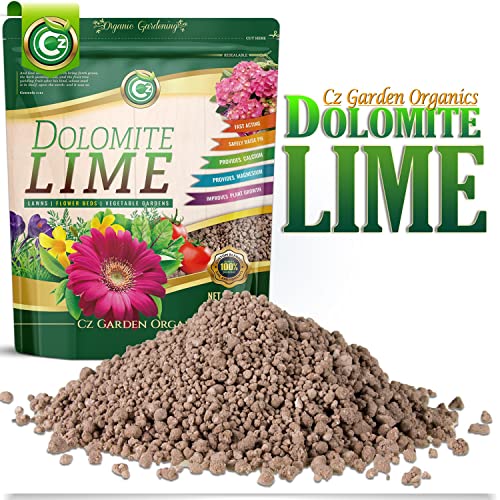
OMRI Listed - Cz Dolomite Lime is an All-Natural mineral fertilizer listed by the Organic Materials Review Institute (OMRI). It may be used in certified organic production or food processing and handling according to the USDA National Organic Program regulations.

FOR USE ON: Use on flowers, vegetables lawns, trees or shrubs to correct acidic soil
Miracle-Gro Organic Indoor Potting Mix, 16 qt.

HELPS REGULATE SOIL MOISTURE: Miracle-Gro Organic Indoor Potting Soil Mix is an organic potting soil that protects indoor plants against over and under watering INDOOR PLANT...
The indoor gardener seeking reliable, organic growth media will find Miracle-Gro Organic Indoor Potting Mix, 16 qt. an exceptional foundation for your container plants.
You’ll appreciate how this blend, manufactured by Scotts Miracle Gro under model 74186430, regulates soil moisture effectively. This protects your houseplants and herbs from the twin threats of overwatering and underwatering. The formulation incorporates responsibly sourced sphagnum peat moss from 100% certified producers, coir, and a quick-start natural fertilizer. This gives your transplants immediate nutritional support.
For seed starting, you fill your container with this organic soil, follow your seed package directions precisely, and water accordingly. When transplanting established specimens, you’ll partially fill your container, loosen the root ball carefully, position your plant, cover with additional mix, press lightly, then water thoroughly and allow drainage.
Best For: Indoor gardeners seeking reliable organic potting mix for container plants, houseplants, herbs, and seed starting who prioritize moisture regulation and environmentally responsible sourcing.
Pros:
- Effectively regulates soil moisture to protect plants from overwatering and underwatering
- Made with 100% certified responsibly sourced sphagnum peat moss for environmental peace of mind
- Contains quick-start natural fertilizer providing immediate nutritional support for transplants
Cons:
- Limited coverage with one 16-quart bag only filling one 12-inch container
- Not suitable for outdoor garden use, restricting versatility
- Contains peat moss, which despite certification raises sustainability concerns for some environmentally conscious users
Recommended Products

Earth Worm castings from Mother Earth provide the best soil amendment for anything indoors or outdoors, including vegetables, herbs, flowers and houseplants. Pure USA Vermicompost, so there's no burn or odor.

SUPERCHARGE YOUR GARDEN: Elevate your plants' growth with premium organic Brut Worm Castings. Our certified organic formula guarantees optimal nutrition for your indoor and outdoor plants.

Fertilizer and Soil Amendment: Made from a combination of our Pure Worm Castings mixed with added Worm Egg Material to enhance the microbial activity of your soil while providing aeration, improving drainage, and adding nutrients.
Soil Science for Gardeners: Building Soil Health

You should assess your site’s drainage and organic matter content, typically 1 to 3 percent in sandy loams, before selecting amendments such as aged compost or peat moss at 2 to 4 inches incorporated 6 to 8 inches deep.
You will increase water retention, support beneficial bacteria and fungi, and create conditions where nutrients become available to roots rather than leaching away.
You can implement cover crops like crimson clover (Trifolium incarnatum, USDA zones 6 to 9) or winter rye (Secale cereale, zones 3 to 8) between growing seasons, mowing and incorporating them to add biomass and nitrogen.
Your long-term commitment to these practices yields measurable results: improved soil structure, enhanced fertility, and gardens that thrive with reduced irrigation and fertilizer inputs across successive seasons.
Best For: Home gardeners and hobbyists seeking practical, science-based methods to build long-term soil health through natural processes and sustainable practices.
Pros:
- Provides step-by-step, illustrated guidance on soil testing, composting, and amendment selection that makes complex soil science accessible to non-experts
- Emphasizes low-input, sustainable techniques like cover cropping and mulching that reduce need for irrigation and fertilizers over time
- Covers comprehensive soil biology topics including microbial activity and nutrient cycles with actionable applications for home garden scale
Cons:
- Geographic limitations noted for cover crop recommendations (USDA zones 3–9), potentially leaving out gardeners in extreme climates
- Relatively dense 224-page format may overwhelm beginners looking for quick-start summaries rather than in-depth scientific explanations
- Published in 2020, so may not reflect the most recent research advances in soil microbiome science and emerging organic amendment alternatives
Recommended Products
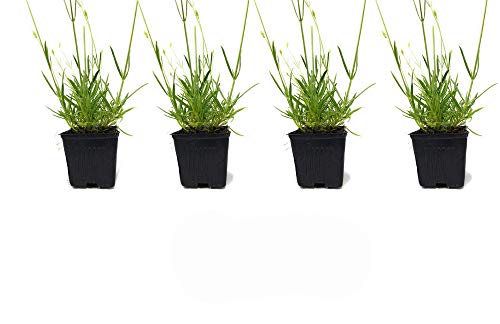
LIVE WHITE SPIKE LAVENDER — 4 LIVE PLANTS — Receive 4 live plants of Lavandula x intermedia 'White Spike' shipped in nursery-quality 4" Pots, rooted, healthy, and ready to plant. Rare white-flowering lavandin — striking in the garden, calming in the vase — every plant is hand-grown on our family farm in Sequim, Washington, the lavender capital of North America.
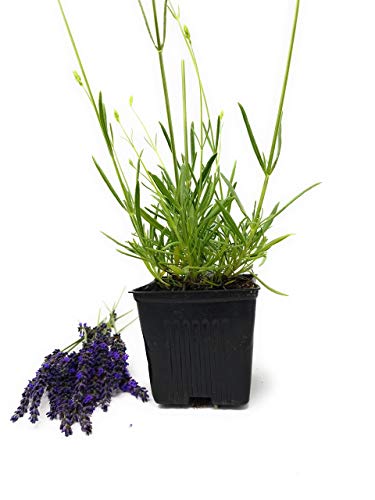
LIVE FRENCH PROVENCE LAVENDER — 1 LIVE PLANT — Receive 1 live plant of Lavandula x intermedia 'French Provence' shipped in nursery-quality 4" Pots, rooted, healthy, and ready to plant. Famous French culinary and oil cultivar with very fragrant flower spikes — every plant is pesticide-free and naturally grown.

You will receive 2 plants selected at random. Colors may vary and can include spanish, Phenomenal, ....
Factors to Consider When Choosing Plants for Sandy Soil
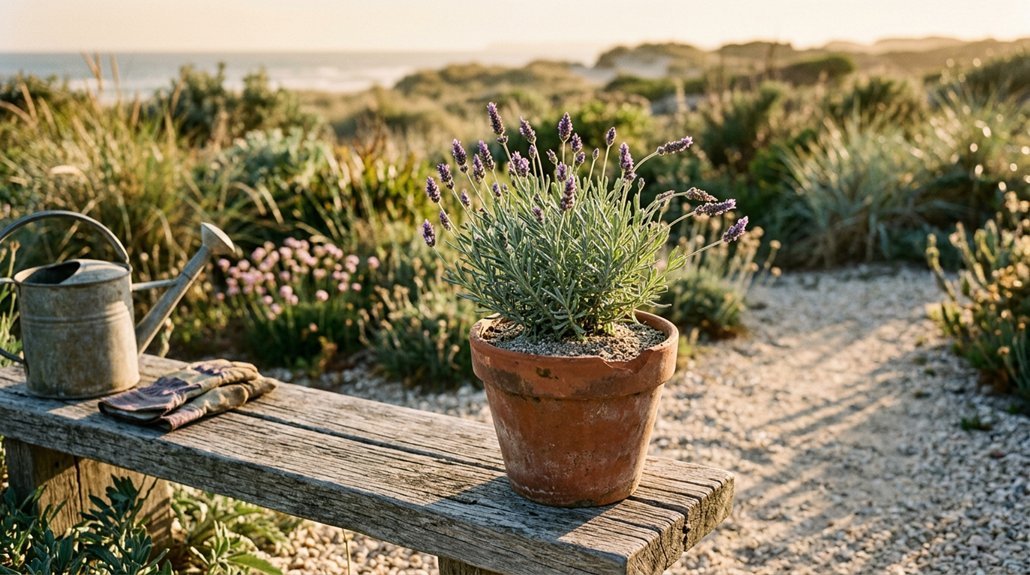
You’ll need to evaluate water retention needs, root depth requirements, nutrient availability concerns, pH preferences, and drought tolerance levels when matching plants to your sandy conditions, since these five factors determine whether a species thrives or struggles in fast-draining, low-fertility ground.
Analyze each candidate’s specific adaptations, such as deep taproots that access water at 24-inch depths or waxy leaf coatings that reduce transpiration, and you’ll avoid common failures like stunted growth or premature death that plague unprepared gardeners.
Use soil tests measuring organic matter percentage, available nitrogen in parts per million, and pH within the 6.0-7.5 range most vegetables prefer, then amend with 2-inch compost layers or select native cultivars like ‘Purple Ice’ Sedum (Zones 3-9) that evolved for exactly these constraints.
Recommended Products

100% Natural: Custom blend for Lavender plants container growing; no artificial ingredients

🌿 Exceptional Growing Medium: Our Lavender Potting Mix is meticulously crafted with premium ingredients like Canadian Peat Moss, Charcoal, Worm Castings, Perlite, Sand, Pumice, and Lime, providing the ideal balance of nutrients and moisture for optimal Lavender growth.

OUTDOOR POTTING SOIL: Miracle-Gro Organic Outdoor Potting Mix contains a quick-release natural plant fertilizer and also feeds plants for up to 2 months
Water Retention Needs
Choosing plants for sandy soil means confronting its defining challenge: water disappears almost as quickly as you supply it, with moisture often draining away within minutes to hours after irrigation and leaving roots grasping for hydration in temporarily dry pockets.
You can improve water retention by working compost or well-aged manure into your soil, which increases its holding capacity and slows rapid drying. Apply wood chips or straw mulch to the surface; this reduces evaporation and conserves moisture between waterings. Consider adding biochar or peat-free compost substitutes; these amendments extend intervals between irrigations.
Select drought-tolerant natives or deeply rooting species, as their root systems access moisture reserves below the surface, reducing dependence on erratic surface hydration.
Root Depth Requirements
Root depth becomes your decisive advantage when gardening in sandy soil, where moisture sinks beyond the reach of shallow roots within hours of watering. You will want to select plants with deep, robust taproots or well-developed fibrous systems, as these structures penetrate below the surface to access stored moisture and reduce drought stress.
Deep root systems also improve stability in loose, sandy textures, where wind and erosion threaten shallow-rooted specimens. When you choose drought-tolerant species, you are often selecting plants with deeper rooting habits that reach sporadic moisture pockets between infrequent irrigation cycles.
Consider your watering schedule carefully: deeper-rooted plants exploit subsoil moisture when you irrigate less often, while shallow-rooted varieties demand constant attention. Match root depth requirements to your site’s moisture dynamics for resilient, thriving plantings.
Nutrient Availability Concerns
Because sandy soils drain so rapidly, you’re facing a constant battle against nutrient leaching that can leave your plants starving between waterings. The low cation exchange capacity of sand means potassium, calcium, and magnesium slip through your fingers, demanding more frequent replenishment than in loam or clay.
You can boost retention by working in organic matter, which increases water holding capacity and fuels microbial activity that recycles nutrients back to your plants. Choose slow-release or balanced fertilizers, such as 10-10-10 formulations, to provide sustained availability rather than quick flushes that wash away.
Test your soil every spring, monitoring NPK levels so you adjust applications precisely. This prevents deficiencies in nitrogen-hungry vegetables like tomatoes, or magnesium shortages in acid-loving blueberries. You’ll build fertility methodically, matching inputs to what your sandy substrate actually holds.
pH Preferences
How do you match your plants to the chemical reality beneath your feet? You’ll find sandy soils typically register between pH 5.5 and 6.5, though organic content and mineral deposits shift this range. You should select species preferring slightly acidic to neutral conditions, approximately 6.0 to 7.0, as these adapt readily to sandy chemistry with proper nutrient management.
You’ll encounter challenges because rapid drainage leaches buffering compounds. You must test soil annually, since low cation exchange capacity permits faster pH fluctuations than clay or loam experiences. You can stabilize conditions through mulching and compost incorporation, which moderates acidity near roots while improving nutrient retention.
When pH drifts below 5.5, you should apply dolomitic lime following test recommendations.
Drought Tolerance Levels
Where should you look when water vanishes almost as quickly as it arrives? You’ll find your answer in root architecture and leaf adaptation, the twin pillars of drought survival.
Deep or extensive root systems become your allies, probing downward through coarse grains to harvest moisture that shallow soils abandon. You should select species bearing waxy or hairy foliage, these textures actively shield against transpiration losses when aridity strikes.
Consider plants employing CAM or C4 photosynthesis, their metabolic efficiency rewards your foresight during extended dry spells. Your establishment protocol matters: provide initial deep watering to drive roots downward, then shift to infrequent, thorough irrigation that trains resilience.
Remember that mulching preserves what sandy soils eagerly release, and drought-adapted varieties reduce your dependency on supplemental water. You are building self-sufficiency, one thoughtful selection at a time.
Soil Amendment Options
Although sandy soils present distinct challenges, you’ll find that strategic amendments transform their limitations into manageable conditions for plant success. You’ll improve water retention and nutrient availability by incorporating organic matter, such as compost or well-rotted manure, which increases cation exchange capacity and binds essential nutrients.
You should add fine mulch, peat, or coco coir to boost moisture retention, while avoiding excess coarse sand that worsens drainage. With each planting, you’ll apply a layer of mulch and slow-release fertilizer to supply steady nutrients over time.
Your goal is a loamy soil mix, achieved through higher proportions of organic matter and mineral amendments, which supports diverse root systems across USDA zones 5-9. You’ll create sustainable growing conditions that expand your plant options beyond native xerophytes, enabling successful cultivation of lavender ‘Hidcote’, Russian sage, and ornamental grasses in amended sandy beds